Clear Sky Science · en
Combining 5-ALA-PDT with berbamine as an in vitro multimodal therapy approach against bladder cancer cells
Why this research matters
Bladder cancer is common, costly to treat, and often comes back even after aggressive therapy. Many tumors eventually stop responding to standard chemotherapy drugs such as cisplatin, in part because a small pool of hard‑to‑kill "starter" cells can survive treatment and regrow the cancer. This study explores a laboratory-tested treatment pairing a light‑activated cancer therapy with a natural plant compound, asking whether the duo can better knock down stubborn bladder cancer cells, including those that resist chemotherapy and behave like stem cells.
A light-based way to attack tumors
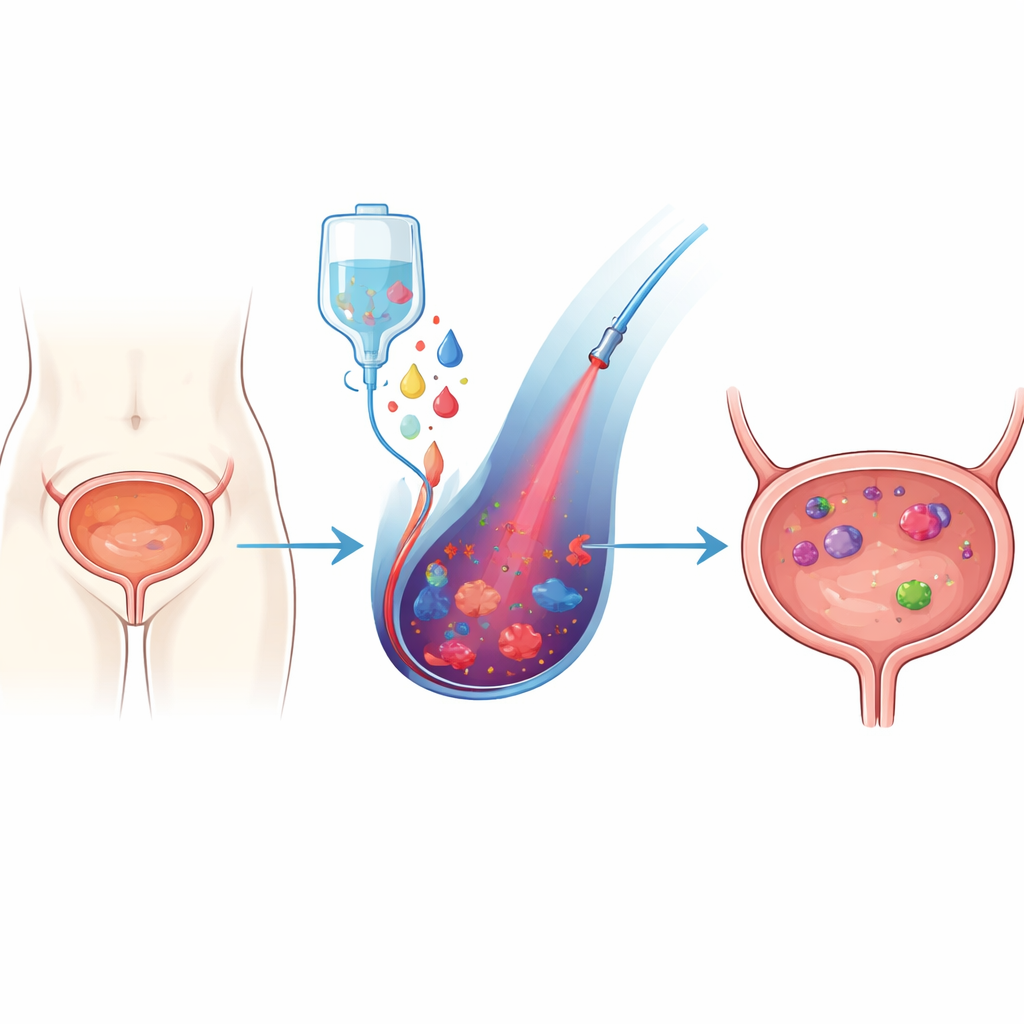
The first part of the treatment is called 5‑aminolevulinic acid–mediated photodynamic therapy, or 5‑ALA‑PDT. 5‑ALA is a building block that cells use to make heme, the red pigment in blood. When extra 5‑ALA is given from outside, tumor cells tend to stockpile an intermediate molecule called protoporphyrin IX. This molecule acts like a light catcher: when red laser light is shone on it, it produces highly reactive oxygen molecules that can punch holes in cell structures and trigger different forms of cell death. Because cancer cells often accumulate more of this light catcher than normal cells, 5‑ALA‑PDT can preferentially damage tumors while sparing healthy tissue. It has already shown promise in early bladder cancer trials, but its power is limited by the cells’ internal defense systems that mop up reactive oxygen.
A plant compound with anticancer potential
The second part of the strategy is berbamine, a natural alkaloid extracted from the plant Berberis amurensis. Earlier work suggested that berbamine can slow tumor growth, reduce cell movement and invasion, and promote cancer cell death while being less harmful to normal cells. It can also interfere with several survival pathways inside cancer cells, including a key switch known as NF‑κB and other signals linked to drug resistance and cell migration. The authors studied berbamine in two human bladder cancer cell lines (RT112 and J82), their cisplatin‑resistant counterparts, and versions grown under special conditions to enrich for cancer stem‑cell‑like spheres. They first measured how fast each cell type multiplied and how much berbamine was needed to cut cell survival in half, then used these values to set doses for combination experiments.
How the combination was tested in the lab
To see how the two treatments interact, the team exposed cells to different amounts of 5‑ALA, added varying doses of berbamine, and then illuminated them with red laser light at controlled energy levels. They measured how much of the light‑catching protoporphyrin IX built up in each cell type, how many reactive oxygen molecules were generated, and how many cells remained alive afterward. Across all bladder cancer cell lines, more 5‑ALA led to more protoporphyrin IX, up to a saturation point. Adding berbamine boosted this buildup further, in some cases more than eightfold, and generally increased the damage done when the cells were exposed to light. Berbamine alone also reduced cell growth, limited migration and invasion, and induced cell death, with cisplatin‑resistant cells often showing particular vulnerability.
Different tumor cells, different responses
The combination did not behave identically in every cell type, underscoring how varied bladder cancers can be. In the cisplatin‑resistant J82 LTT cells, higher berbamine concentrations steadily strengthened the killing effect of 5‑ALA‑PDT, nearly wiping out viable cells under the strongest conditions. In contrast, some parental J82 cells and their stem‑cell‑like counterparts responded best at intermediate berbamine levels; pushing the dose higher seemed to blunt the added benefit of light treatment, perhaps because surviving cells ramped up their defenses. For RT112 cells, berbamine improved 5‑ALA‑PDT mainly at certain 5‑ALA doses, while in the cisplatin‑resistant RT112 LTT line, 5‑ALA‑PDT was already so effective that extra berbamine did not provide much further gain. Most strikingly, RT112 cancer stem‑cell‑like spheres were highly sensitive to the combination: modest 5‑ALA and berbamine doses together with light were enough to drop survival to almost background levels, suggesting these otherwise resilient starter cells can be selectively hit.
What this could mean for future treatment
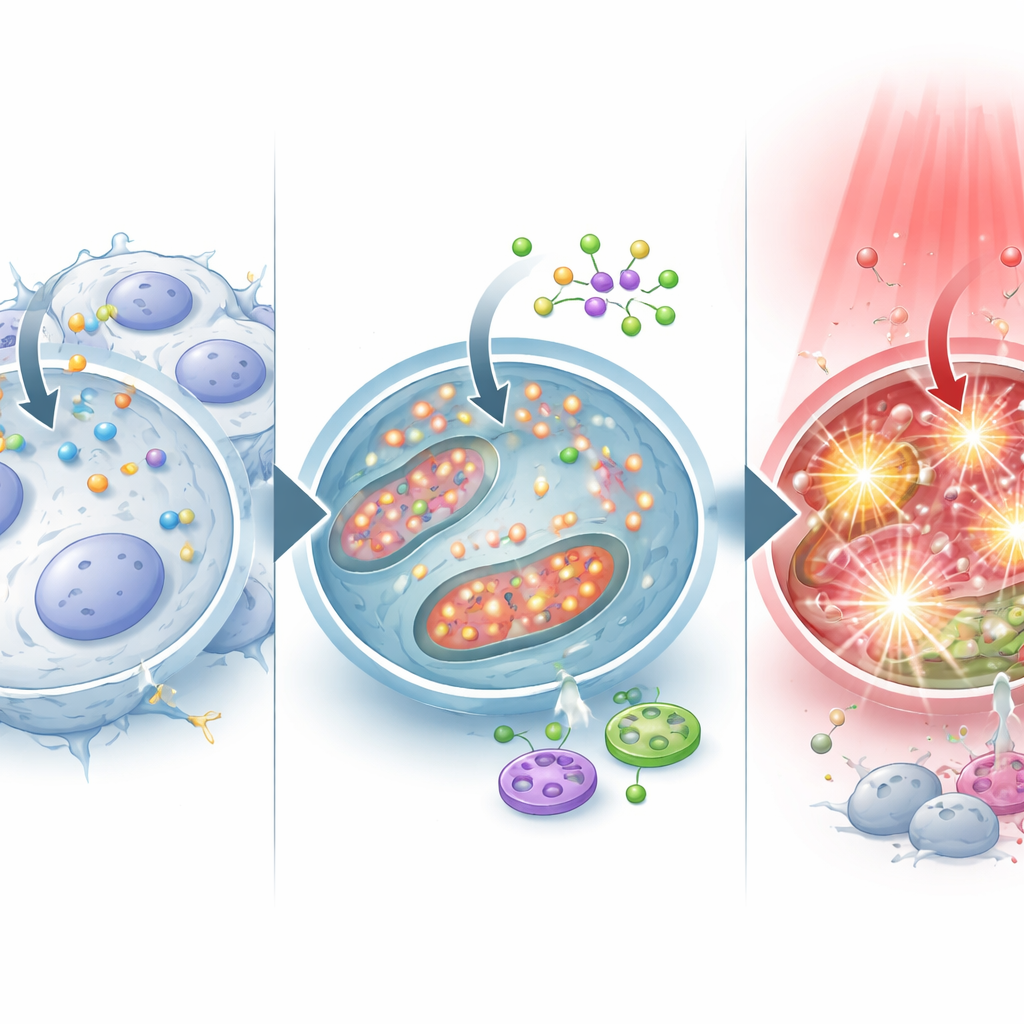
In simple terms, the study shows that pairing a light‑activated drug with a plant‑derived compound can make bladder cancer cells, including chemotherapy‑resistant and stem‑cell‑like cells, easier to destroy in the lab. Berbamine not only harms tumor cells on its own but also helps them load up more of the light‑catching molecule that powers photodynamic therapy, tipping the balance toward lethal oxidative damage when red light is applied. The exact mix of doses matters and depends on the biology of each tumor, but the concept of "tuning" light‑based therapy with a low‑cost sensitizer is promising. The work was done in cell dishes, not patients, so it does not yet prove benefit in people. Still, it points toward a future in which bladder tumors, especially those that have outsmarted standard drugs, might be screened for sensitivity to 5‑ALA‑PDT plus berbamine and then treated with a tailored combination that targets even the toughest cancer seeds.
Citation: Kabus, M., Aumiller, M., Rühm, A. et al. Combining 5-ALA-PDT with berbamine as an in vitro multimodal therapy approach against bladder cancer cells. Sci Rep 16, 11228 (2026). https://doi.org/10.1038/s41598-026-46092-x
Keywords: bladder cancer, photodynamic therapy, berbamine, cisplatin resistance, cancer stem cells