Clear Sky Science · en
Traditional masculinity ideologies are associated with psychiatric diagnoses in men
Why this topic matters to everyday life
Many men grow up hearing that they should be tough, independent, and always in control. This article explores how strongly holding on to such traditional ideas about manhood is linked to real, doctor-assigned mental health diagnoses, not just to feeling stressed or unhappy. Understanding this link can help families, clinicians, and men themselves see how certain expectations may quietly shape who gets help, who suffers in silence, and how mental health problems show up in men’s lives. 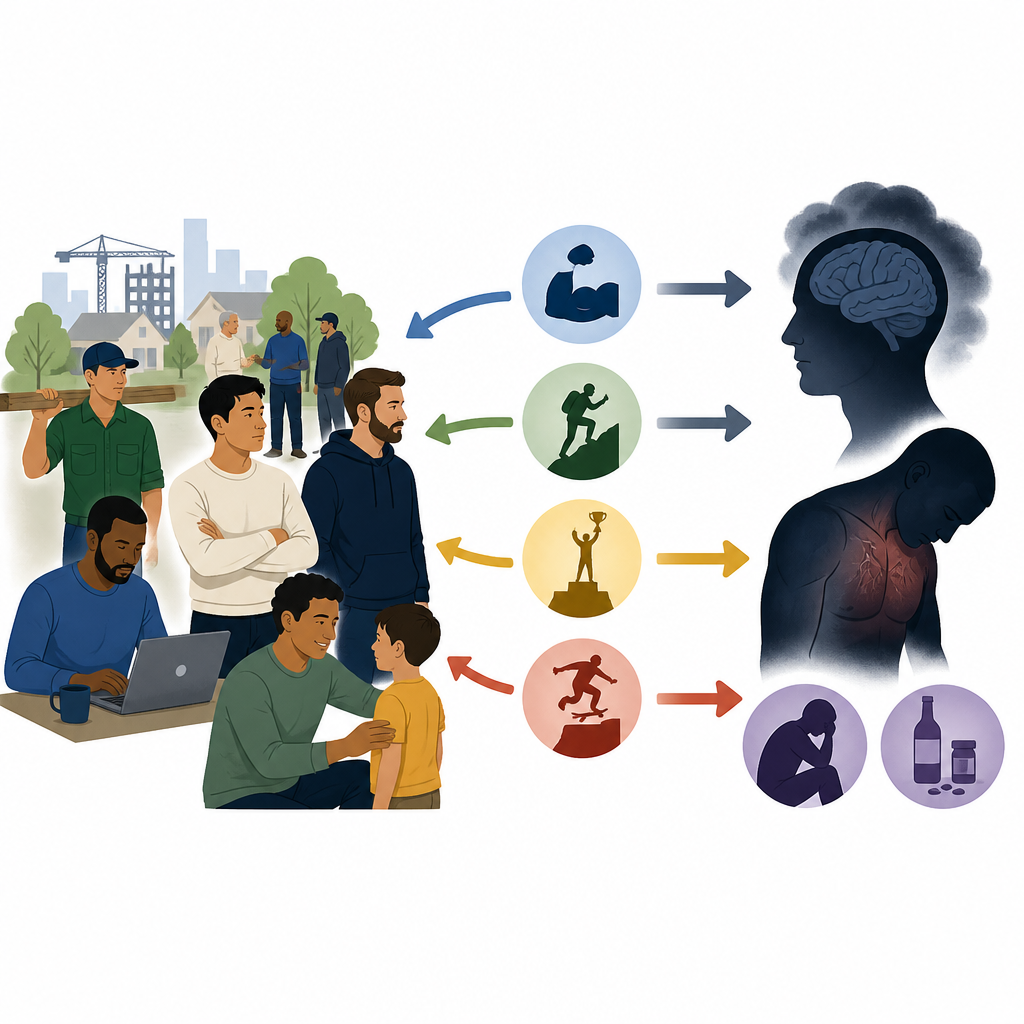
Common rules about being a man
The authors focus on what they call traditional masculinity ideologies, meaning widely shared beliefs in Western societies about how men should think, feel, and behave. These beliefs include staying emotionally stoic, always striving for success and status, taking risks, relying only on oneself, and treating work as more important than relationships or self-care. Some versions also encourage casual sex, dominance over others, and even the use of force to solve conflicts. While such norms can sometimes bring benefits, like persistence or confidence, they can also make it hard for men to show vulnerability or ask for support when they are struggling.
How the study was carried out
The study used baseline data from a clinical trial that tested a therapy program designed specifically for men with depression. More than thirty thousand people clicked on an online screening, and 317 men aged 25 to 50 ultimately completed an in-depth interview. All had been pre-screened for signs of depression, so the group had more mental health problems than the general male population. Each man filled in a questionnaire that measured how strongly he agreed with traditional masculinity beliefs. Trained interviewers then used a structured diagnostic interview, a standard tool based on the DSM-5 manual, to determine whether each man met criteria for various psychiatric diagnoses, such as depressive disorders, substance use disorders, anxiety, or attention-deficit/hyperactivity disorder.
What the researchers found
In this sample, about two thirds of the men met criteria for at least one current psychiatric diagnosis. Men with any diagnosis tended to score higher on traditional masculinity than men without a diagnosis. Statistical models showed that with each step up in traditional masculinity, the odds of having any diagnosis rose by roughly four percent, even after accounting for age, education, sexual orientation, and relationship status. The link was especially clear for depressive disorders and for substance-related and addictive disorders. One particular theme stood out: self-reliance. Men who strongly endorsed handling everything alone were more likely to have a diagnosis than those who were more open to depending on others, suggesting that extreme self-sufficiency may carry a mental health cost. 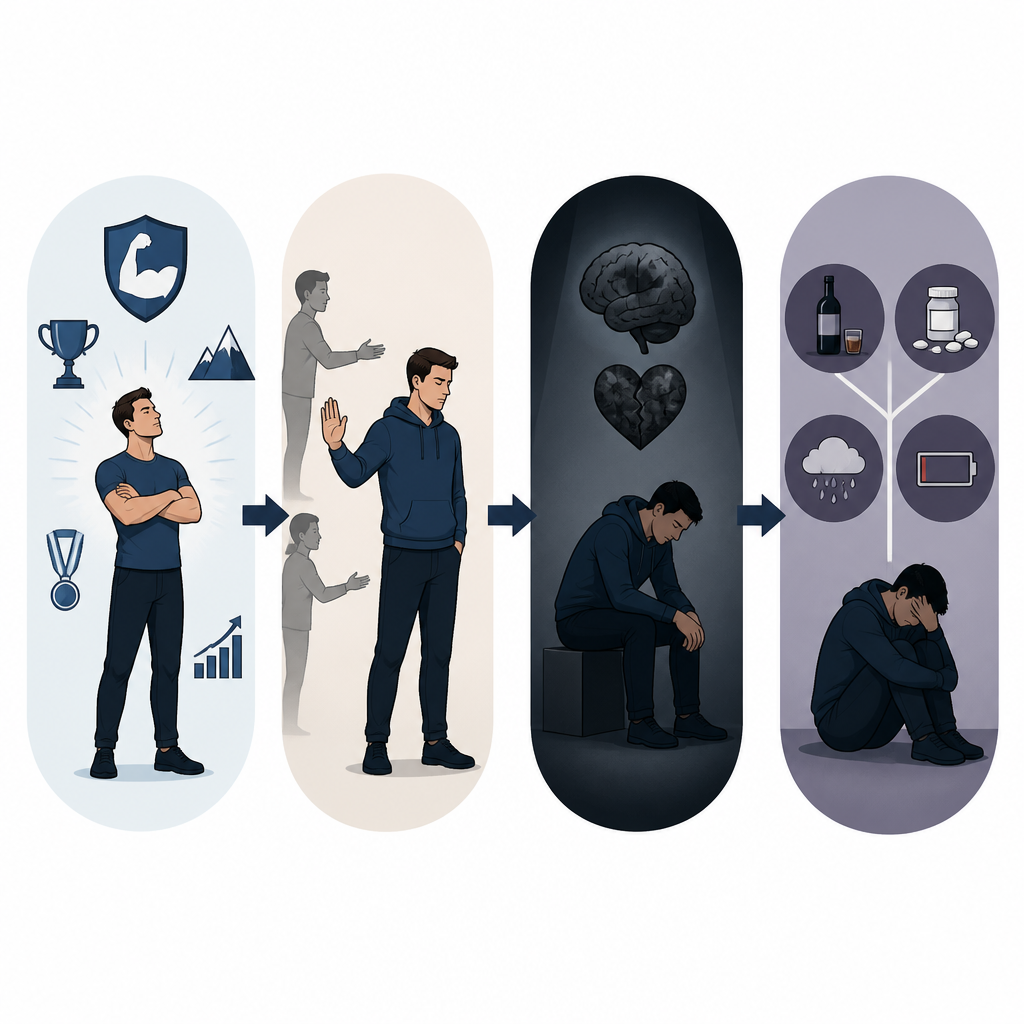
Where the pattern did and did not appear
The researchers did not find clear links between traditional masculinity and anxiety disorders or attention-deficit/hyperactivity disorder in this group. They suggest that anxiety, which often involves fear and avoidance, may clash with cultural images of men as brave and risk-taking, possibly leading men to hide or underreport anxious feelings. Exploratory analyses hinted that strong adherence to traditional masculinity might also be related to personality disorders and sleep problems, but the numbers in those groups were small, so these findings are uncertain and need to be tested in larger studies. Importantly, because the study was cross-sectional, it cannot prove whether traditional masculinity leads to mental disorders or whether struggling with mental health pushes some men to cling more tightly to rigid masculine ideals.
What this means for men and mental health care
To a layperson, the main message is that some widely praised traits, like never asking for help or always acting tough, may quietly raise the risk that men end up meeting criteria for depressive and substance-related disorders. The study suggests that clinicians should pay attention to how strongly their male patients hold traditional ideas about manhood, since these beliefs can shape how symptoms appear, how willing men are to seek care, and how they respond to treatment. Rather than blaming masculinity as such, the authors argue for a more flexible view of manhood that leaves room for emotional openness and connection. Building gender-sensitive approaches in clinics and therapy could make it easier for men to talk about their struggles and receive support before problems become severe.
Citation: Schneeberger, M., Ehlert, U. & Walther, A. Traditional masculinity ideologies are associated with psychiatric diagnoses in men. Sci Rep 16, 15326 (2026). https://doi.org/10.1038/s41598-026-45822-5
Keywords: men’s mental health, traditional masculinity, depression in men, substance use, gender norms