Clear Sky Science · en
Evaluating the restoration of Egypt’s Mediterranean Manzala Lagoon: a multi-index assessment of water quality and heavy metals
Why This Lagoon Matters to Everyday Life
Along Egypt’s Mediterranean coast lies Lake Manzala, a vast shallow lagoon that has long supplied fish, protected shorelines, and supported nearby communities. Over recent decades, however, it has been choked by wastewater, farm runoff, and industrial discharges. This study asks a simple but pressing question with broad relevance: after large public investments in dredging and wastewater treatment, is this crucial wetland really getting healthier, or is serious pollution still holding it back?
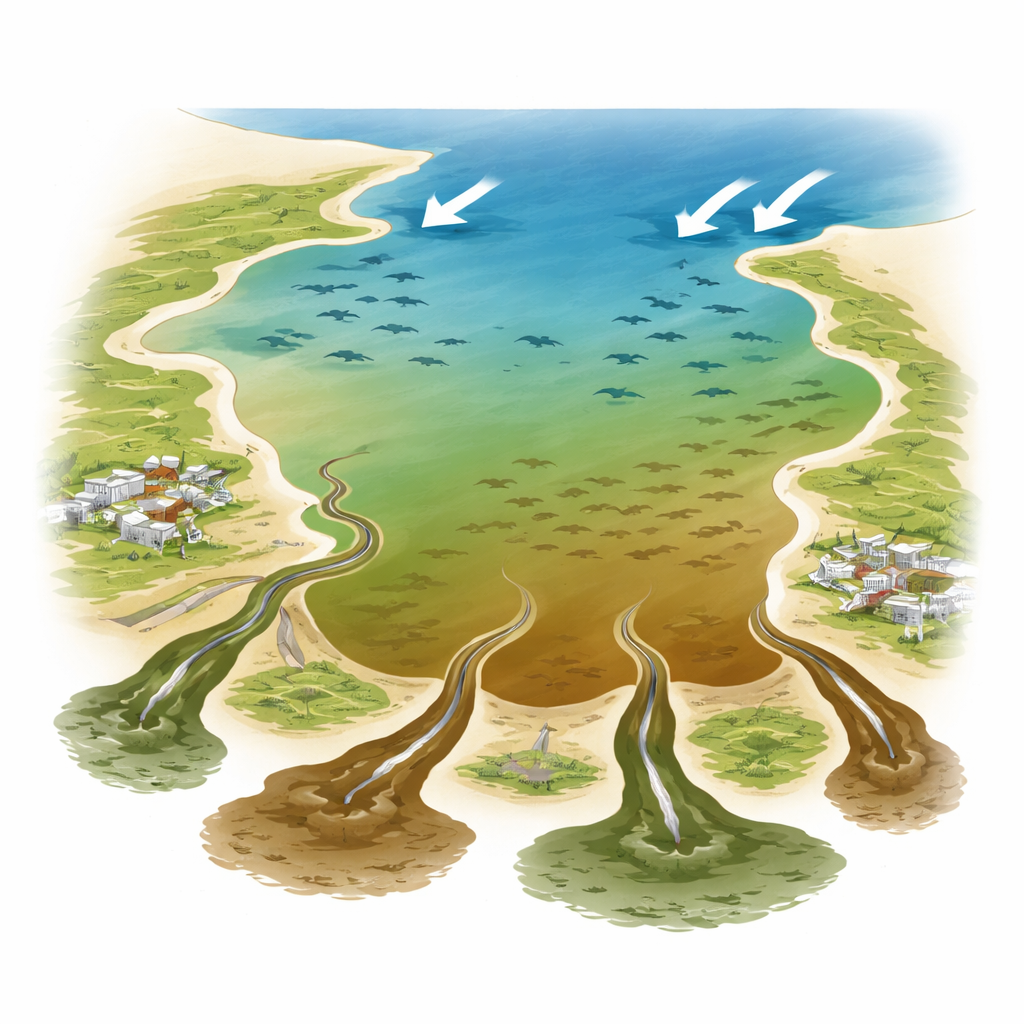
A Working Lake Under Heavy Strain
Lake Manzala acts like a natural kidney for the Nile Delta, receiving most of its water from southern drains that carry mixtures of agricultural, domestic, and industrial waste, while smaller inlets in the north bring in cleaner Mediterranean seawater. The researchers sampled water across 12 stations and four seasons in 2021–2022, measuring basic conditions such as temperature, saltiness, and oxygen, as well as nutrients like nitrogen and phosphorus and a suite of heavy metals. To move beyond single measurements, they combined these results into several overall “health scores” that capture water quality, toxicity to aquatic life, nutrient over-enrichment, and metal contamination.
Reading the Lagoon’s Health Scores
The integrated indices tell a sobering story. A Canadian-style water quality score classified most of the lake as “poor” to “marginal,” far from the levels expected in clean or even moderately disturbed waters. A separate toxicity index showed that only the hardiest fish can tolerate conditions near the southern drains, while more sensitive species are restricted to the better-flushed northern areas. A trophic state index, which tracks how overloaded a water body is with nutrients and algae, placed Lake Manzala firmly in the “hypereutrophic” category. This means thick algal growth, murky water, and frequent oxygen shortages—conditions that can trigger fish kills and collapse delicate food webs.
Invisible Threats: Nutrients and Heavy Metals
The team found especially high concentrations of nutrients and several heavy metals in the southern and southeastern basins, where major drains enter the lagoon. Nitrogen and phosphorus levels there are high enough to fuel persistent algal blooms, while oxygen near the bottom can drop to nearly zero as microbes consume decaying organic matter. At the same time, metals such as lead, cadmium, nickel, and chromium remain above international safety guidelines in many locations. When all metals are combined into a single index, the values are far above thresholds considered safe for aquatic life, indicating serious long-term risk for fish and for people who rely on them as food. Multivariate statistical analysis linked these problems mainly to human sources, with natural processes like wind mixing and seawater exchange playing only a minor, though helpful, cleanup role.
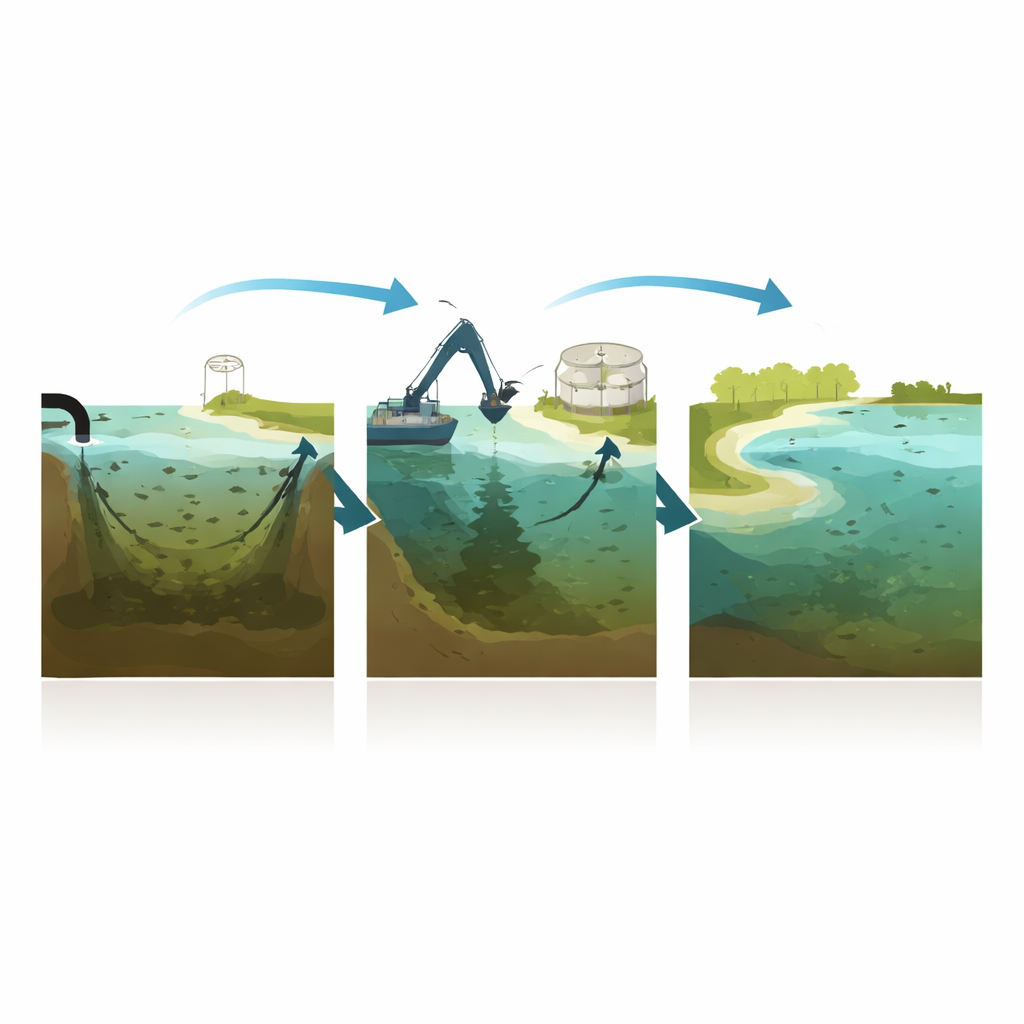
What Has Restoration Achieved So Far?
Since 2017, the Egyptian government has dredged channels, removed thick beds of aquatic plants, and brought a major wastewater treatment plant online. These efforts have improved water circulation, slightly expanded open-water areas, and strengthened the influence of cleaner seawater in the north. Compared with peak pollution years in the 2000s, some heavy metal levels are now much lower and extreme nutrient spikes have softened. Yet the study shows that these physical and engineering actions alone cannot erase decades of pollution embedded in sediments or stop the constant inflow of new contaminants from farms, cities, and factories upstream.
Where the Lagoon Stands and What Comes Next
For a lay reader, the bottom line is that Lake Manzala is recovering, but only slowly and unevenly. The northern sectors now function as partial refuges where conditions can support more normal aquatic life, but the southern basins remain severely stressed by nutrient overload and metal pollution. The authors conclude that true restoration will require a broader, long-term strategy: fully treating all drainage water before it reaches the lake, cutting fertilizer and industrial discharges at their sources, carefully managing dredging to avoid stirring up buried contaminants, and tracking progress with repeated, lake-wide monitoring. If these steps are taken, Lake Manzala could once again act as a thriving, productive buffer for the Nile Delta—and serve as a model for rescuing other overburdened coastal lagoons around the Mediterranean and beyond.
Citation: Eissa, M.A., El Sayed, S.M., ElSayed, F.A. et al. Evaluating the restoration of Egypt’s Mediterranean Manzala Lagoon: a multi-index assessment of water quality and heavy metals. Sci Rep 16, 12241 (2026). https://doi.org/10.1038/s41598-026-45115-x
Keywords: Lake Manzala, coastal lagoon pollution, eutrophication, heavy metals, water quality restoration