Clear Sky Science · en
Changes in verbal fluency, anthropometric parameters, physical activity, and physical fitness following an after-school basketball program in children: a pilot study
Why an after-school game matters
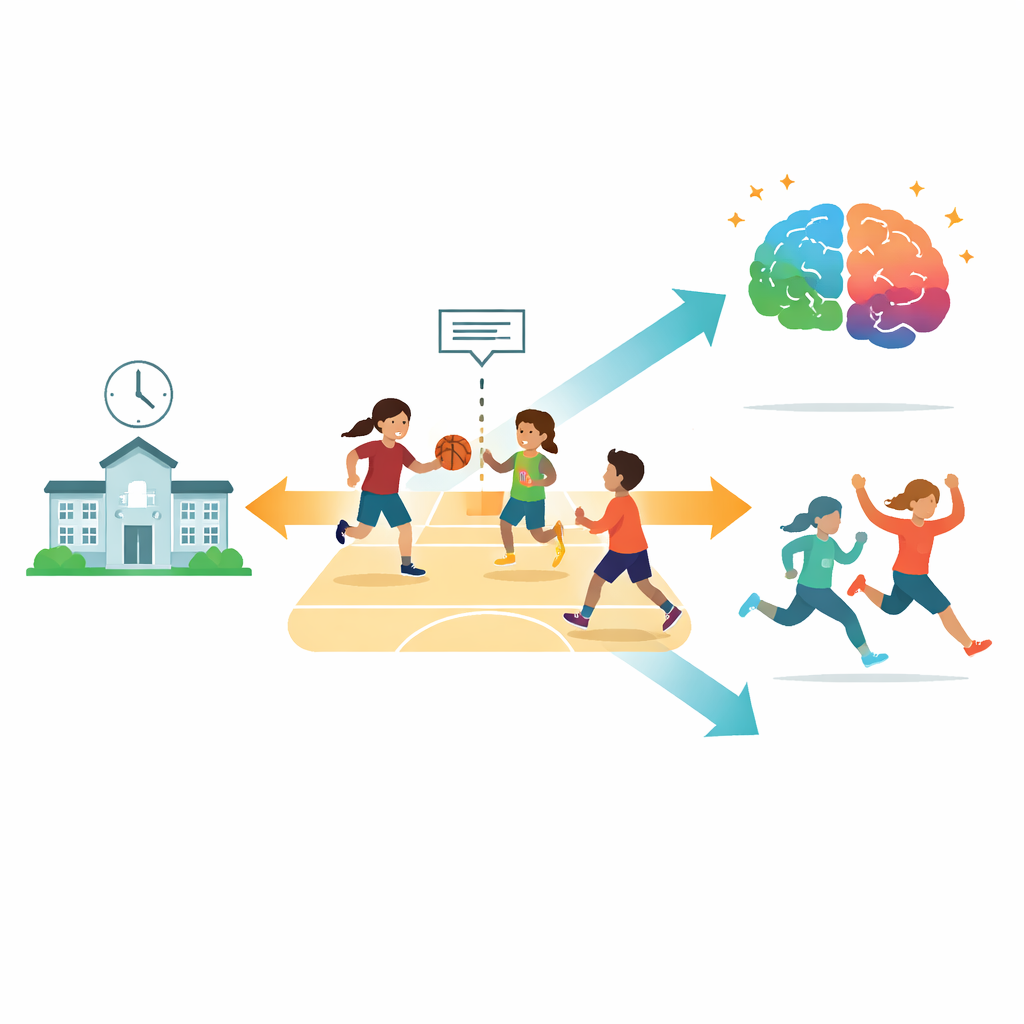
Parents, teachers, and kids alike often wonder whether time spent on sports after school takes away from homework or actually helps learning. This study asks a simple question with big implications: when children join a structured after-school basketball program, does it not only make them fitter, but also sharpen how easily they can find and say words—a key mental skill linked to school success?
What the researchers set out to explore
The team studied 29 children in Chile, ages 9 to 11, who attended the same public school. Some chose to enroll in a 12-week after-school basketball workshop held twice a week, while others did not join any extra sports and served as a comparison group. Before and after the 12 weeks, all children were measured on several fronts: body size and shape (such as weight and waist circumference), everyday physical activity, physical fitness (strength, jumping, running agility, and how far they could walk in six minutes), and a simple but powerful thinking test called verbal fluency.
How they tested body and mind
To check verbal fluency, children were given one minute to quickly say as many words as possible that either started with a certain letter (a “sound-based” task called phonological fluency) or belonged to a category like “animals” (a “meaning-based” task called semantic fluency). These tasks tap into how well children can search their memories, stay focused, and avoid repeating themselves, all while speaking quickly. On the physical side, the researchers recorded how far children could jump from a standing position, how fast they could shuttle back and forth over a short distance, how strong their hand grip was, and how far they could walk in six minutes. Children also answered a short questionnaire about how active they had been during the past week.
What changed after 12 weeks of basketball
After three months, children in the basketball group showed clearer gains than those in the comparison group, especially in fitness and one key thinking skill. They improved more in their sound-based verbal fluency, meaning they could produce a larger number of suitable words starting with the given letter after the program. They also performed better on all physical fitness measures: they tended to walk farther in six minutes, jump farther, grip more strongly, and complete the agility run more quickly. Everyday physical activity scores also rose more in the basketball group, although this trend was less robust when analyzed in a stricter way. By contrast, body measurements like weight and waist-to-height ratio changed little in either group over the relatively short study period.
How movement and thinking may be connected
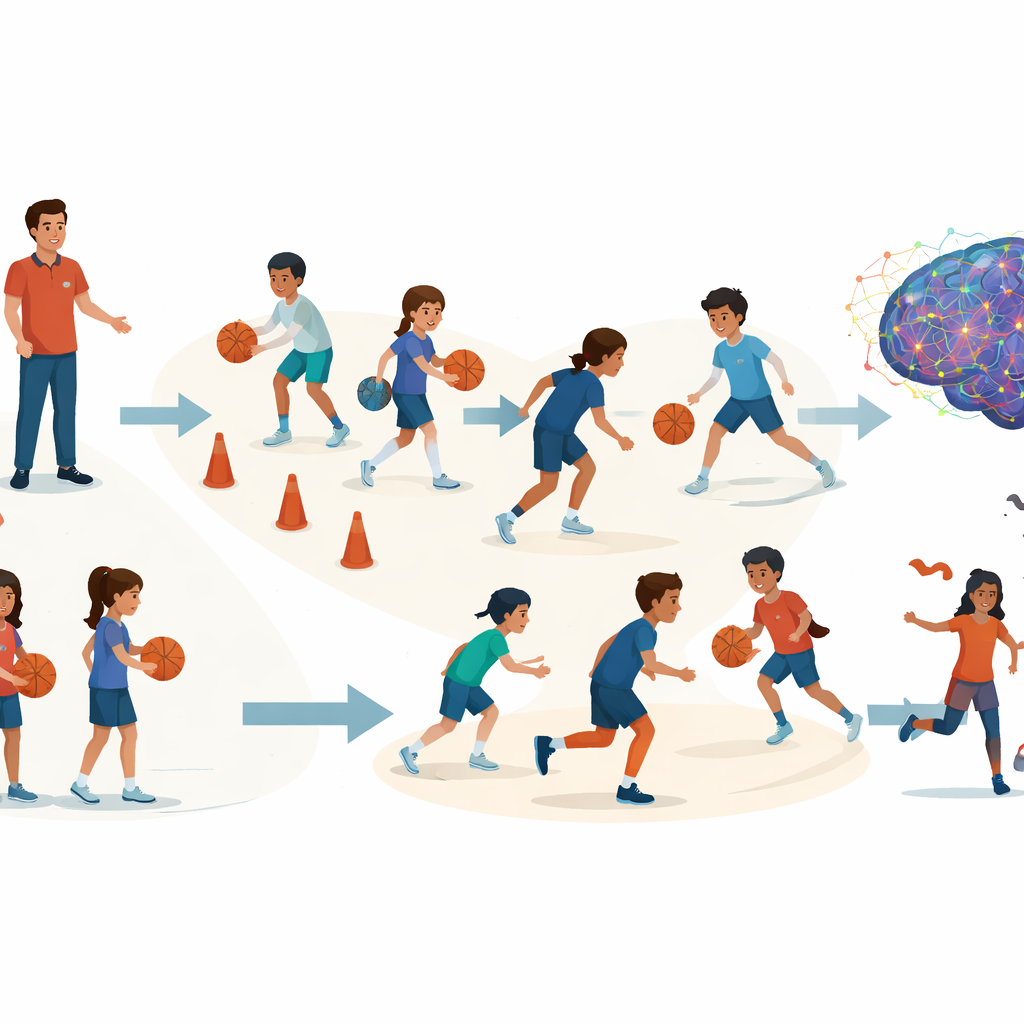
The findings hint that moving more—and moving in demanding, ever-changing game situations like basketball—may help certain mental skills grow alongside muscles and lungs. Basketball forces children to constantly watch teammates and opponents, decide quickly, and adjust movements under time pressure. This kind of rich, unpredictable practice is thought to challenge the brain systems that support planning, flexible thinking, and self-control. In this study, better changes in some fitness measures, such as jumping performance, were linked to better changes in sound-based word generation, suggesting that physical and mental improvements may go hand in hand, even if the exact biological reasons were not directly measured.
What this means for schools and families
For families and educators, the main message is encouraging but cautious. A well-organized, enjoyable after-school basketball program was feasible to run in a regular public school and was associated with children becoming both fitter and quicker at a specific language-related thinking task. However, because the children chose whether or not to join the program and there was no other structured activity for comparison, the researchers cannot say for sure that basketball itself—rather than simply being more active or more engaged after school—caused these gains. Larger, carefully controlled studies are needed to confirm and extend these early results. Still, the study supports the idea that play with purpose, especially in dynamic team sports, may be a powerful ally for both healthy bodies and active minds.
Citation: Campos-Jara, C., Carrasco-Alarcón, V., Araya Sierralta, S. et al. Changes in verbal fluency, anthropometric parameters, physical activity, and physical fitness following an after-school basketball program in children: a pilot study. Sci Rep 16, 13950 (2026). https://doi.org/10.1038/s41598-026-44652-9
Keywords: children, basketball, executive function, physical fitness, after-school programs