Clear Sky Science · en
Choice-induced preference change under a sequential sampling model framework
Why our choices reshape what we like
Imagine choosing between a chocolate bar and an orange that you like equally. Strangely, after you pick one, you may come to like your chosen snack more and the rejected one less. This everyday quirk, known as choice-induced preference change, has been documented for decades. Yet many leading mathematical models of decision making have struggled to explain it. This paper shows how a popular class of models, called sequential sampling models, can naturally produce this preference shift once we let values evolve during the decision itself.

How psychologists usually think about decisions
Much research on decision making looks at simple choices between two options. Before making choices, people often rate how much they like each option. Classic findings show that choices are slower and less predictable when options are similarly attractive, and quicker and more consistent when one option clearly stands out or when both options are highly valued. Choices are also faster when the options differ strongly on key attributes, such as taste versus health for foods. These patterns have been captured very well by sequential sampling models, which imagine the brain gradually collecting noisy pieces of evidence until one option has enough support to cross a decision threshold.
When liking changes after we decide
Choice-induced preference change goes beyond these standard patterns. In many experiments, people rate items, make choices between pairs, and then rate the items again. Typically, the rating of the chosen item rises, the rating of the rejected item falls, and the gap between them widens. This “spreading of alternatives” is strongest for hard decisions—when the initial ratings were close together or less certain—and for choices where each option is strong on different attributes. It also tends to be larger when people decide quickly and feel confident. Simple explanations based purely on measurement noise cannot fully account for these reliable links to difficulty, attributes, and response times.
Letting values evolve during deliberation
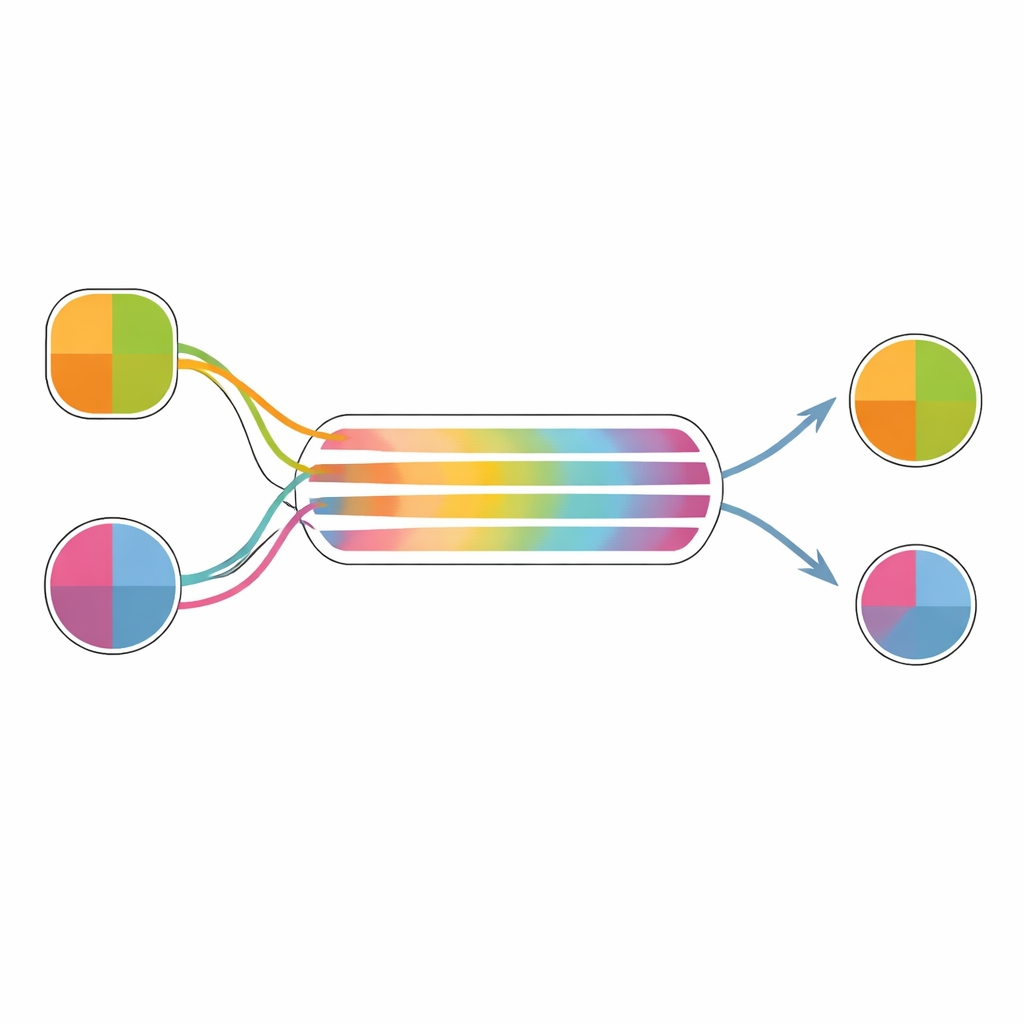
Standard sequential sampling models assume that each option has a fixed underlying value during a decision; the model merely reveals this value by accumulating evidence. Under this assumption, there is no room for values themselves to shift. The authors challenge this by allowing the quality of evidence to change over time. In their framework, early evidence reflects rough prior impressions, while harder decisions prompt the decision-maker to consider additional attributes or information that were not fully weighed at the start. For example, when tastiness alone cannot decide between chocolate and an orange, a person may start to factor in health, tilting the evolving evidence in favor of the orange and altering the internal value gap between the two snacks.
Testing different decision engines on real data
To see whether this idea works in practice, the authors simulated choices using real data from earlier snack-choice experiments. Participants had rated foods on overall value as well as on pleasure and nutrition, then made choices and rated them again. The authors fit three related decision models to each person’s choices and response times: a basic drift–diffusion model that treats value as a single quantity; a multi-attribute version that accumulates evidence separately for pleasure and nutrition; and an extended model in which different attributes start to influence the decision at different times. Using the fitted models, they simulated many decisions and computed an internal measure of preference change based on how much the model’s “final” value difference differed from the one implied by the initial ratings.
What the models reveal about changing minds
All three model variants reproduced the fact that preference spreading is, on average, positive and larger for difficult decisions. The basic model achieved this mainly through noise: when evidence drifts slowly, random fluctuations have more time to push the final value difference away from the initial one. However, only the models that explicitly tracked separate attributes could mimic the empirical finding that preference spreading grows when the options differ strongly in their mix of attributes. These richer models also captured the observed link between faster decisions and larger preference shifts, reflecting that stronger effective evidence both speeds up choices and pushes internal values further apart. Allowing attributes to enter the decision at different times provided the closest qualitative match to the data.
What this means for everyday choices
To a non-specialist, the main message is that we do not simply discover fixed preferences when we choose; we actively refine and sometimes reshape them during the act of choosing. By enriching a well-established decision framework with multiple evolving streams of evidence, this work shows that our post-choice attraction to what we picked can emerge from the same basic process that governs how quickly and reliably we decide. In other words, the mind’s gradual weighing of different attributes not only determines which option wins, it also helps write the story we later tell ourselves about what we like.
Citation: Lee, D.G., Pezzulo, G. Choice-induced preference change under a sequential sampling model framework. Sci Rep 16, 14455 (2026). https://doi.org/10.1038/s41598-026-44610-5
Keywords: decision making, preference change, drift diffusion model, value-based choice, cognitive modeling