Clear Sky Science · en
Mental imagery modulates bistable perception in a modality-specific manner
Seeing with the Mind’s Eye and Ear
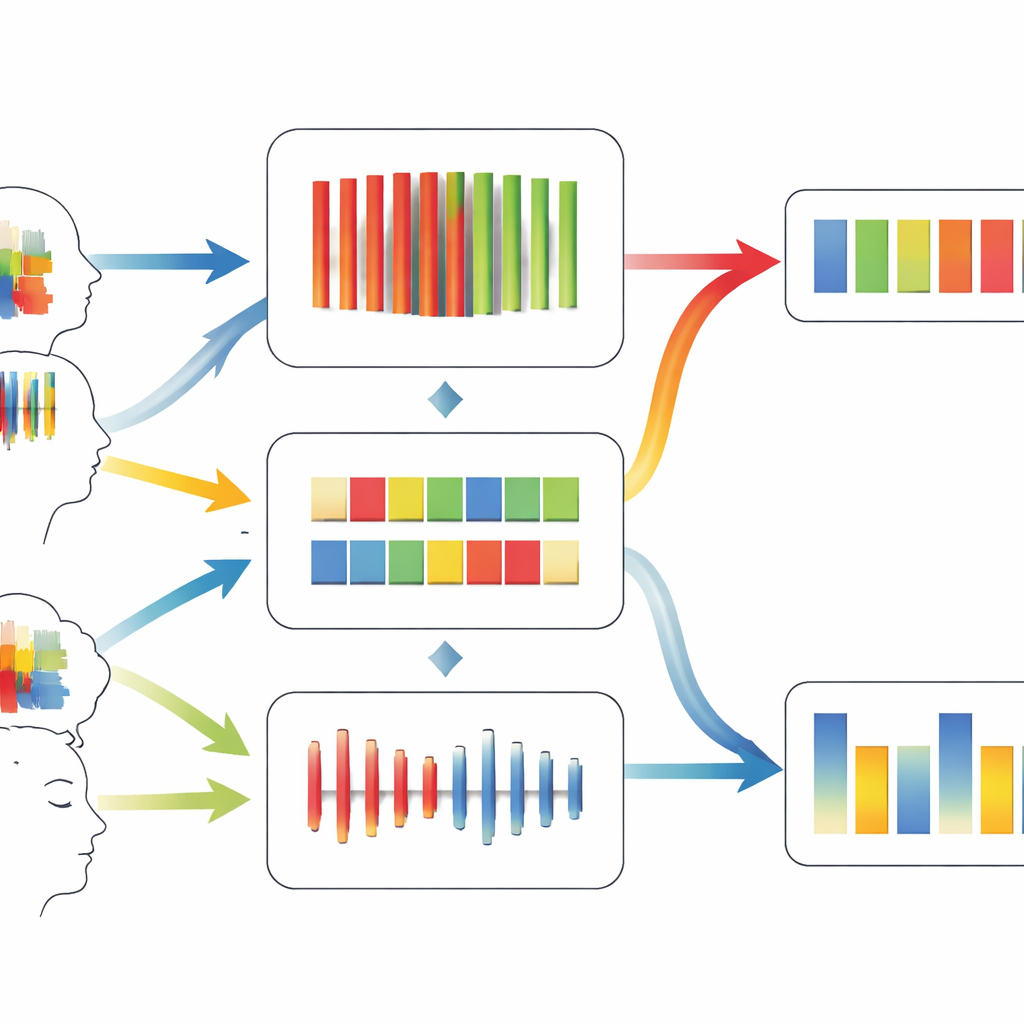
We are all familiar with daydreaming in pictures, but many of us can also vividly replay a song in our heads. This study asks a simple yet deep question: do these inner pictures and inner sounds actually change what we consciously see and hear in the moment? By comparing vision and hearing side by side, the researchers show that mental imagery can nudge visual perception quite strongly, but has a much weaker grip on how we hear ongoing sounds.
When the World Has Two Possible Looks or Sounds
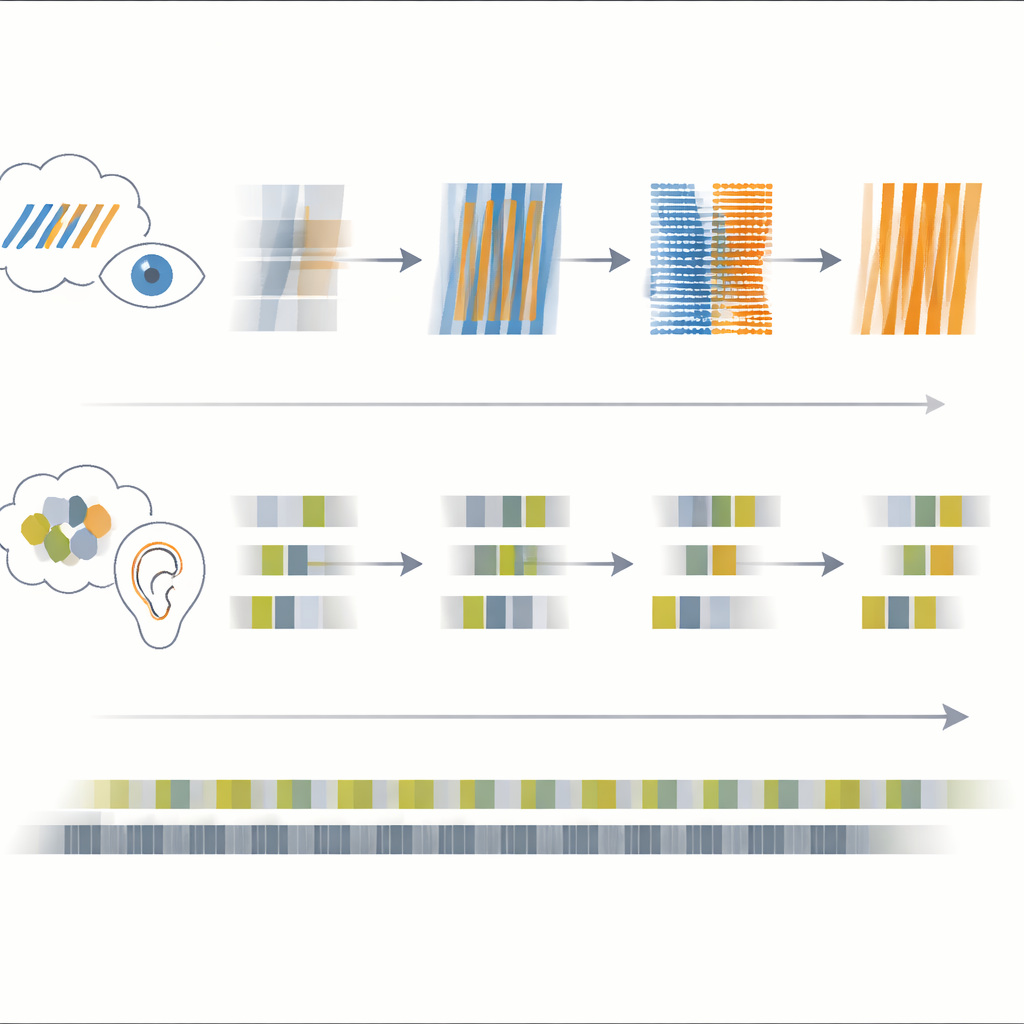
The team focused on “bistable” situations, where an unchanging stimulus can flip between two interpretations. In vision, they used binocular rivalry: each eye saw a set of stripes moving in opposite directions, and perception alternated between the two motions. In hearing, they used auditory streaming: a repeating pattern of two tones could be heard either as one fused stream or as two separate streams. These setups are ideal for probing conscious experience, because the physical input stays the same while perception changes.
Setting the Stage with Real and Imagined Cues
Before presenting these ambiguous sights and sounds, the researchers sometimes gave participants a physical cue (a brief unambiguous stimulus) or an imagery cue (a short cue followed by a period of instructed imagining). In the sound task, hearing a clear sequence that favored segregation made listeners more likely to initially hear two separate streams in the following ambiguous pattern. However, simply imagining that segregated pattern did not have the same effect. In the visual task, both real motion and imagined motion could tilt which direction was seen first once rivalry began, although they did not change how long the chosen percept stuck around.
Timing, Stability, and Individual Differences
By tracking how perception unfolded second by second, the study found that these biases were short-lived and mostly affected the very first moments of seeing or hearing. In auditory streaming, physical cues could briefly overcome a natural tendency to start with a single fused stream, but this advantage faded. Visual rivalry, in contrast, responded readily to both external and internal cues, though again mainly at the onset. Crucially, in the visual task people who reported more vivid mental imagery showed stronger effects of imagery: their imagined motion more often matched the first motion they actually saw. No such link emerged between self-rated auditory imagery vividness and hearing outcomes.
Why Vision and Hearing Behave Differently
The contrast between the two senses suggests that vision and hearing do not treat mental imagery in the same way. Visual rivalry is fast and highly sensitive to slight biases, making it more open to top-down influences like imagery. Auditory streaming seems to build up more slowly and is strongly shaped by a default “integrated first” tendency, which may leave less room for imagined sounds to sway the outcome under the tested conditions. The authors argue that these differences reflect distinct internal dynamics and memory systems in the two senses, rather than a single, shared imagery mechanism.
What This Means for Everyday Experience
Put simply, the study shows that mental imagery can meaningfully bias what we see, especially at the moment a new visual scene is resolved, and that people with stronger visual imagery feel this influence more. For hearing, under these particular experimental constraints, inner sound had much less measurable impact. This suggests that the mind’s eye and mind’s ear do not play identical roles in shaping conscious perception. Understanding these modality-specific effects helps scientists build richer models of how internal ideas and expectations join with incoming sensory information to create our lived experience.
Citation: Verebélyi, L., Welker, Á., Kovács-Deák, K. et al. Mental imagery modulates bistable perception in a modality-specific manner. Sci Rep 16, 14230 (2026). https://doi.org/10.1038/s41598-026-44578-2
Keywords: mental imagery, binocular rivalry, auditory streaming, bistable perception, conscious perception