Clear Sky Science · en
Association between total dietary sugar intake and gallstones in Americans
Why sugar and stomach stones matter
Many people know that eating too much sugar can harm the heart or raise diabetes risk, but few realize it may also affect the small organ that stores bile for digestion. This study asks a simple but important question: are adults who eat more sugar more likely to develop gallstones, a common cause of belly pain and surgery?
What the researchers wanted to learn
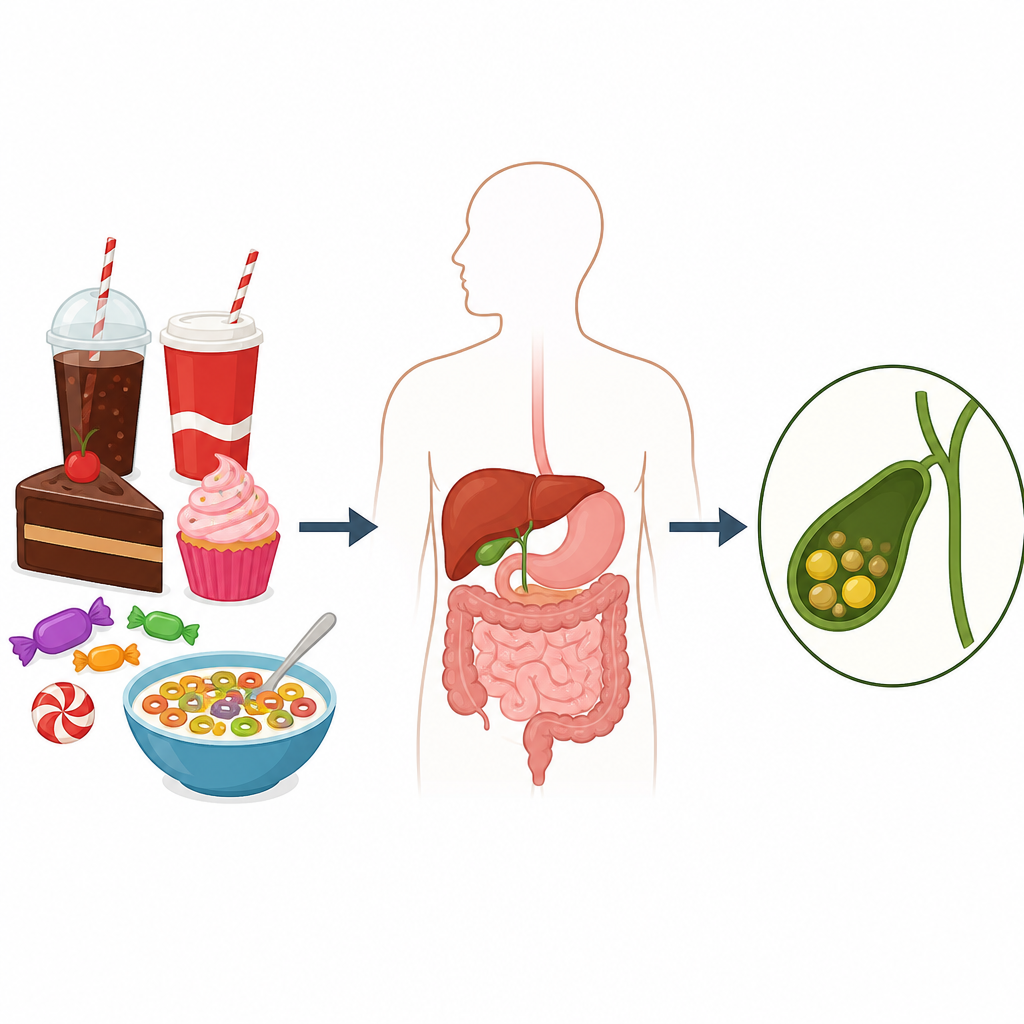
Gallstones are tiny, pebble-like deposits that form in the gallbladder and can trigger severe pain, infections, and hospital visits. They already affect up to one in five adults worldwide and are becoming more common. At the same time, high sugar diets, rich in sweet drinks, desserts, and processed foods, are widespread in Western countries. While past work linked sugar to obesity, fatty liver, and heart disease, no large population study had clearly tested whether total sugar intake is tied to gallstones. The authors set out to fill this gap using detailed national health data and modern computer methods.
How the study was done
The team used information from nearly nine thousand adults who took part in the U.S. National Health and Nutrition Examination Survey between 2017 and 2023. Each person completed two in depth 24 hour diet recalls with trained interviewers, allowing the researchers to estimate the average amount of sugar eaten per day. Gallstone status came from participants reporting whether a health professional had ever told them they had gallstones. The researchers also collected many other details, including age, sex, body weight, income, smoking, drinking, physical activity, long term illnesses such as diabetes and high blood pressure, and overall calorie intake. They then used statistical models to test whether people who consumed more sugar had higher odds of reporting gallstones, while taking these other factors into account.
What the numbers showed
After full adjustment for age, sex, lifestyle, body size, and health conditions, higher sugar intake was linked to clearly higher gallstone risk. For every extra 100 grams of sugar per day roughly the amount in several cans of sweetened soda the odds of having gallstones were about 41 percent higher. When the researchers divided people into four groups from lowest to highest sugar intake, those in the two highest groups had 37 and 68 percent higher risks than those in the lowest group, showing a dose response pattern. A more flexible type of analysis, which allows the curve to bend, suggested that risk climbs steadily as sugar intake rises, especially up to about 150 grams per day, with no sharp safe threshold.
Taking a closer look with smart computers
To go beyond standard statistics, the team built a machine learning model called XGBoost, which is designed to find complex patterns in large data sets. Because far fewer people had gallstones than did not, they used a technique that balances the groups before training the model. Tested on unseen data, the model showed strong skill at distinguishing who had gallstones and who did not. An interpretation tool known as SHAP was then used to rank which features mattered most. Age, sex, and body mass index were the top predictors, as expected, but sugar intake still ranked sixth and clearly pushed the model toward predicting gallstones at higher levels. A related plot showed that gallstone risk climbed quickly as sugar intake increased to about 150 grams per day and then rose more slowly, hinting at a saturation point or other real world influences.
Why sugar might encourage stones
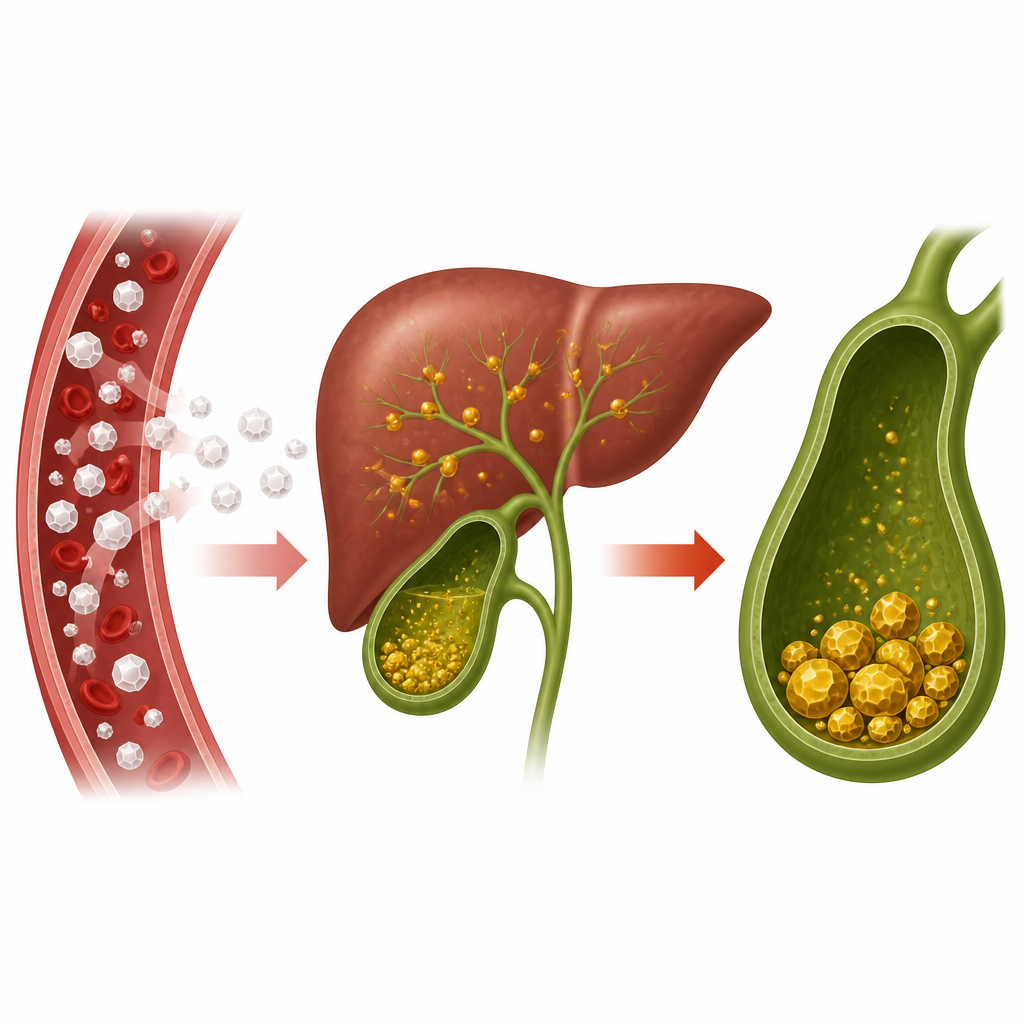
Although the study cannot prove cause and effect, existing biology offers several clues. Eating large amounts of sugar, especially refined sugar and fructose, can cause spikes in blood sugar and insulin. This can drive the liver to make more cholesterol and pump it into bile, making bile thicker and more likely to form crystals. Long term high sugar intake also promotes weight gain and resistance to insulin, slows emptying of the gallbladder, and may increase low level inflammation and damage in the gut and gallbladder wall. Together these changes can set the stage for small crystals in bile to grow into solid stones. On the other hand, some very high sugar diets may include many fruits that supply fiber and vitamins, which could slightly soften the risk pattern seen at the highest intakes.
What this means for everyday life
For the average reader, the takeaway is straightforward: in this large sample of U.S. adults, people who ate more sugar were more likely to report gallstones, even after accounting for weight, diabetes, and other familiar risk factors. Because the research is cross sectional and based on self reported diagnoses and short term diet recalls, it cannot show that sugar directly causes gallstones, and some people with early symptoms may already have cut back on sweets. Still, the findings add one more reason to be cautious about high sugar eating habits and support efforts to reduce added sugars as part of a broader approach to protecting digestive health. Future long term and laboratory studies will be needed to confirm how sugar intake shapes gallstone risk over time.
Citation: Zhang, J., Lu, Y., Zhou, X. et al. Association between total dietary sugar intake and gallstones in Americans. Sci Rep 16, 15013 (2026). https://doi.org/10.1038/s41598-026-44407-6
Keywords: dietary sugar, gallstones, NHANES, machine learning, digestive health