Clear Sky Science · en
An urban bryophyte hotspot in an industrial city: the case of Ostrava Zoo (Czech Republic)
Hidden Green Life in an Industrial City
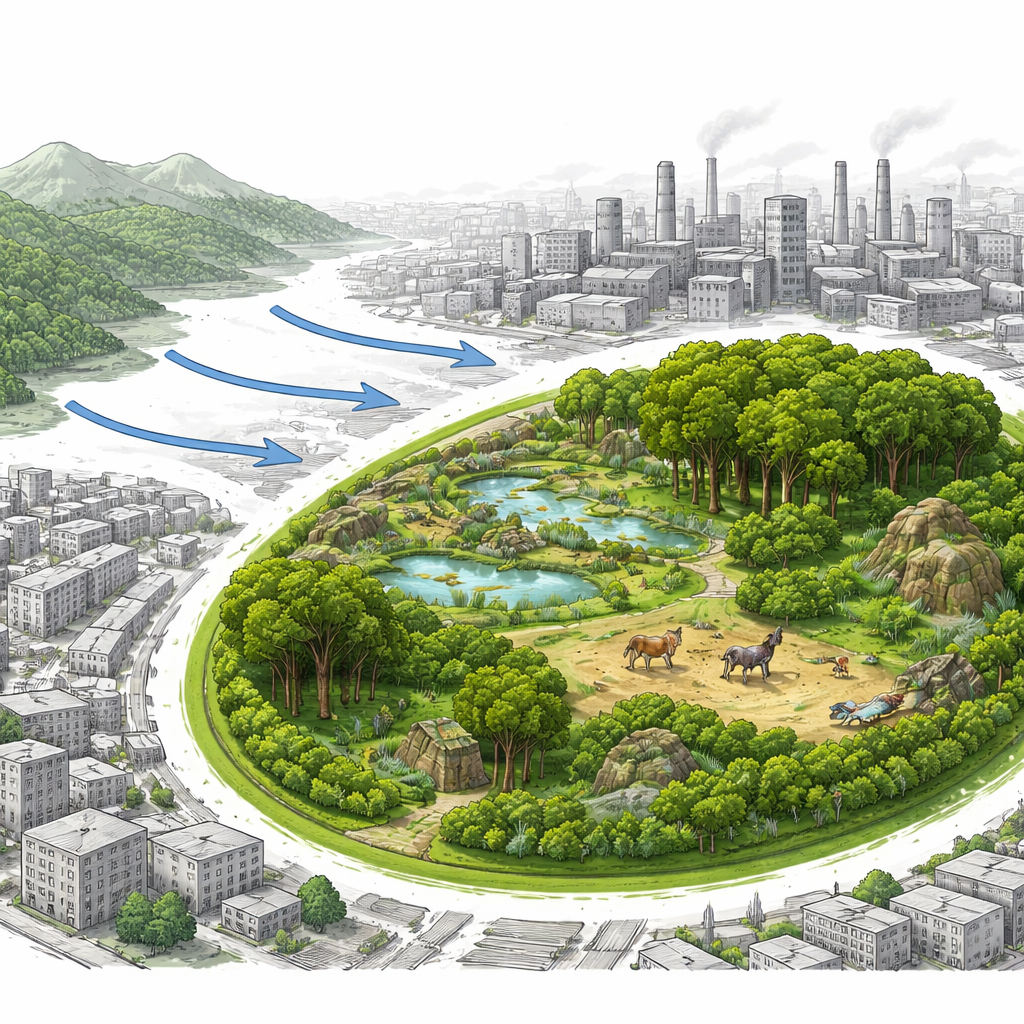
When people visit a zoo, they usually focus on lions, giraffes or penguins. Yet underfoot and on tree trunks, tiny mosses and liverworts – together called bryophytes – are quietly telling a different story about nature in the city. This study shows that Ostrava Zoo, in the heart of a heavily industrial region of the Czech Republic, has become an unexpected oasis for these small plants, rivaling nearby mountain reserves in richness and serving as a crucial link for plant life moving through an urban landscape.
A Small Oasis with Big Diversity
Researchers surveyed bryophytes across the entire Ostrava Zoo between 2021 and 2024. On an area of less than one square kilometre they documented 129 different kinds, including 18 liverworts and 111 mosses – numbers comparable to those in protected mountain reserves of the Moravian–Silesian Beskids. Some species are common and widespread, but others are locally rare and had not been reported from other parts of the city. This means the zoo is not just a pleasant park; it is a true hotspot of plant diversity embedded in a landscape long shaped by coal mining, steelworks and heavy industry.
Trees, Wet Corners and Walls as Tiny Worlds
The secret behind this richness lies in how many different micro-worlds the zoo contains. Old beech forest, stream corridors and wetlands, shaded valleys, sunlit grasslands, and enclosures with bare, regularly disturbed soil all sit side by side. On top of that, there is an abundance of man‑made surfaces – concrete walls, paths, decorative stonework and thatched roofs – that act like substitute cliffs and rocks. Each surface offers its own mix of moisture, shade and chemistry, so different bryophyte species can find just the right niche. Some form soft mats in damp forest soil, others cling to rotten logs, and many spread across concrete or stone where a little roughness and retained moisture allow them to gain a foothold.
Mosses as Air-Quality Testers
One of the most striking findings is how many bryophyte species now live on tree bark inside the zoo. A total of 38 species were recorded growing as epiphytes, a group that historically suffered in polluted industrial cities because they absorb water and nutrients directly from the air. Their strong return in Ostrava indicates that air quality has improved considerably over recent decades. The presence of old, healthy trees – some around 150 years old – further helps these sensitive species persist, because mature trunks provide stable, rough, and well‑shaded surfaces over long periods of time.
Carried by the Wind Across the Region
While local habitat is important, many of the zoo’s bryophytes have likely arrived from farther away. The team used atmospheric models to trace how air masses move during the growing season. These back‑trajectories show that prevailing winds frequently travel from the bryophyte‑rich Beskid reserves toward the zoo and across other semi‑natural patches around Ostrava. Because bryophyte spores are tiny and easily lifted into the air, they can ride these winds over tens of kilometres. Once they reach the city, the zoo’s mix of stable forest, moist corners and freshly disturbed soil provides plentiful safe landing spots where some of these spores can germinate and form new colonies.

A Stepping Stone for Urban Nature
Putting these strands together, the study concludes that Ostrava Zoo functions as much more than a collection of animal enclosures. It acts as a refugium where a surprisingly rich bryophyte community can persist in spite of the surrounding industry, and as a stepping stone that helps connect mountain and lowland populations across an otherwise fragmented urban matrix. For non-specialists, the key message is that carefully managed urban green spaces – especially those with old trees, varied wet and dry corners, and even thoughtfully kept walls and roofs – can support an often overlooked but ecologically important layer of biodiversity. Protecting and enhancing such habitat mosaics in cities may be a simple, effective way to help small plants, and the many organisms that depend on them, weather the pressures of pollution, climate change and habitat loss.
Citation: Plášek, V., Wolski, G.J., Stachová, S. et al. An urban bryophyte hotspot in an industrial city: the case of Ostrava Zoo (Czech Republic). Sci Rep 16, 13515 (2026). https://doi.org/10.1038/s41598-026-44318-6
Keywords: urban mosses, biodiversity hotspots, zoological gardens, spore dispersal, industrial landscapes