Clear Sky Science · en
Revealing seasonal dietary niche overlap among sympatric large carnivores using DNA metabarcoding
Why this story of lions and hyenas matters
When we picture African savannas, we often think of roaring lions, laughing hyenas, and great herds of hoofed animals. But as people, livestock, and climate pressures reshape these landscapes, how these big meat-eaters share their food can make or break both wildlife and local livelihoods. This study peeks into an unusual source of information—carnivore droppings—to reveal what lions and spotted hyenas are really eating across wet and dry seasons in Namibia, and what that means for their coexistence with each other and with people.
Following footprints in a dryland park
Researchers worked in the Greater Etosha Landscape of north-central Namibia, a semi-arid region that includes a large national park, a private game reserve, and nearby communal lands where people keep cattle, goats, and sheep. In this mosaic, wild herbivores like zebras, springbok, wildebeest, and gemsbok live alongside livestock and top predators. Because these carnivores are increasingly confined to protected areas, understanding how they use prey in this shared landscape is key to managing conflict and conserving both predators and their food base.
Reading diets from DNA in scat
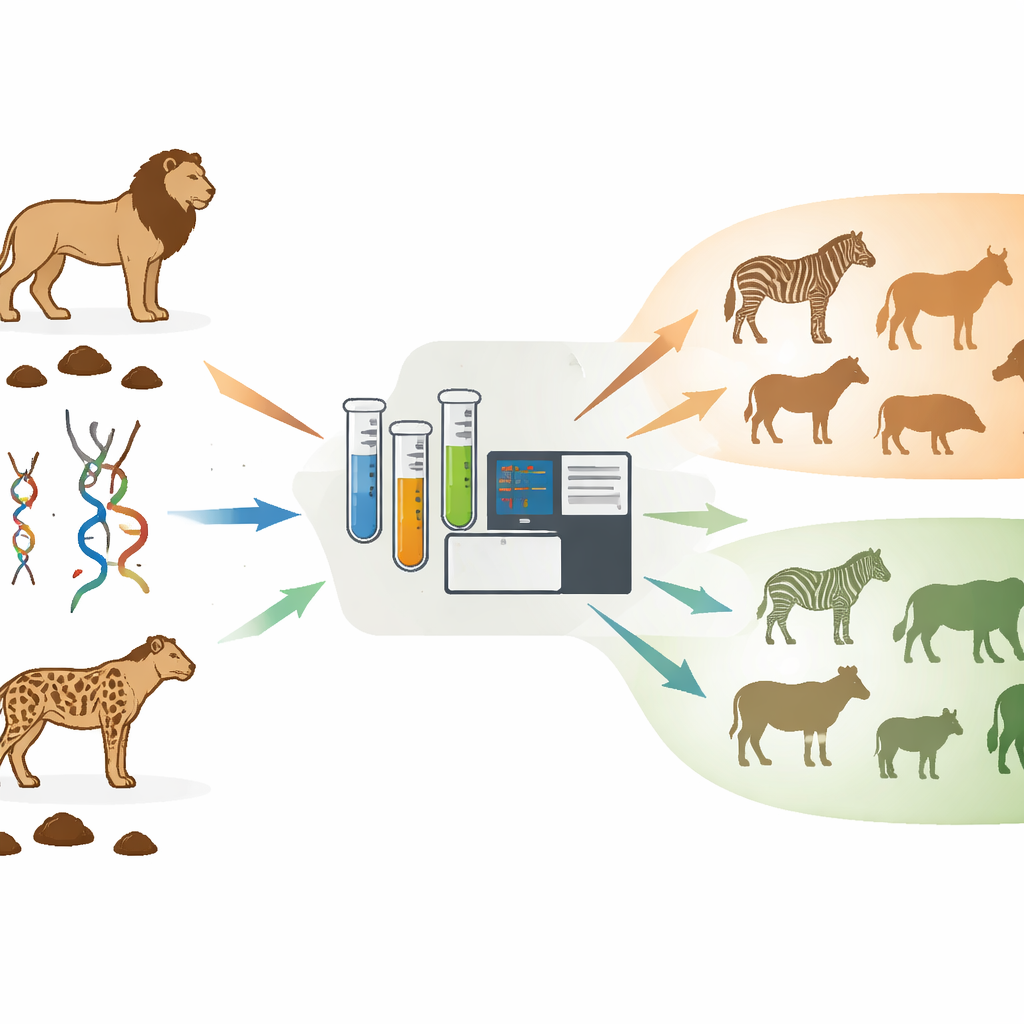
Instead of sorting bones and hair by eye, the team turned to DNA metabarcoding, a technique that reads tiny genetic fragments left in feces. They collected 164 lion and hyena droppings between 2021 and 2024; 98 contained enough prey DNA to analyze. Using a short genetic marker that works across vertebrates, they matched sequences against reference databases to identify which animals were eaten. This approach offers finer detail than traditional methods and can detect prey that leave few hard remains, while also confirming whether a sample came from a lion or a hyena.
Who is eating whom across the seasons
The genetic sleuthing revealed 19 vertebrate prey species in total, mostly large hoofed mammals. Lions most often ate gemsbok, eland, plains zebra, and blue wildebeest, with similar patterns in both wet and dry seasons. Spotted hyenas also focused on large ungulates, especially plains zebra, gemsbok, and springbok, and even included critically endangered black rhinoceros in their diet. Hyenas were detected eating domestic cows and goats near the park’s northeastern edge, highlighting points where wild predators and human livelihoods collide. Despite small differences in which species topped the menu, statistical tests showed no strong seasonal shift in diet for either predator.
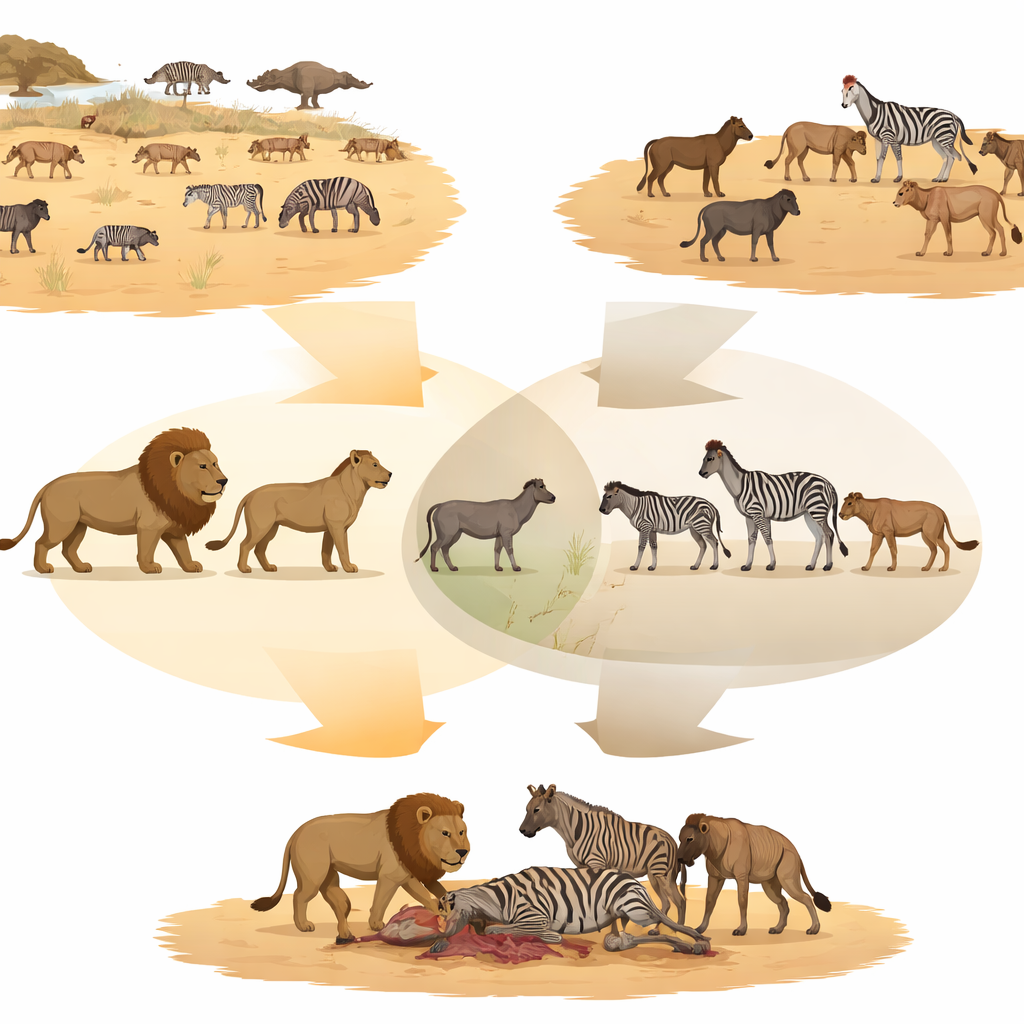
Sharing the buffet rather than splitting it
To understand how narrowly or broadly each predator fed, the researchers calculated dietary “breadth” and how much their menus overlapped. Both lions and hyenas turned out to be flexible feeders that used a range of prey, with lions showing slightly broader diets overall, especially in the dry season in some areas. In both species, diets were broader in the wet season, when newborn herbivores are abundant and animals spread out from permanent waterholes, likely forcing predators to be less choosy. Measures of overlap showed moderate to high sharing of prey, with most species eaten by hyenas also appearing in lion diets. Rather than dividing prey neatly by kind, the two carnivores seem to rely on much of the same buffet, probably aided by scavenging and stealing from each other’s kills.
What this means for wildlife and people
For a general reader, the main takeaway is that lions and spotted hyenas in this Namibian dryland do not separate their food resources as much as one might expect from such fierce rivals. They largely hunt and scavenge from the same pool of large herbivores, adjusting their variety of prey slightly with the seasons. This close overlap means that changes in wild ungulate numbers or landscape use—through drought, disease, or human pressure—could ripple through both species at once. The detection of livestock in hyena diets signals hotspots of human–wildlife conflict that need careful management. By using DNA traces in scat, researchers can now track these dietary patterns with high accuracy over time, offering an important tool for safeguarding predators, their prey, and the people who share their landscapes.
Citation: Patterson, J.R., Périquet-Pearce, S., Melton, M.H. et al. Revealing seasonal dietary niche overlap among sympatric large carnivores using DNA metabarcoding. Sci Rep 16, 13590 (2026). https://doi.org/10.1038/s41598-026-43423-w
Keywords: African lions, spotted hyenas, diet overlap, DNA metabarcoding, Etosha Namibia