Clear Sky Science · en
Study on the impact of urban underground public space expansion on near-ground carbon monoxide concentrations
Why Going Underground Matters for City Air
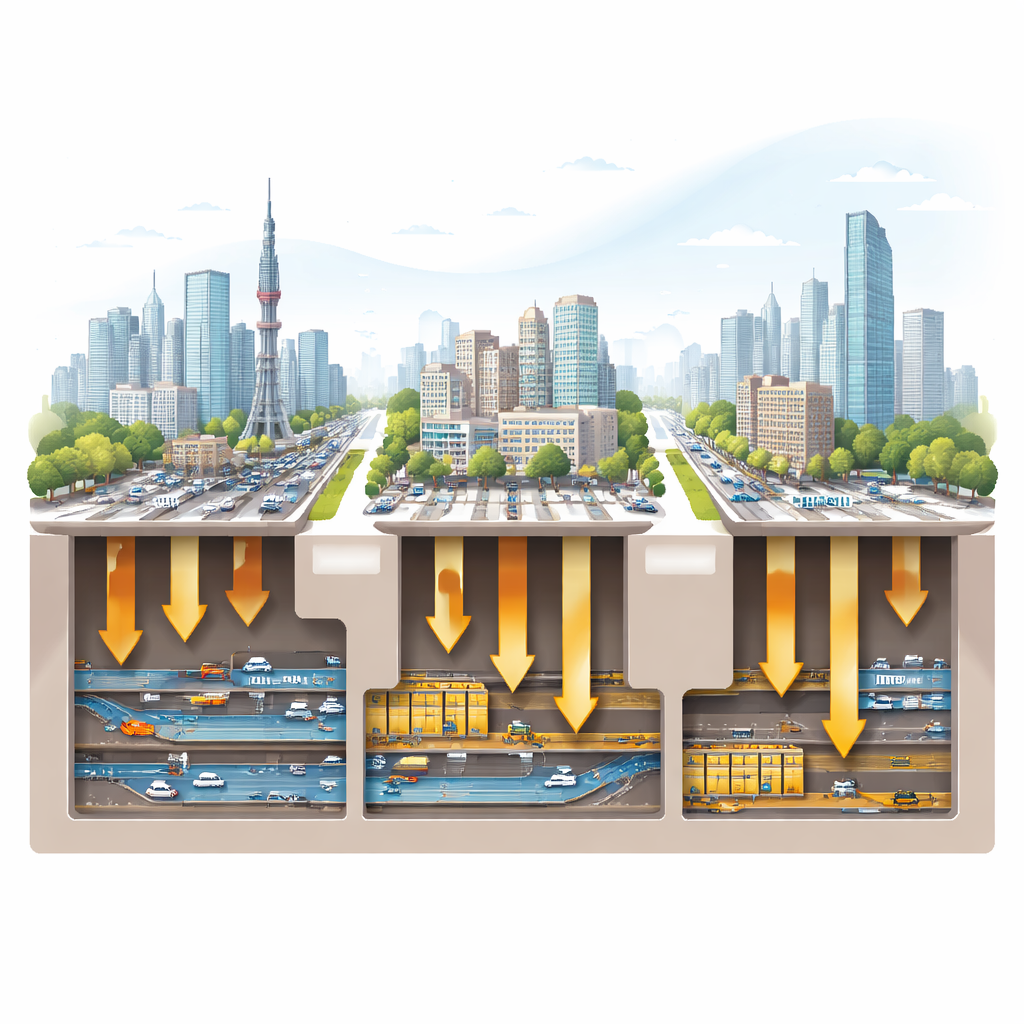
As cities around the world grow taller and more crowded, they are also running out of room at street level. To cope, many have begun building downward, adding subways, underground malls, tunnels, and parking garages. This study asks a simple but important question: when we move more of city life underground, does the air we breathe at ground level actually get cleaner—specifically, does the amount of carbon monoxide, a harmful gas from vehicles, go down?
Hidden Spaces Under Busy Streets
The authors focus on what they call underground public space—places beneath our feet that anyone can use, such as metro stations, underground shopping streets, sunken plazas, and parking garages. Unlike pipes or deep utility tunnels, these spaces are closely tied to daily travel, shopping, and work. Because they can host transit lines and walkable networks, they have the potential to shift people and traffic away from surface roads. That shift could reduce tailpipe emissions exactly where people breathe the most: in the near-ground layer of air along sidewalks, crossings, and city streets.
Three Cities, Many Years of Data
To see how this plays out in the real world, the researchers examined three large Chinese cities—Shanghai, Chengdu, and Jinan—that represent different landscapes and stages of underground development. Shanghai sits on a flat coastal plain and has a long-established underground network. Chengdu lies in a basin with poorer natural ventilation but has been rapidly building underground systems. Jinan is squeezed between mountains and a river, with more limited air circulation and a younger, patchier underground network. Using map-based "points of interest" that mark underground facilities, the team tracked where and how quickly underground public space expanded in each city between 2015 and 2022.
Turning Digital Traces into a Pollution Map
The study combines these underground-location data with a high-resolution map of carbon monoxide concentrations created from ground sensors, satellites, and atmospheric models. The researchers divided each city into a fine grid of squares one kilometer on a side and counted how many underground facilities appeared in each square over time. They then compared changes in carbon monoxide across areas with different growth levels in underground space—from zones with no new development to those with rapid underground expansion—while using statistical models to filter out the influence of local geography and broad year-to-year trends.
Cleaner Air, with Local Twists
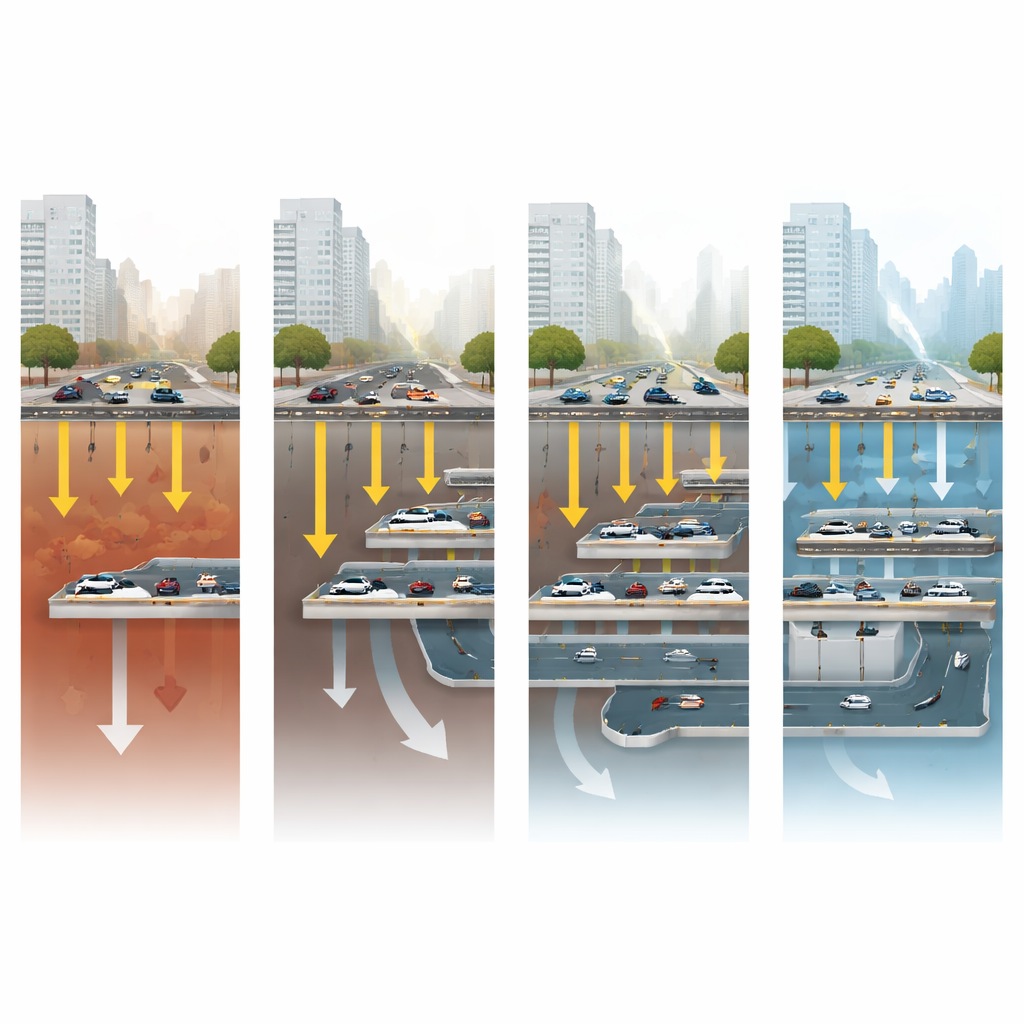
Across all three cities, places where underground public space grew tended to experience larger drops in carbon monoxide than places that stayed unchanged. In Shanghai and Chengdu, grid cells with fast underground growth showed the sharpest declines, and the statistical model confirmed a strong, consistent link: more underground sites were associated with lower carbon monoxide at ground level. Jinan told a more complicated story. There, each additional underground facility was linked to a relatively strong local reduction in carbon monoxide, but the overall improvement in its fastest-growing areas was smaller than in the other two cities. The authors suggest that Jinan’s constrained valley-like shape, heavier industrial background, and still-fragmented underground network blunt the broader air-quality benefit.
What This Means for Future Cities
For non-specialists, the main takeaway is straightforward: building well-connected underground networks—especially transit lines and linked commercial passages—can do more than ease traffic and save land. It can also help clear the air we breathe at street level by drawing vehicles and activity away from the surface and reshaping travel patterns. Yet the payoff depends on local conditions such as terrain, industry, and how mature and continuous the underground system is. Thoughtful planning that fits each city’s setting is key if going underground is to become a reliable tool for cleaner, healthier urban air.
Citation: Zhuang, G., Qiu, P., Pang, L. et al. Study on the impact of urban underground public space expansion on near-ground carbon monoxide concentrations. Sci Rep 16, 12508 (2026). https://doi.org/10.1038/s41598-026-42950-w
Keywords: underground public space, urban air quality, carbon monoxide, public transit, city planning