Clear Sky Science · en
Prevalence and associated risk factors with overweight, obesity and abdominal obesity among women of childbearing age residing in Nouakchott, Mauritania
Why This Matters for Everyday Life
Across the globe, more and more women are gaining excess weight, and this trend is especially strong in many African cities. This study looks closely at women living in Nouakchott, the capital of Mauritania, and shows just how common weight gain and belly fat have become among women in their prime childbearing years. Understanding what drives this pattern is important not only for the women themselves, but also for their children and families, because a mother’s health strongly shapes the health of the next generation.
Women, City Living, and Changing Bodies
The researchers focused on 1,166 women aged 15 to 49 who live in different districts of Nouakchott. In Mauritania, heavier body size, especially among Arab-Mauritanian women, has long been linked with beauty, social status, and even marriage prospects. Against this backdrop, the team wanted to know how many women are now overweight or obese, how many have excess fat around the waist, and which life circumstances are most closely tied to these patterns. They combined in-home interviews about diet, schooling, work, and daily habits with careful measurements of weight, height, waist, and hips.
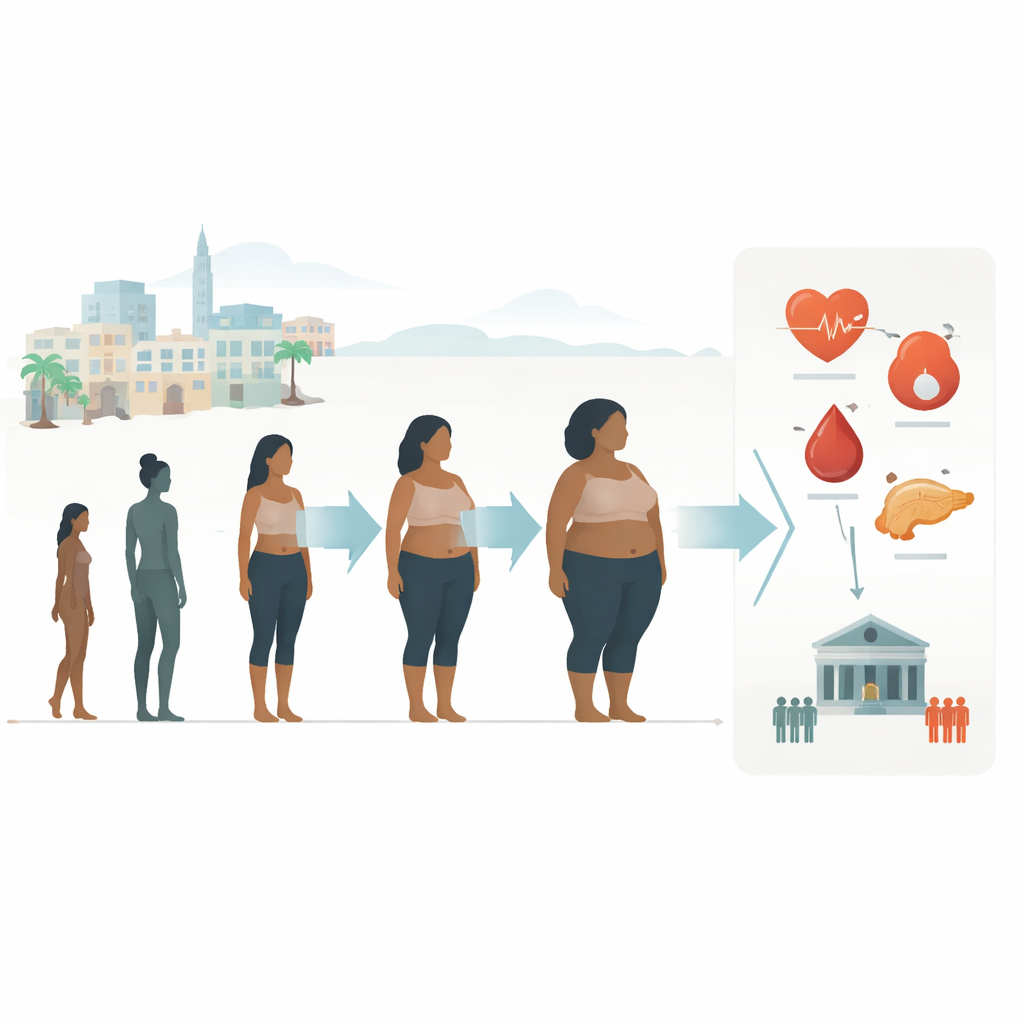
What the Numbers Reveal About Weight
The picture that emerged is striking. About seven in ten women were either overweight or obese. Roughly one in three was overweight, while nearly four in ten were already in the obese range. When the researchers looked specifically at belly fat, the results were even more alarming: more than eight out of ten women had a waist size linked to higher risk of disease, and about two-thirds had an unhealthy waist-to-hip balance. These high levels were seen across the city and rose sharply after the age of 20, then stayed high through the thirties and forties. Such central fat around the abdomen is known to raise the chances of heart disease, diabetes, high blood pressure, and other long-term illnesses.
Life Stages, Schooling, and Daily Routines
Age and marital status stood out as powerful influences. Compared with teenagers, women in their late teens and twenties, thirties, and forties were several times more likely to be overweight, obese, or to have abdominal obesity. Married and divorced women faced higher odds of weight problems than single women, reflecting in part the changes in lifestyle, repeated pregnancies, and cultural expectations that often follow marriage. Schooling also mattered: women with little or no formal education were more likely to carry excess weight and belly fat than those who had gone on to higher education, suggesting that awareness of healthy eating and disease risks may be limited for many. Surprisingly, time spent in front of a screen did not show the clear link with obesity seen in some other countries, possibly because other types of resting time and local habits play a larger role than television or phone use alone.
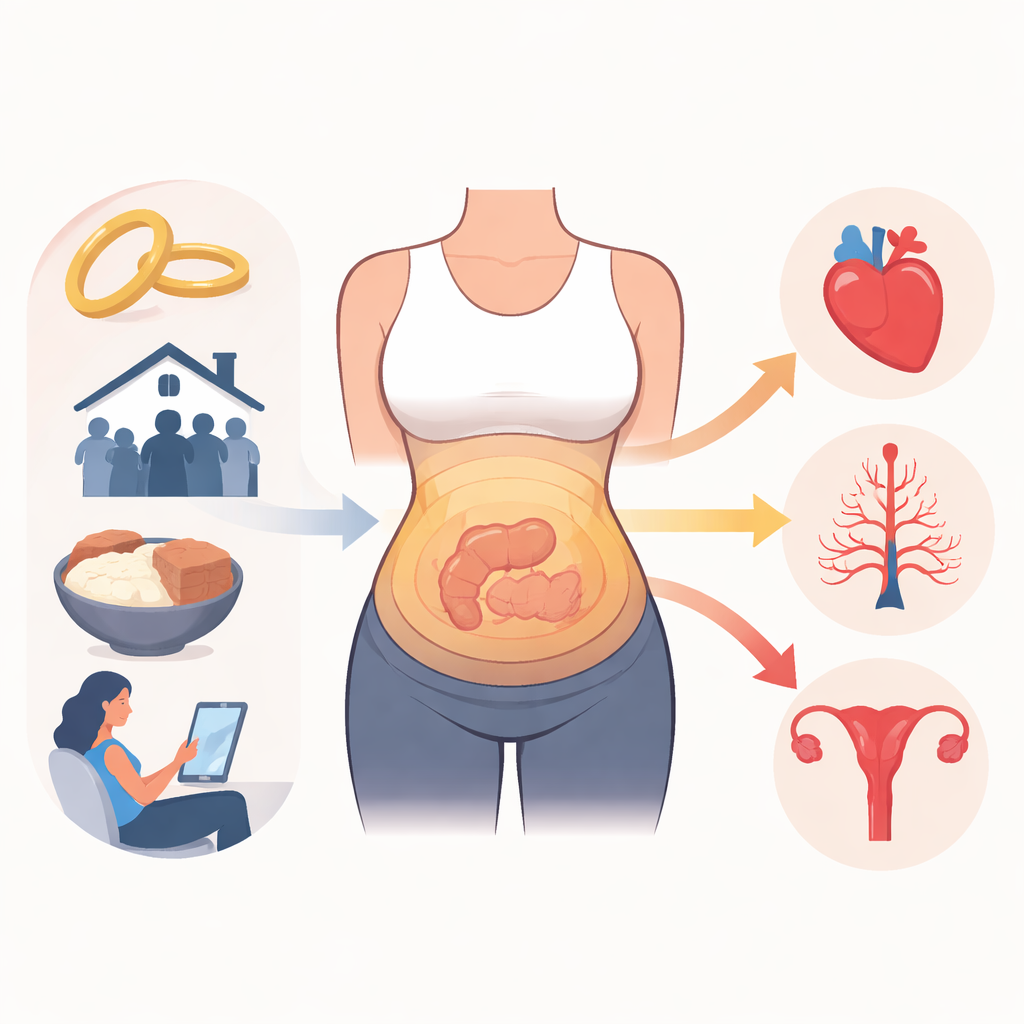
Food, Culture, and Money
The study points to a mix of diet, culture, and household economics behind these trends. Many women rely heavily on large portions of starchy staples such as rice, wheat, and corn, while being only lightly active. In some communities, young girls are even encouraged or pressured to eat excessively to achieve a larger body size, sometimes using risky medicines or appetite stimulants. Households with more income sources tended to have more obesity, probably because added purchasing power makes calorie-dense foods easier to obtain and because a larger body is often seen as a visible sign of comfort and prosperity. At the same time, the lack of a national strategy to prevent obesity means that few structured programs exist to help women adopt healthier habits.
What This Means for Women and Families
For a layperson, the core message is simple and sobering: in Nouakchott, most women of childbearing age are now living with excess weight, and especially with dangerous belly fat, and this is closely tied to getting older, being married, and having limited schooling. Because these conditions raise the risk of serious diseases and can complicate pregnancy and childbirth, the findings signal an urgent need for action. The authors argue that health policies should speak directly to women in this age group, in their own languages and cultural context, to encourage more balanced diets, more physical movement in daily life, and a shift away from seeing extreme weight as a sign of beauty or success. By doing so, Mauritania could help protect the health of today’s women and the children they will bring into the world.
Citation: Issa, M.Y., Diagana, Y., Khalid, E.K. et al. Prevalence and associated risk factors with overweight, obesity and abdominal obesity among women of childbearing age residing in Nouakchott, Mauritania. Sci Rep 16, 12908 (2026). https://doi.org/10.1038/s41598-026-42225-4
Keywords: women’s health, obesity, abdominal fat, urban Africa, reproductive age