Clear Sky Science · en
Artificial intelligence perceptions and career anxiety among health sciences students
Why this topic matters to students and parents
As artificial intelligence quietly spreads into hospitals, clinics, and offices, many young people are asking a simple question: will there still be a place for me? This study looks at that question through the eyes of health sciences students in Turkey, exploring how their worries about AI connect to their fears about finding a job after graduation. The results show that AI is not just a new tool; it is also a source of very real emotional stress about the future.
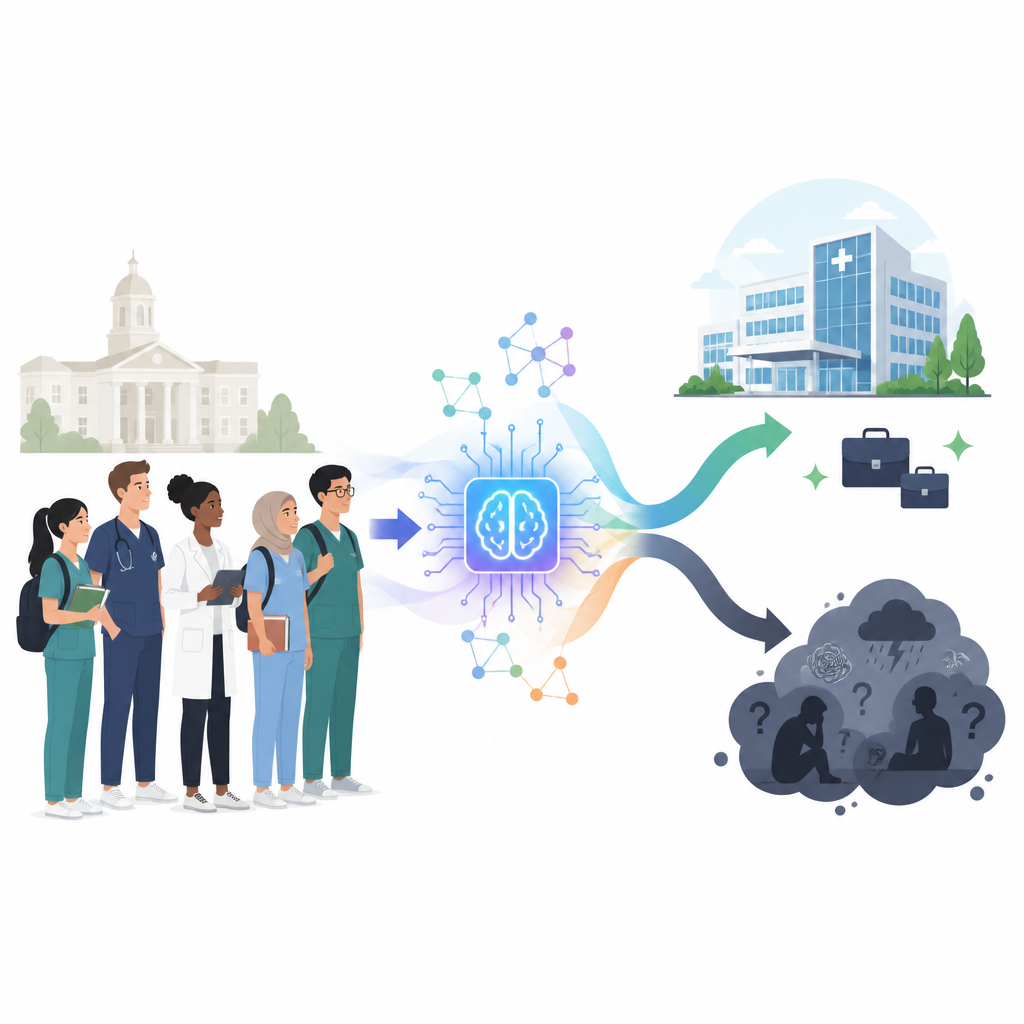
Looking at student worries in the age of smart machines
The researchers surveyed 821 students from different health-related programs, including nursing, physical therapy, midwifery, speech and language therapy, medical secretarial work, health management, and pharmacy services. Using standard questionnaires, they measured two things: how anxious students felt about AI in general and how worried they were about getting a job after they finished school. Most participants were young women in associate or bachelor’s programs, reflecting the current makeup of health sciences education in Turkey.
How job fears and AI fears move together
On average, students reported moderate anxiety about AI and slightly higher anxiety about job hunting. When the researchers compared these scores, they found a clear pattern: students who were more anxious about AI also tended to be more anxious about finding work. This link was statistically meaningful, even though it was only moderate in strength. In other words, fear of AI was not the only source of job worries, but it added noticeable extra weight to students’ overall stress about their careers.
The role of money, education, and field of study
The team also looked at how background factors shaped these worries. Students from departments that may feel more exposed to automation showed different levels of job search anxiety than those in other fields. Income made a difference too: students who reported better financial situations tended to feel less anxious about their job search, suggesting that money cushions some of the pressure of entering a changing labor market. Interestingly, students at higher educational levels often worried more, perhaps because they were closer to graduation and more aware of rising competition and the impact of AI on health jobs.
From technology fear to career stress
To make sense of these patterns, the authors drew on a classic stress and coping model, which says that stress depends less on the threat itself and more on how people see that threat and their ability to handle it. For these students, AI is often viewed as a possible rival that could take over routine tasks or favor workers with advanced digital skills. When students doubt their own skills or feel they lack guidance, that view turns into a sense of threat and uncertainty about employability. The study suggests that AI anxiety is not just about disliking new gadgets; it is a specific form of stress tied to feeling unprepared for a technology-shaped job market.
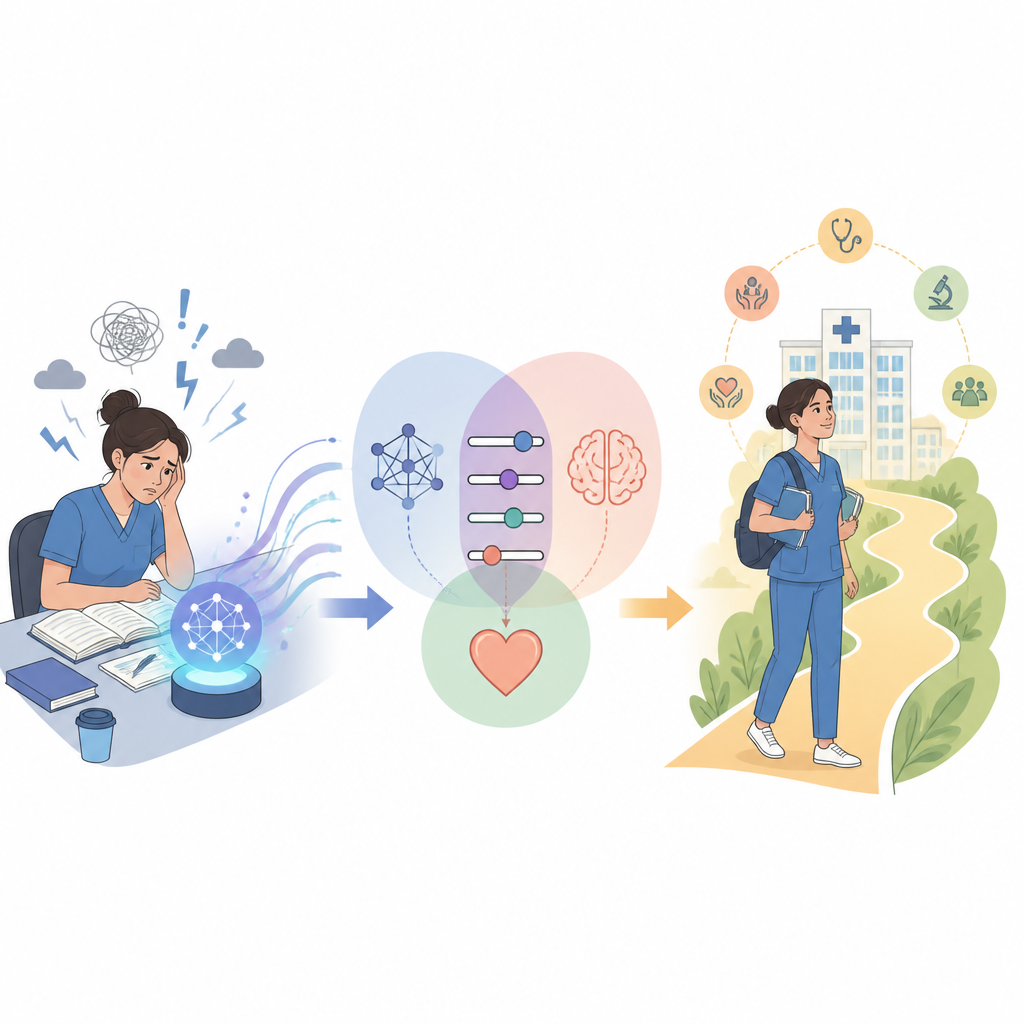
What schools can do to ease the path forward
The authors argue that universities and health programs can ease this tension by helping students see AI as a partner rather than a competitor. This includes building AI literacy into courses, offering practical experiences with AI-based tools, and expanding career counseling that explains how jobs are changing and which skills will stay in demand. Special support for low-income students, who may struggle to access digital training, is also important. By improving students’ sense of control and competence, these steps could reduce job search anxiety and help the next generation of health professionals enter the workforce with more confidence, even as smart machines become a normal part of care.
Citation: Dağ, E., Nal, M., Topuz, İ. et al. Artificial intelligence perceptions and career anxiety among health sciences students. Sci Rep 16, 14781 (2026). https://doi.org/10.1038/s41598-026-42030-z
Keywords: artificial intelligence anxiety, job search anxiety, health sciences students, career uncertainty, digital skills