Clear Sky Science · en
Representativeness of the Danish Blood Donor Study relative to the general population: a cross-sectional assessment
Why who volunteers for health studies matters
When headlines report that a study has found a new health risk or protective factor, we often assume those results apply to all of us. But most large health studies rely on volunteers, and volunteers are not a random slice of society. This article examines who actually takes part in a major Danish research project built around blood donors, and asks a simple but crucial question: how well do these volunteers reflect the broader Danish population of adults?
A nationwide look at blood donor volunteers
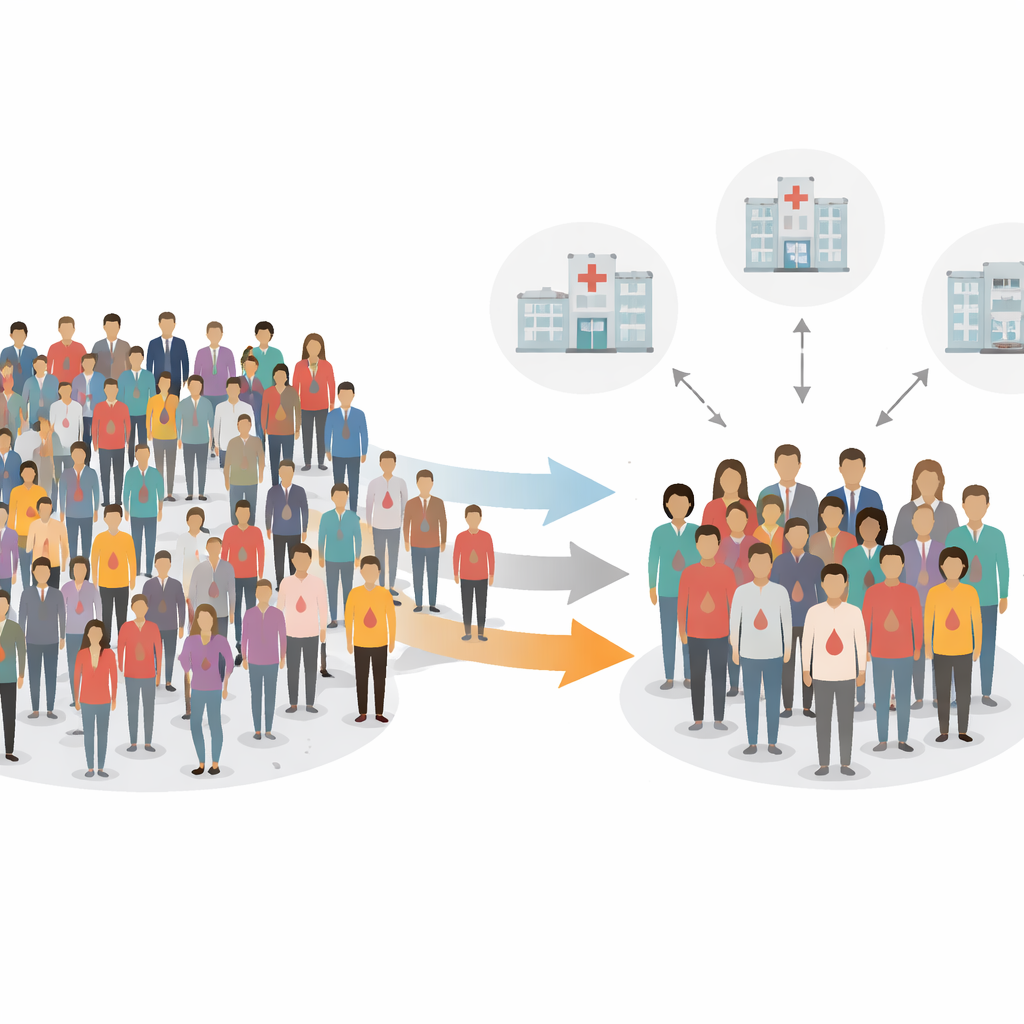
The researchers focused on the Danish Blood Donor Study (DBDS), a long-running project that has enrolled about 170,000 people who gave blood at donation centers across Denmark. These volunteers fill out repeated questionnaires, give blood samples for genetic and other tests, and are linked to national registers that track hospital diagnoses, prescriptions, income, education, and more. To see how similar they are to other Danes, the team compared every DBDS participant who was alive and living in Denmark at the end of 2021 with all other residents aged 18 to 74—more than four million people in total.
Who is more likely to be in the donor study?
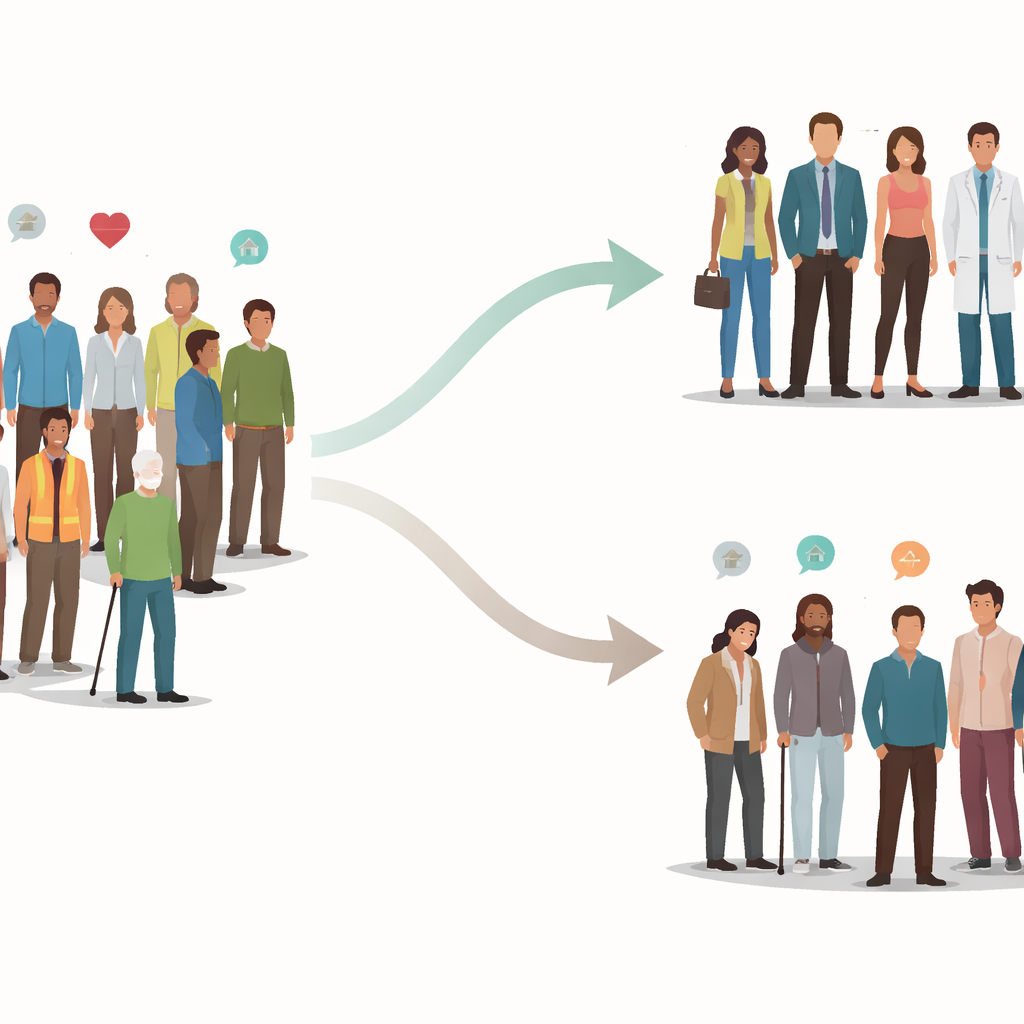
The analysis revealed clear patterns in who ends up in DBDS. Participation was slightly higher among women than men and peaked in early to mid-adulthood, then declined at younger and older ages. People living with a partner of the opposite sex, married individuals, and those in four-person households or with exactly two children were more likely to be part of the study than people living alone or in very large households. While adults living alone were generally less represented, young men and women who lived alone in cities were an exception: they joined more often than expected. Geography also played a role—residents of moderately to densely populated areas were overrepresented, and those in sparsely populated rural municipalities took part less often.
Education, jobs, and income tilt the picture
Socioeconomic factors strongly shaped participation. People with higher levels of education, including university and research degrees, joined DBDS far more often than those whose schooling stopped after compulsory education. The same was true for people whose parents had higher education. Being employed made participation considerably more likely, whereas students, unemployed people, and those outside the labor force were less often included. Certain occupations stood out: workers in finance and insurance sectors were particularly overrepresented, approaching one in ten in some age groups, while people employed in agriculture, forestry, and fishing were least likely to be part of the study. Participation also rose steadily with income, peaking among the highest-earning Danes. By contrast, immigrants and their descendants, as well as people who had spent several years living abroad, were much less likely to appear in the donor cohort than Danes of native origin.
Healthier volunteers and a few notable exceptions
Health status further distinguished DBDS participants from the general population. Using hospital and prescription registers, the researchers found that blood donor volunteers were less likely to have recently received diagnoses across most major disease groups or to have filled prescriptions in many drug categories. People with mental or behavioral disorders, or diseases of the blood and blood-forming organs, were especially underrepresented, as were men with hormonal or metabolic problems. These gaps likely reflect both the health rules that govern who is allowed to donate blood and the practical challenges of donating for those with chronic illness. An important exception was women aged 25 to 44, who were more likely than their peers to have records related to pregnancy, childbirth, and the period around birth, and to have prescriptions for reproductive or hormonal medications—patterns that mirror their frequent contact with health services during childbearing years.
What this means for using donor data
The study concludes that, while the Danish Blood Donor Study is a powerful resource rich in biological and register data, it does not mirror the Danish adult population in a simple way. Its participants tend to be healthier, better educated, higher earners, and more likely to live in stable, urban households, with immigrants and people in poorer health less often included. The authors argue that this does not make the study useless for understanding national health, but it does mean that researchers must account for these imbalances—for example, by statistically reweighting results or presenting findings separately for key subgroups. By carefully mapping how volunteers differ from everyone else, this work provides a roadmap for making future analyses based on blood donor data more transparent and more relevant to the wider public.
Citation: Træholt, J., Helenius, D., Christoffersen, L.A.N. et al. Representativeness of the Danish Blood Donor Study relative to the general population: a cross-sectional assessment. Sci Rep 16, 14140 (2026). https://doi.org/10.1038/s41598-026-41941-1
Keywords: blood donors, volunteer bias, population representativeness, epidemiology, Danish health registers