Clear Sky Science · en
Joint effect of uncertainty-of-outcome and calorie content on food preference
A Surprising Twist in Healthy Eating
Why do mystery-flavor snacks and blind-box treats feel so exciting—and could that same curiosity help people choose healthier foods? This study explores how the uncertainty of not knowing exactly which food you will get interacts with whether that food is high or low in calories. By tracking people’s choices, reaction times, and brain activity, the researchers show that uncertainty can make low-calorie foods more tempting than they would normally seem, offering a potential tool for both marketers and public health advocates.
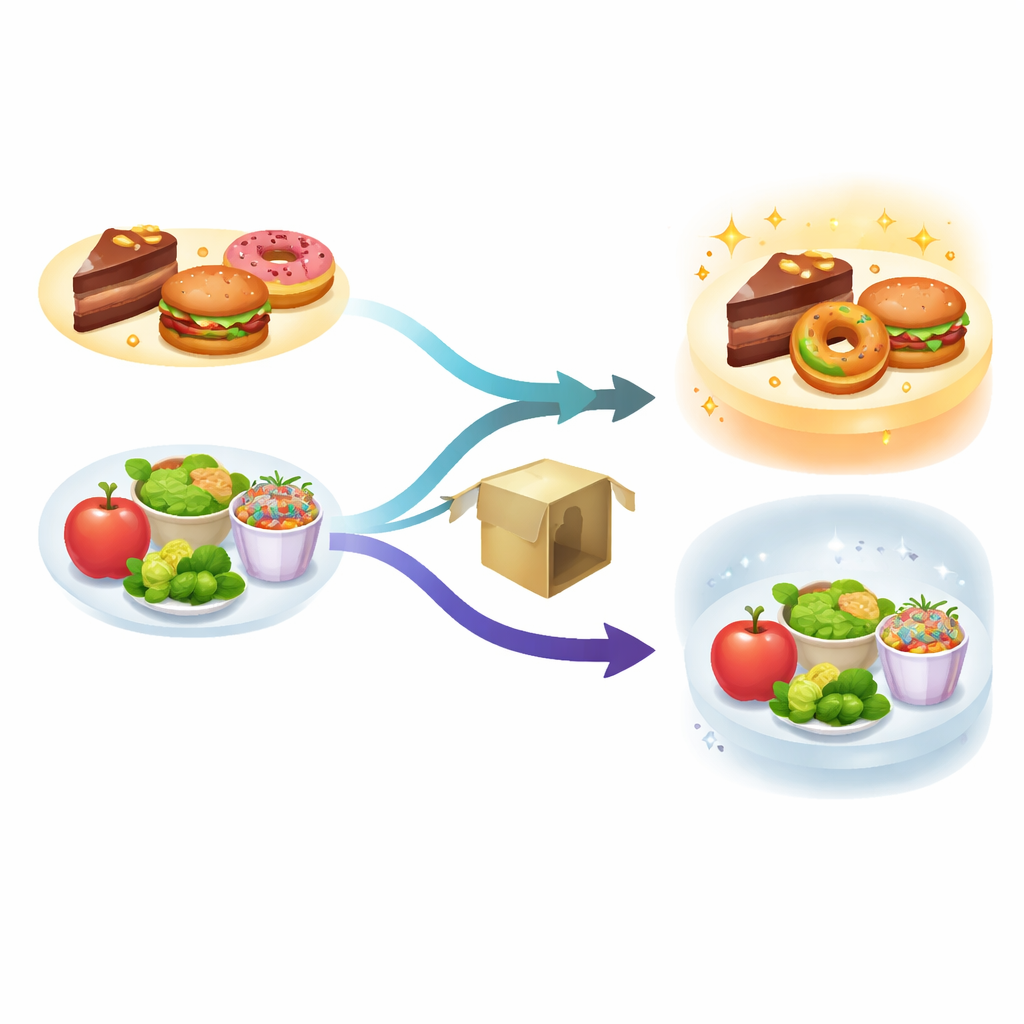
How Mystery Boxes Meet the Dinner Table
In modern food marketing, uncertainty has become a selling point. From mystery-flavor chips to surprise drink cans, brands invite people to “take a chance” on unknown tastes. Previous research suggests that uncertainty sparks curiosity and optimistic expectations, making experiences feel more fun and rewarding. At the same time, people often think of high-calorie foods as tastier and more appealing than low-calorie options like vegetables. This study set out to see how these two forces—mystery and calorie content—work together when people decide what to eat, and whether mystery might especially boost the appeal of healthier, lower-calorie foods.
Inside the Choice: Certain Plate or Mystery Box?
Fifty-eight young adults arrived at the lab hungry and first rated how tasty they found pictures of different foods, some high-calorie (such as rich, dense dishes) and some low-calorie (such as fruits and vegetables). Next came the key test: on each trial, they saw two options—a clearly visible food and a closed mystery box hiding another food from the same calorie category. They had to choose which item they were willing to eat. Overall, people chose the mystery option more often when the foods were low in calories than when they were high in calories. They also made these uncertainty-favoring decisions more quickly with low-calorie foods, suggesting that the unknown option felt especially attractive in that context.
Expecting More, Enjoying Less
After each choice, the selected food was revealed and participants rated its tastiness. Here, the story took an interesting turn: once revealed, the foods that had been behind the mystery box were rated as less tasty than the clearly visible foods, regardless of calorie level. In other words, uncertainty encouraged people to take a chance, but the actual outcome often failed to live up to their hopeful expectations. Still, their overall tendency to keep choosing the mystery option stayed high, especially for low-calorie foods. The researchers suggest that curiosity itself—wanting to know what is inside the box—can keep people coming back, even when past surprises were somewhat disappointing.
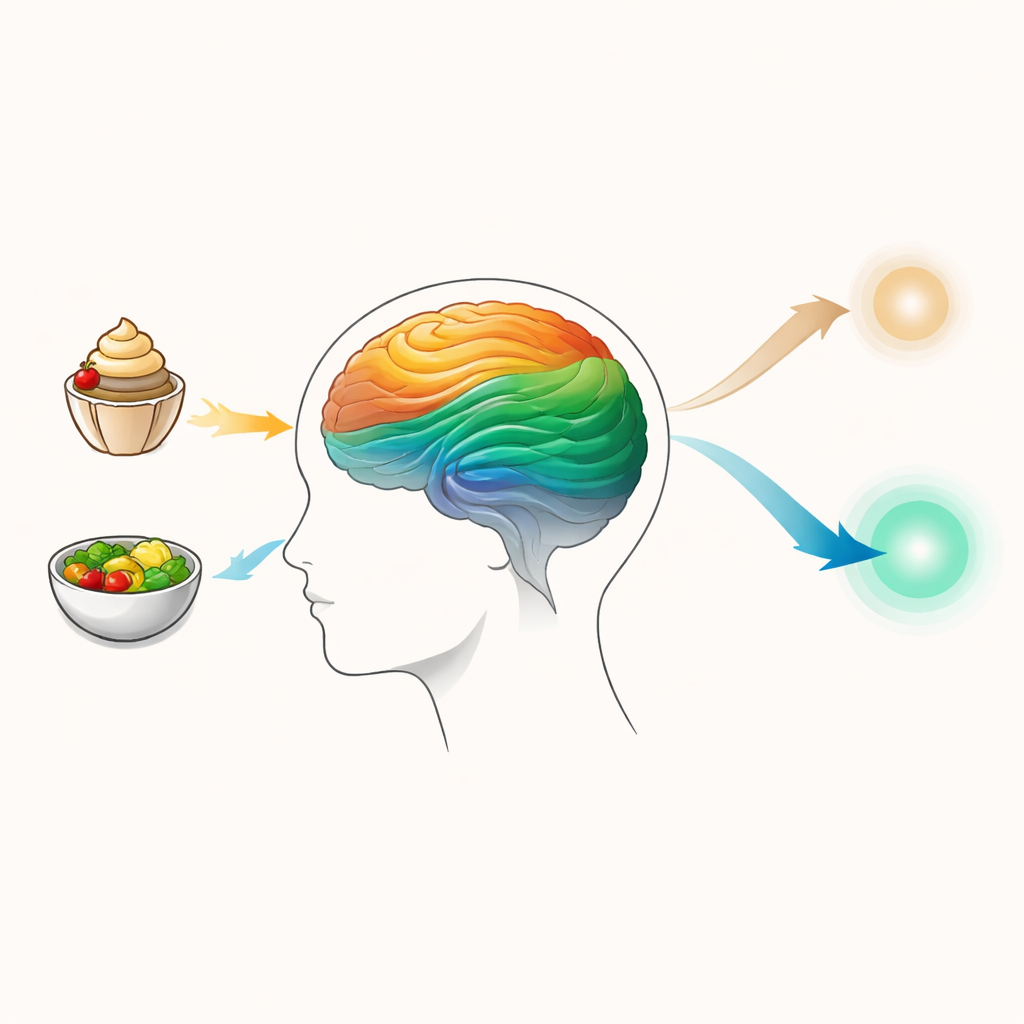
What the Brain Reveals About Difficult Decisions
While participants made their choices, the researchers recorded brain activity using scalp sensors. They focused on signals over the front of the head, a region involved in weighing rewards and making value-based decisions. When people were dealing with low-calorie foods, the brain showed signs of greater conflict early in the decision process, consistent with these options being less naturally appealing. High-calorie foods, by contrast, produced stronger later signals linked to attention and reward evaluation, as well as stronger changes in brain rhythms associated with effortful comparison. A computational model of the decision process indicated that, for low-calorie foods, evidence in favor of the mystery option built up more quickly—pointing to a higher “expected value” for uncertain low-calorie choices than for their visible counterparts.
Turning Curiosity into a Health Ally
Taken together, the findings suggest that not knowing exactly which healthy food you will receive can make the prospect more exciting and subjectively rewarding at the decision stage, even if the revealed food is not rated as especially delicious. This means that carefully designed “mystery” promotions—such as surprise boxes of fruits, vegetables, or other lower-calorie items—could nudge people toward healthier choices and keep them engaged with good habits over time. By harnessing people’s natural curiosity, uncertainty can be transformed from a marketing gimmick into a tool that may support better eating and reduce food waste, all while preserving a sense of fun and discovery at the table.
Citation: Zheng, L., Yu, Y., Cheng, P. et al. Joint effect of uncertainty-of-outcome and calorie content on food preference. Sci Rep 16, 11471 (2026). https://doi.org/10.1038/s41598-026-41632-x
Keywords: food choice, mystery box, calorie content, consumer curiosity, healthy eating