Clear Sky Science · en
Vaccination trends and operational challenges in Peste des Petits Ruminants eradication in Ethiopia
Why this matters for farmers and food security
Peste des Petits Ruminants (PPR) is a fast-spreading viral disease of sheep and goats that can wipe out flocks and income for families who depend on them. In Ethiopia’s North Shewa Zone, these animals are a backbone of household food and cash, so stopping PPR is not just a veterinary issue but a question of livelihoods and food security. This study looks at how well vaccination campaigns have worked over six years and what is helping or hindering Ethiopia’s ambitious goal to wipe out PPR by 2027.
A dangerous disease with a heavy local cost
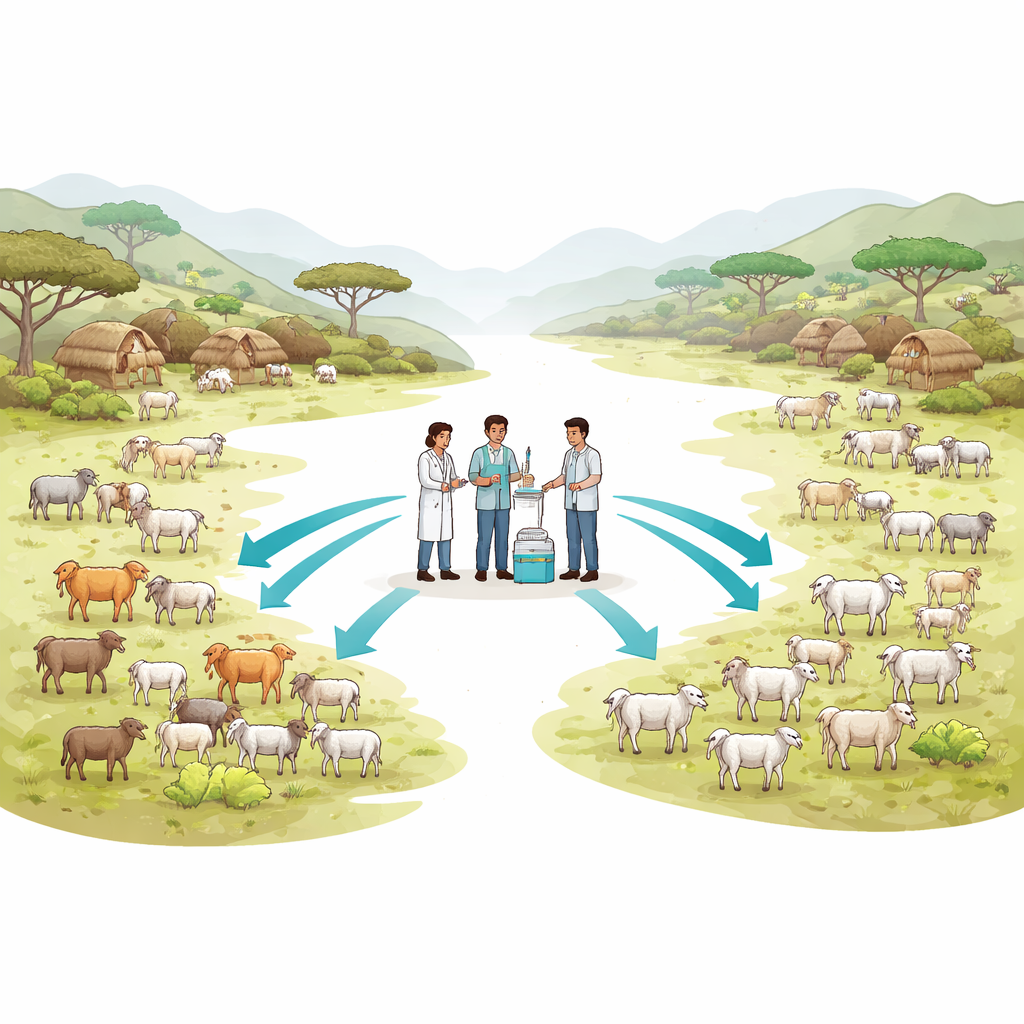
PPR causes fever, mouth wounds, diarrhea, and pneumonia in sheep and goats, and can affect nearly every animal in an unprotected flock, killing many of them. For Ethiopian families, this means lost meat, milk, and money, and can force people to sell other assets or go into debt. The disease also threatens rare wild species that share grazing areas with domestic animals, adding a conservation concern. Because a safe and effective vaccine exists, international agencies and the Ethiopian government see PPR as a disease that can realistically be eradicated—if vaccination is done well and consistently.
How vaccinations have been carried out
Since 2018, North Shewa has used a “risk-based” approach, concentrating vaccinations where outbreaks are most likely rather than trying to cover every flock at once. Animal health professionals receive brief training before each campaign on recognizing PPR, handling the live vaccine, and recording data. When animals show suspicious signs, rapid tests are used to confirm the disease, and teams then vaccinate nearby flocks. Over six years, 62 vaccination campaigns were conducted across 24 districts, protecting about 2.9 million sheep and goats. Some districts, especially those with more animal movement and past outbreaks, saw repeated visits, while six districts received no vaccination at all during the study period.
Uneven progress and who gets missed
Vaccination activity has risen and fallen sharply from year to year. The peak came in 2019 for the number of campaigns and in 2023 for the number of animals vaccinated, while 2022 saw only one campaign and very low coverage. Even in active years, animals in some districts and mobile herds were missed. Because sheep and goats are often grazed freely and young animals are constantly being born and sold, pockets of unprotected animals remain. The study also found that there is no simple way to mark which animals have already been vaccinated, and almost no blood testing after campaigns to check whether enough animals have actually developed protective immunity. These gaps make it hard to know how close the region really is to stopping virus circulation.
What helps the fight and what holds it back
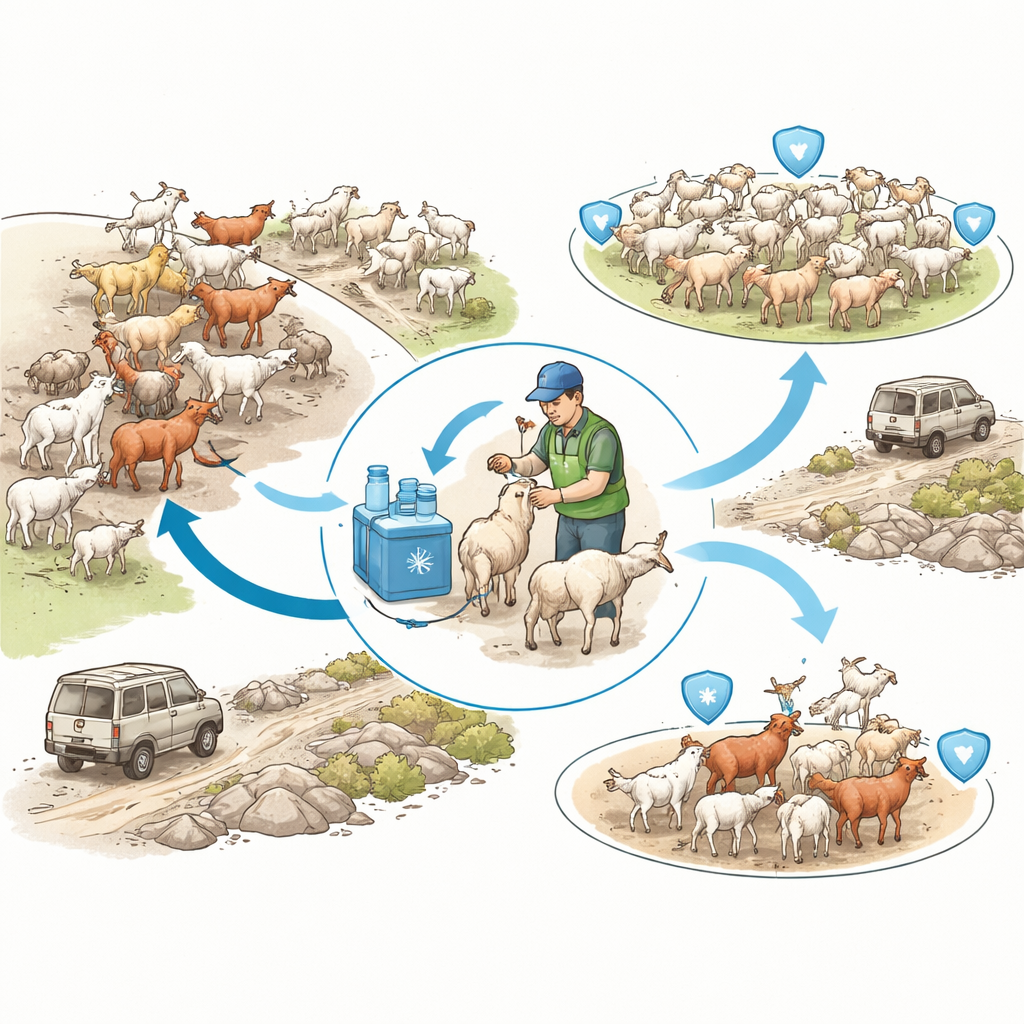
The researchers spoke with 46 veterinarians and frontline animal health workers to understand conditions on the ground. Many pointed to strong national policies, reliable local vaccine production, and adequate supplies of basic tools like syringes as important strengths. Farmers’ groups and the bundling of PPR vaccination with other animal health services were also seen as helpful for mobilizing communities. At the same time, most respondents reported that budgets were tight, vehicles and cold storage were often lacking, and security problems in some areas made travel risky or impossible. Limited staff numbers, uneven skills, and weak coordination between different levels of the system further reduced the impact of each campaign.
What needs to change to finish the job
The authors conclude that, from a biological standpoint, eradicating PPR in North Shewa is clearly possible, and the region has already moved through the early stages of the global eradication roadmap. However, persistent gaps in funding, security, reach, and follow-up monitoring are preventing Ethiopia from reaching the final step, where the virus disappears and vaccination can safely stop. To get there, the study recommends more regular surveillance, routine blood testing after campaigns, better animal identification, and strategies tailored to mobile and hard-to-reach flocks. It also calls for steadier financing, stronger coordination, and deeper community engagement. In simple terms, the tools to beat PPR are in hand; the challenge now is to use them broadly and consistently enough that no flock is left behind.
Citation: Alamerew, E.A., Cherenet, T., Aklilu, F. et al. Vaccination trends and operational challenges in Peste des Petits Ruminants eradication in Ethiopia. Sci Rep 16, 11259 (2026). https://doi.org/10.1038/s41598-026-41404-7
Keywords: peste des petits ruminants, sheep and goat vaccination, Ethiopia livestock health, disease eradication programs, rural food security