Clear Sky Science · en
QRNN-GRU framework for automatic argument and annotation extraction in medical drug reviews
Why online drug stories matter
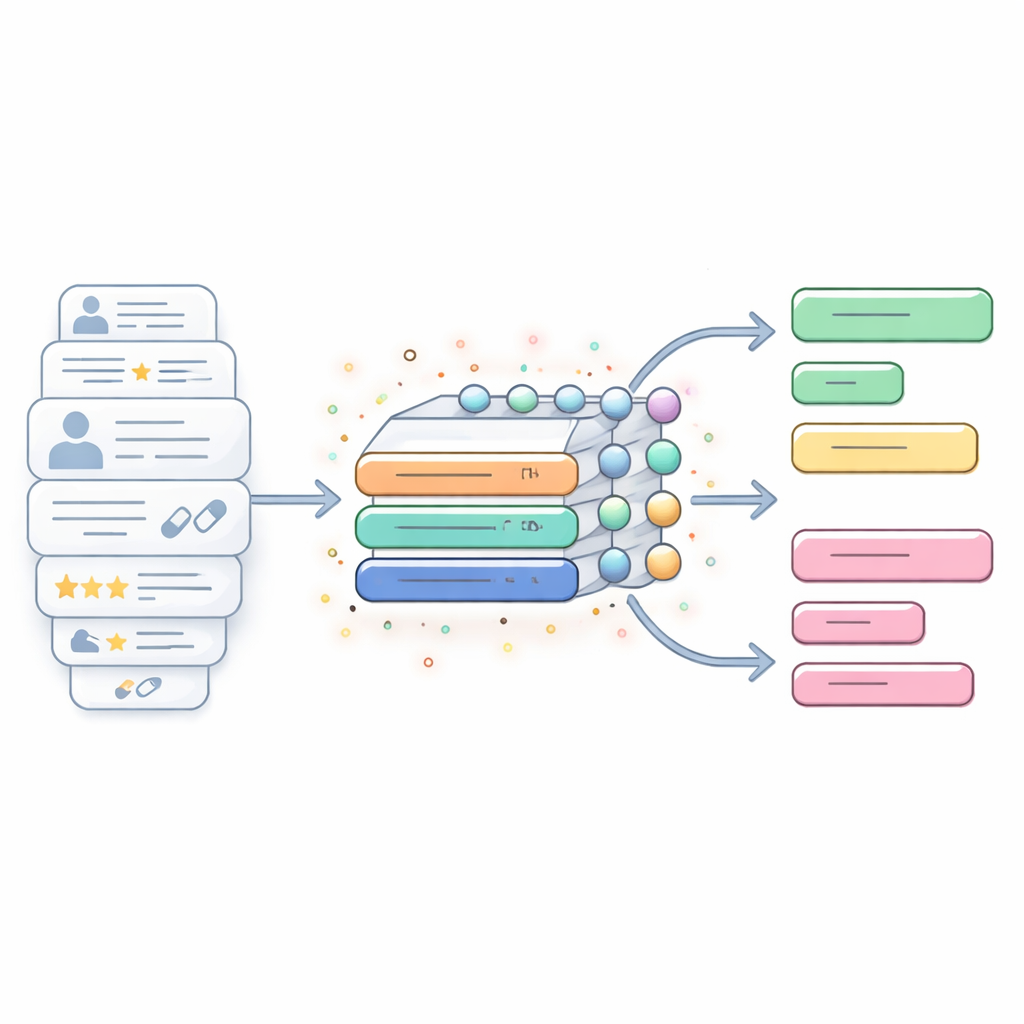
Every day, thousands of people post personal stories about the medicines they take—how well they work, what side effects appear, and whether life really gets better. Hidden inside this noisy stream of comments is a gold mine of insight for doctors, patients, and regulators. The challenge is that these reviews are messy, emotional, and full of specialized medical terms. This paper presents a new artificial intelligence (AI) system designed to read such drug reviews and automatically pick out well-structured arguments about benefits and harms, turning scattered anecdotes into organized evidence.
From scattered opinions to clear arguments
When people write about medicines, they often make arguments without realizing it. A parent might claim that a drug helped their child’s condition and then give specific reasons or examples as support. Argument mining is the research field that tries to detect these building blocks—claims, supporting reasons (called premises), and irrelevant sentences—inside text. In medical reviews, this is harder than in school essays or formal debates because the language is informal, sentences are incomplete, and symptoms or side effects are described in many different ways. The authors focus specifically on this tough medical setting, where better tools could help summarize real-world experiences with drugs more reliably.
A hybrid AI engine built for long and noisy text
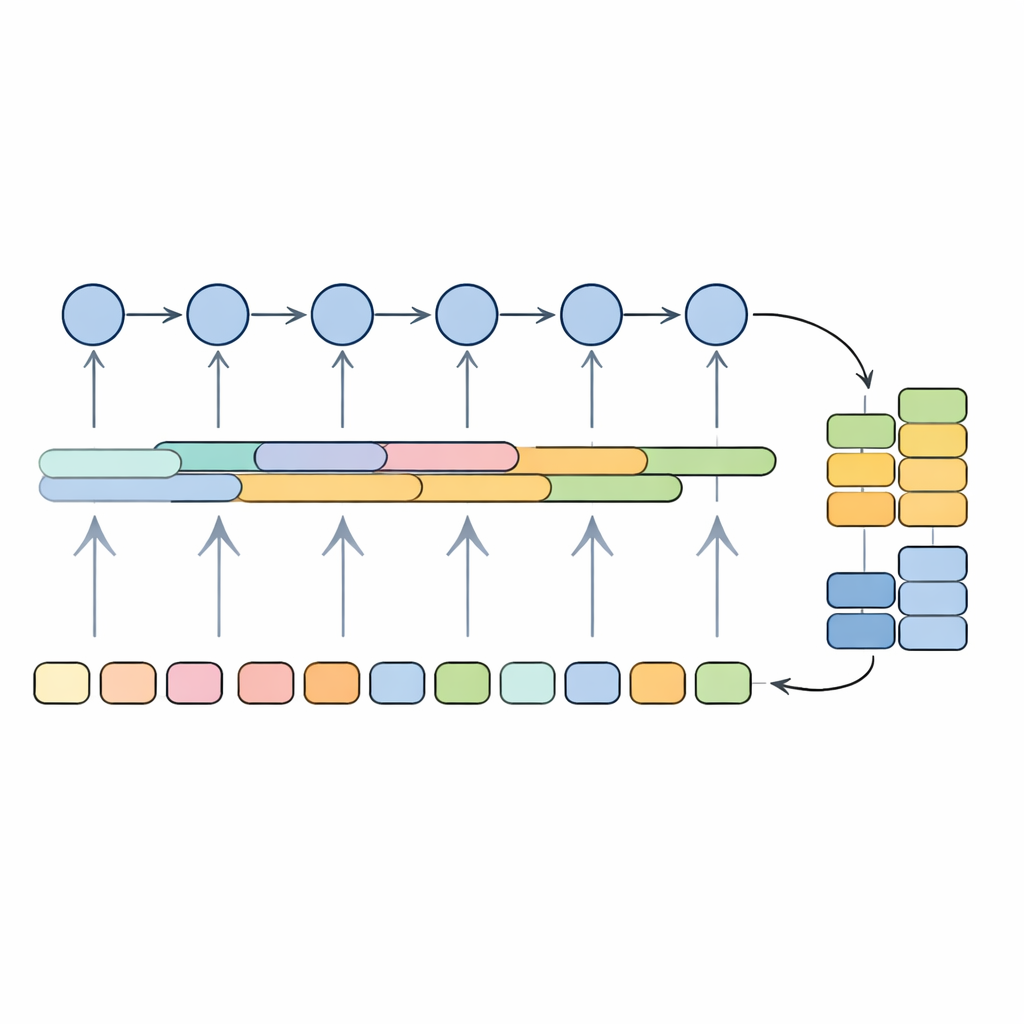
The study introduces a hybrid AI model that combines two sequence-processing techniques: quasi-recurrent neural networks (QRNNs) and gated recurrent units (GRUs). In simple terms, the QRNN portion acts like a fast scanner that looks for short local patterns in text—phrases that signal praise, complaints, or side effects—while the GRU portion acts like a careful listener that keeps track of how these patterns unfold across longer stretches of a review. Together, they aim to balance speed and depth: the system can handle long, messy drug stories without becoming too slow or losing track of important context spread across multiple sentences.
Letting digital “fireflies” tune the system
Designing such an AI model involves many choices: how many layers it should have, how quickly it should learn, and how strongly it should be regularized to avoid overfitting to quirks in the data. Instead of hand-tuning these settings, the authors use an optimization method inspired by the behavior of fireflies. In this approach, many candidate configurations “flash” according to how well they perform, and better ones attract others, gradually steering the search toward a high-performing combination. This firefly-based optimizer fine-tunes the QRNN–GRU system so that it learns efficiently from large collections of user reviews while remaining stable during training.
Putting the model to the test on medical texts
The researchers trained and evaluated their system on a large public drug review dataset, where sentences were labeled as claims, premises, or non-arguments using a semi-automatic annotation process. The hybrid model achieved about 89 percent on a balanced measure of accuracy and coverage (the F1 score) and around 91 percent overall accuracy, outperforming more traditional methods such as support vector machines, naïve Bayes, random forests, and single deep learning models like plain convolutional networks, LSTMs, or GRUs used alone. It also compared favorably to a widely used transformer model similar to BERT, while requiring substantially less computing power and memory at prediction time. To test whether the approach generalizes beyond drug reviews, the authors also applied it to a benchmark of medical research abstracts and found that it remained competitive with state-of-the-art systems designed for that task.
What this means for patients and medicine
In plain terms, this work shows that it is possible to automatically turn everyday drug reviews into structured maps of what people are claiming and why they believe those claims. By combining a fast local scanner (QRNN), a context-aware listener (GRU), and an efficient tuning strategy (firefly optimization), the system can sift through large volumes of messy medical text and reliably separate meaningful arguments about effectiveness and side effects from background chatter. This could eventually help patients see clearer summaries of others’ experiences, assist clinicians in spotting emerging patterns of benefit or harm, and support researchers who track how medicines perform outside controlled clinical trials. The authors note that their model still focuses mainly on sentence-level patterns and on medical texts only, but they see it as a promising step toward richer, more efficient tools that make sense of the stories people tell about their health.
Citation: Altameem, E., Alnuem, M. & Albassam, S. QRNN-GRU framework for automatic argument and annotation extraction in medical drug reviews. Sci Rep 16, 13581 (2026). https://doi.org/10.1038/s41598-026-41379-5
Keywords: argument mining, drug reviews, medical text analysis, neural networks, patient experience