Clear Sky Science · en
Self-reported respiratory allergic symptoms and eczema in schoolchildren in Peja region-west Kosovo
Why children’s allergies matter
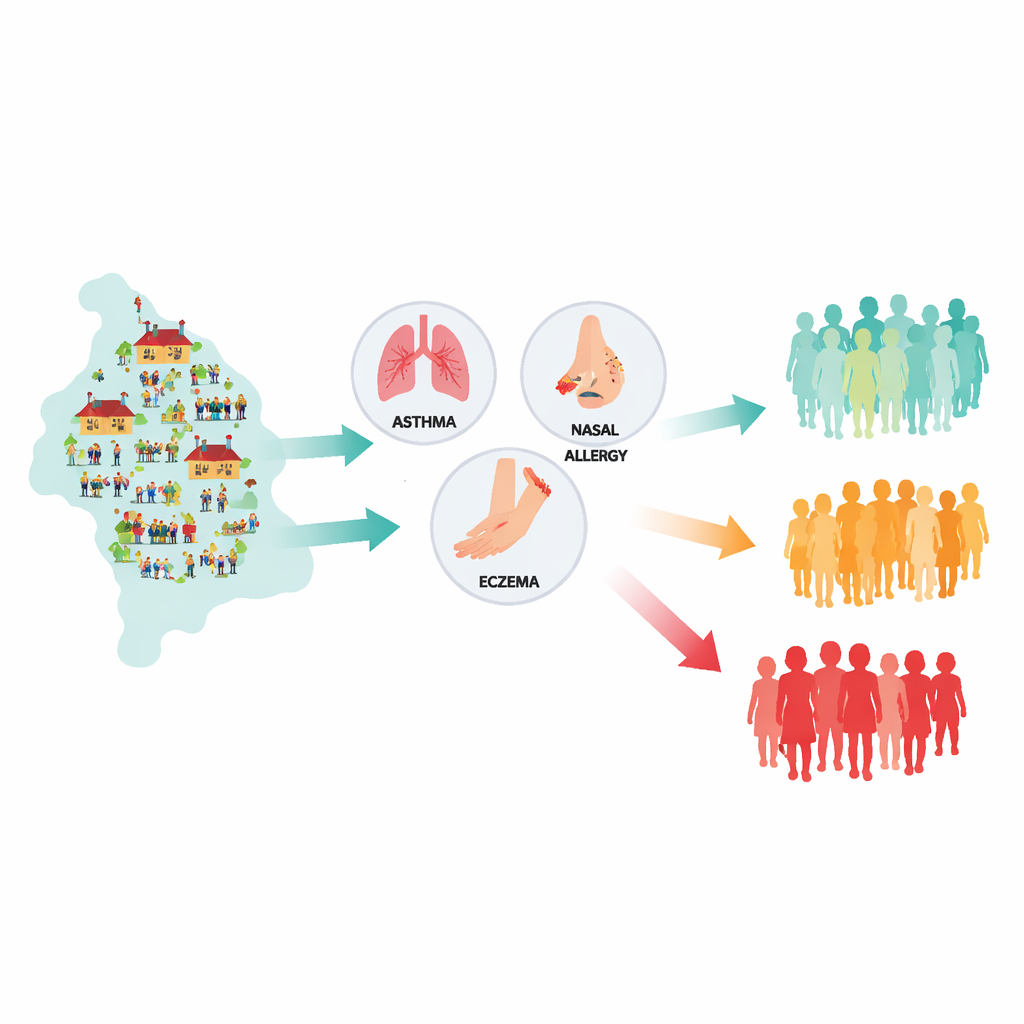
For many families, a child’s wheezing, stuffy nose, or itchy skin can be worrying but confusing. Are these harmless phases, or signs of lasting health problems? This study looked closely at three common allergy-related conditions—asthma, nose allergies, and eczema—among schoolchildren in the Peja region of western Kosovo. By asking more than a thousand children detailed questions, the researchers not only measured how common these problems are, but also uncovered patterns in how different symptoms tend to cluster together. Their findings can help parents, teachers, and doctors spot which children are at higher risk and plan better support at school and at home.
Taking a snapshot of schoolchildren’s health
The research team surveyed 1432 children aged 11 to 14 years in urban schools during the 2017–2018 school year. Using an international questionnaire that has been applied in many countries, they asked about past and current breathing troubles, nose symptoms without a cold, and episodes of itchy, red skin in typical eczema areas such as the folds of elbows and knees. They also measured height and weight and noted whether children were singletons, had siblings, or were twins. Because the questions had been carefully translated and tested in Albanian, the answers provide a reliable snapshot of how these conditions appear in everyday school life.
How common are asthma, nose allergies, and eczema?
The picture that emerged was mixed. Asthma—long-term breathing problems marked by wheezing and shortness of breath—was reported at relatively low levels: only about one in twenty children said they had ever had asthma, and roughly two thirds of those reports had been confirmed by a doctor. Eczema showed a similar pattern, with 5.7% of children reporting the condition and about a third having a medical diagnosis. Nose allergies, often experienced as sneezing, a runny or stuffy nose, and itchy eyes without a cold, were much more frequent: about one in seven children reported such problems, and over half of these had seen a doctor who confirmed the diagnosis. Girls were slightly more likely than boys to report nose allergies and eczema, while asthma rates were similar between the sexes.
Overlap between conditions and day-to-day impact
Many children did not have just one problem. The most frequent overlap was between nose allergies and eczema, affecting just over 2% of the children. Smaller groups had both asthma and nose allergies or both asthma and eczema, and only a tiny fraction—about one in 300—had all three. When the team looked at how symptoms affected daily life, they found that around one in six children had ever wheezed, and a smaller group had enough breathing trouble in the past year to disturb their sleep, limit speech, or require inhaler medicine. Overweight and obese children were more likely to wake at night because of breathing problems and to use inhalers, suggesting that body weight may worsen respiratory discomfort. Nose and skin symptoms also interfered somewhat with school activities for a minority of children, for example by disturbing sleep or causing daytime discomfort.
Hidden patterns in children’s allergy symptoms
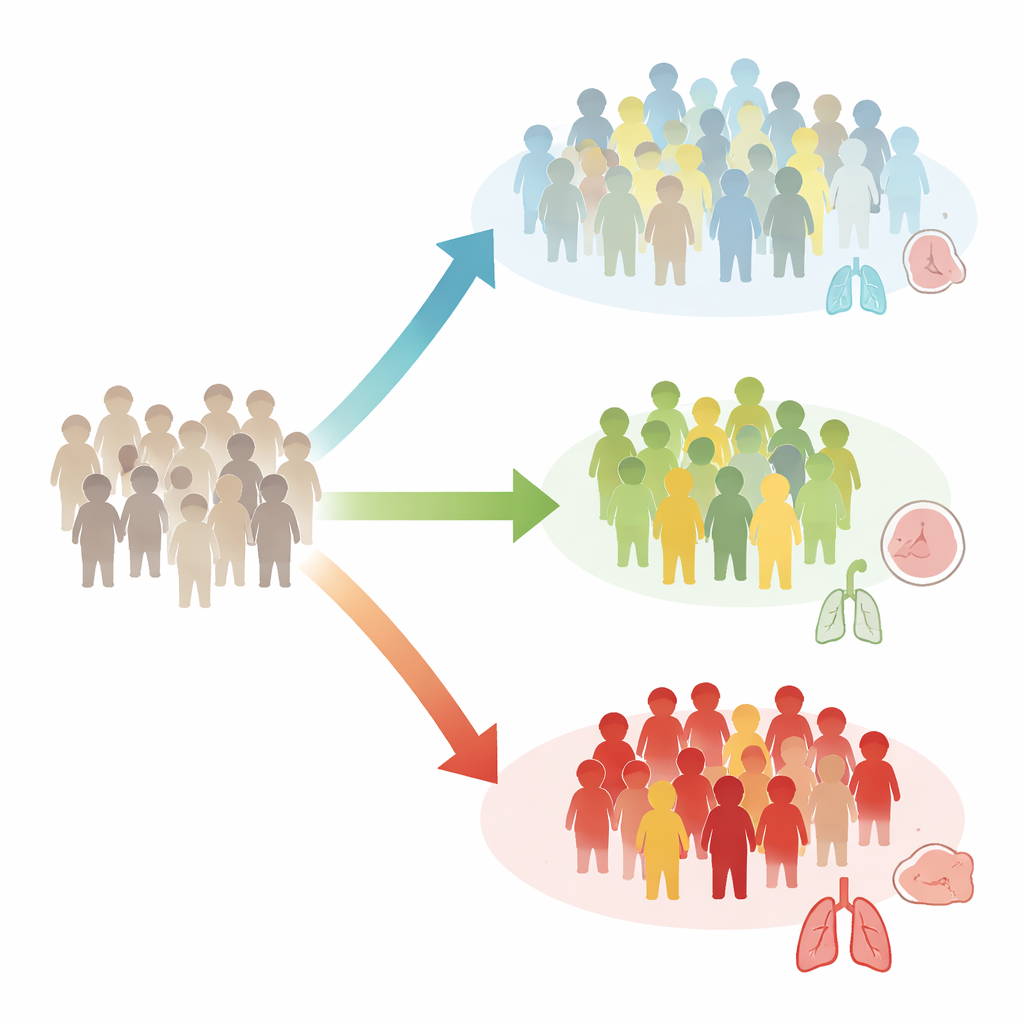
Beyond simple counts, the researchers used a statistical technique called latent class analysis to uncover hidden patterns in the children’s answers. This method groups individuals who share similar symptom profiles, even if they have not been formally diagnosed. Three distinct patterns, or “phenotypes,” appeared. The first and largest group, covering about seven in ten children, had very low chances of any allergic or breathing symptoms and can be thought of as the low-risk group. A second group, about one quarter of the children, mostly struggled with nose problems, often together with mild eczema but with little sign of serious asthma. The third and smallest group, around 6%, had frequent wheezing, including episodes severe enough to make speaking difficult, and often had nose allergies and eczema as well. This group represents children who might need closer medical follow-up and more active management.
What this means for families and schools
For parents and teachers, the study’s message is both reassuring and cautionary. In this region of Kosovo, severe asthma and widespread eczema are not very common, but nose allergies affect many schoolchildren and sometimes go hand in hand with breathing or skin problems. By recognizing the different patterns of symptoms—ranging from almost no issues, through mainly nose and skin troubles, to a small group with serious breathing difficulties—health services can better tailor advice, treatment, and school support. In practice, this could mean simple steps such as asking targeted questions during routine check-ups, using inhalers correctly where needed, and paying attention to persistent nose or skin complaints rather than dismissing them as “just allergies.”
Citation: Lumezi, B.G., Lokaj-Berisha, V., Zhjeqi, V. et al. Self-reported respiratory allergic symptoms and eczema in schoolchildren in Peja region-west Kosovo. Sci Rep 16, 11087 (2026). https://doi.org/10.1038/s41598-026-41110-4
Keywords: childhood asthma, allergic rhinitis, eczema, schoolchildren health, Kosovo epidemiology