Clear Sky Science · en
Natural infection of Aedes albopictus with the wAlbB strain and Ae. aegypti with the wPip strain of Wolbachia in Iran
Why tiny hitchhikers on mosquitoes matter
Mosquito-borne diseases like dengue, Zika, and chikungunya are spreading into new parts of the world, including Iran. Two invading mosquito species are largely to blame, but they themselves can be infected by a surprising ally for humans: a bacterium called Wolbachia that can weaken mosquitoes’ ability to spread viruses. This study asks a key question for future disease control in Iran: are these invading mosquitoes already carrying Wolbachia naturally, and if so, which types?
Invading mosquitoes at Iran’s door
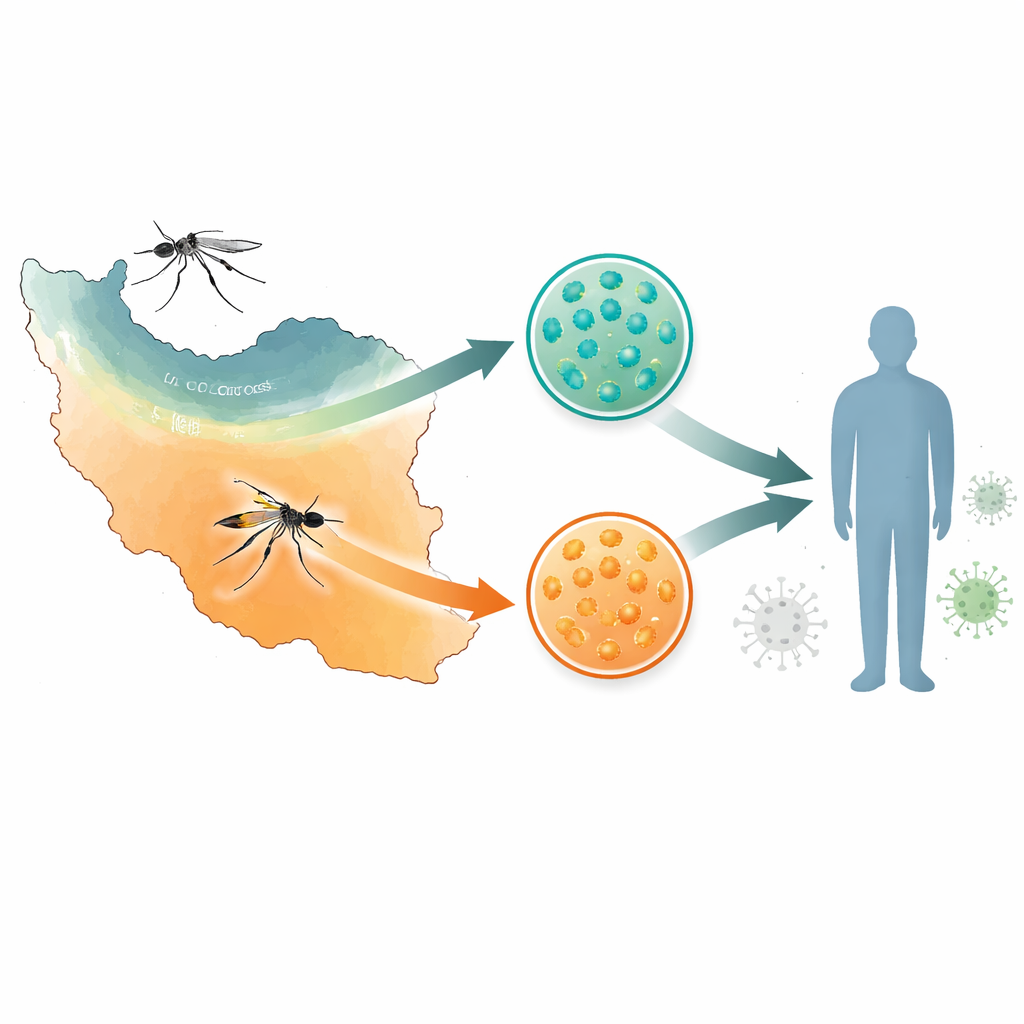
The research focuses on two globally important mosquitoes. Aedes albopictus, the "Asian tiger" mosquito, thrives from tropical to temperate climates and can carry at least 22 different viruses. Aedes aegypti, closely associated with human homes in the tropics, is the main global carrier of dengue. Both species have recently established in Iran: Ae. albopictus in the cooler, humid north along the Caspian Sea, and Ae. aegypti in the hot, coastal south by the Persian Gulf and Gulf of Oman. Their expansion raises concern that major outbreaks of dengue and other viral diseases could follow.
The helpful bacteria hiding inside
Wolbachia is a maternally inherited bacterium that lives inside many insects. In mosquitoes, certain Wolbachia strains can block viruses or disrupt reproduction, making them attractive tools for biological control programs that are now being rolled out in many countries. However, wild Ae. aegypti populations are usually thought to be naturally free of Wolbachia, while Ae. albopictus commonly carries one or two strains. Before Iran can adopt Wolbachia-based control, public health agencies need to know which strains, if any, are already present in its invasive mosquitoes, because native infections can either help or interfere with introduced strains.
Hunting for Wolbachia in the field and the lab
The team collected 777 mosquitoes from across Iran, including both field-caught and laboratory-reared Ae. albopictus and Ae. aegypti. Using sensitive DNA-based tests, they screened each mosquito for Wolbachia and then sequenced key bacterial genes to determine strain identity and evolutionary relationships. Statistical models were used to see how infection odds varied by mosquito species, collection site, and whether mosquitoes came from natural settings or controlled insectary colonies.
What the genetic fingerprints revealed
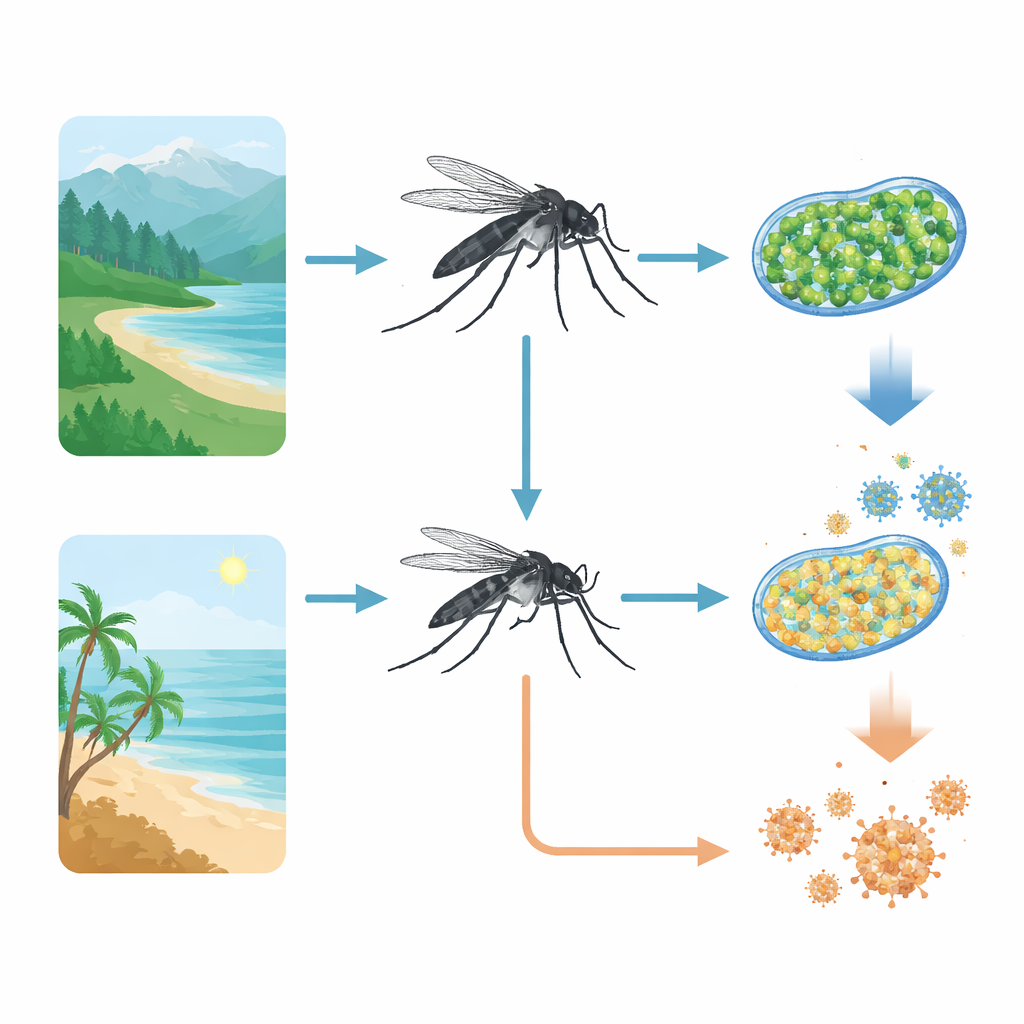
Overall, only about 6% of mosquitoes carried Wolbachia, suggesting that these invading species are still in an early stage of establishment in Iran. Infections were more frequent in Ae. albopictus than in Ae. aegypti. Genetic analysis showed that Ae. albopictus harbored the wAlbB strain, a well-known variant that can strongly block viruses and alter mosquito reproduction. More surprising, some wild Ae. aegypti from southern Iran carried a different strain, wPip, typically found in Culex mosquitoes rather than Aedes. This appears to be one of the first documented natural infections of Ae. aegypti with wPip anywhere in the world, pointing to recent cross-species transfer, likely aided by human movement and trade.
What this means for future mosquito control
To a non-specialist, the key message is that the “useful bacteria” many countries are beginning to release into mosquitoes are already present, in small amounts, in Iran’s invasive mosquito populations—but in specific combinations that could complicate control efforts. The wAlbB strain in Ae. albopictus is promising for reducing virus spread, yet the unexpected wPip strain in Ae. aegypti could interfere with planned releases of other Wolbachia types designed to sterilize mosquitoes or block dengue. The authors conclude that careful mapping and genetic tracking of Wolbachia in local mosquitoes must become a routine part of Iran’s vector control planning, so that future releases of Wolbachia-infected mosquitoes are chosen and timed to work with, rather than against, the invisible microbial partners already riding inside these disease-carrying insects.
Citation: Karimian, F., Rahimy, S., Yousefi, H. et al. Natural infection of Aedes albopictus with the wAlbB strain and Ae. aegypti with the wPip strain of Wolbachia in Iran. Sci Rep 16, 10070 (2026). https://doi.org/10.1038/s41598-026-40993-7
Keywords: Wolbachia, Aedes mosquitoes, dengue, biological control, Iran