Clear Sky Science · en
Psychometric properties of the WHO-VFQ-20 questionnaire for assessing vision-related quality of life in Brazilian urban populations with different vision status
Why Everyday Vision Matters
Being told you have “20/40” or “20/200” vision says something about how clearly your eyes see an eye chart, but it does not fully capture how your sight shapes your daily life. This study looks at a short World Health Organization questionnaire, the WHO‑VFQ‑20, which asks people about real‑world tasks and feelings related to their eyesight. The researchers wanted to know whether this tool truly reflects the everyday impact of vision problems for adults living in Brazilian cities, across a wide range of eye conditions and levels of sight.
Listening to People, Not Just Measuring Eyes
Eye doctors usually rely on technical tests such as visual acuity and visual fields to judge how well a person sees. Yet two people with the same test results can describe very different experiences: one may function quite well, while another struggles with reading, walking outside, or socializing. Questionnaires that focus on vision‑related quality of life were created to capture this personal side. Many of these tools, however, were originally developed in high‑income countries with different lifestyles and daily demands. The WHO‑VFQ‑20 was designed as a brief, interview‑based questionnaire that could work in more diverse settings, including low‑ and middle‑income regions. This study puts that promise to the test in Brazilian urban populations.
Who Took Part in the Study
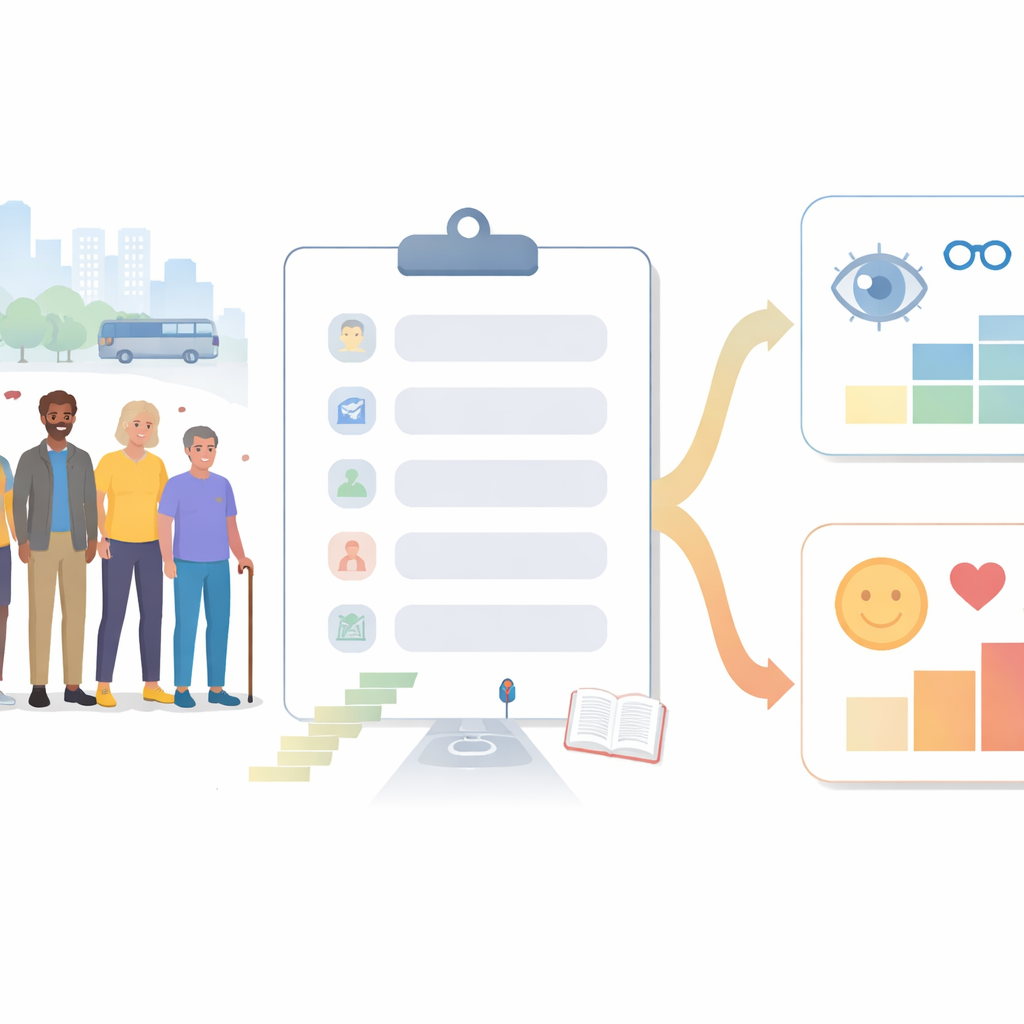
The team interviewed 606 adults aged 25 to 92 years from three institutions in and around São Paulo: a public university eye clinic and two non‑governmental organizations that serve blind and visually impaired people. This created a mix ranging from people with normal sight to those with severe vision loss or blindness, and included a variety of eye diseases such as glaucoma, diabetic retinopathy, cataract, and retinal disorders. Participants answered 20 questions about their eyesight, day‑to‑day activities like moving around or reading, and emotional and social aspects such as embarrassment, dependence on others, or participation in social events. Answers were given on a five‑point scale and converted into scores from 0 (worst) to 100 (best).
What the Questionnaire Revealed
As expected, overall scores went down as vision worsened. People with better visual acuity reported fewer difficulties with distance and near tasks, adapting to bright or dim light, and taking part in social life. Those in visual rehabilitation programs, who tended to have more severe vision loss, scored even lower on most activity‑related questions. At the same time, higher scores were linked to better general health, more years of schooling, and being married or living with a partner. These links suggest that the questionnaire is sensitive not only to the sharpness of vision but also to broader life circumstances that shape how people cope with sight problems.
Looking Under the Hood of the Questions
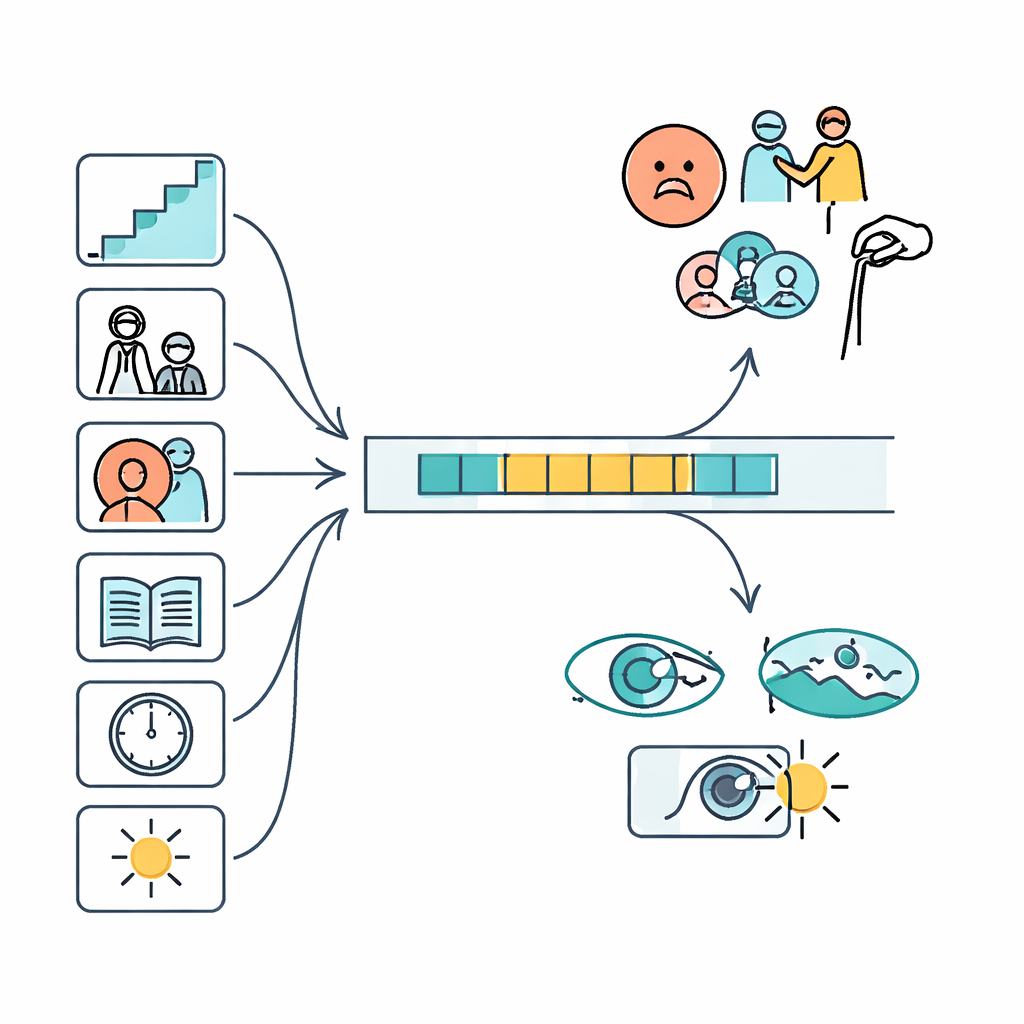
To go beyond simple averages, the researchers used a statistical approach known as Rasch analysis, which examines how well each question fits into an underlying scale and how precisely the questionnaire separates people with different levels of difficulty. Overall, the WHO‑VFQ‑20 showed excellent internal consistency and could clearly distinguish several levels of visual ability. However, some questions behaved differently from the rest, especially those dealing with eye pain and emotional worries about becoming a burden or losing remaining sight. The patterns suggested that the questionnaire was actually tapping into two related but distinct areas: practical visual functioning (such as seeing steps or reading close objects) and psychosocial functioning (such as feelings, worries, and social participation).
Two Sides of Living With Vision Loss
When the researchers re‑analyzed the data by treating the questions as two components—one focused on how well people perform visual tasks, the other on emotional and social well‑being—the fit of the model improved. Both components showed good precision for the questions themselves, and acceptable ability to differentiate people’s experiences. This means the same short questionnaire can supply two useful scores instead of one blurred summary. For everyday practice and research, that distinction matters: treatments or services might improve how clearly someone sees without immediately easing their fears or social isolation, or vice versa.
What This Means for Patients and Eye Care
For adults in Brazilian cities, the Portuguese version of the WHO‑VFQ‑20 appears to be a sound way to capture how vision problems affect both daily activities and emotional life, especially when its two components are reported separately. Because it is brief, interview‑based, and culturally adapted, it can be used in busy clinics and in studies that follow large groups of patients over time. The authors suggest that future work should continue to test and refine this tool in different populations and with specific eye diseases. Used alongside standard eye exams, it can help bridge the gap between what charts show and how patients actually live with their vision.
Citation: Ferraz, N.N., Berezovsky, A., Ellwein, L.B. et al. Psychometric properties of the WHO-VFQ-20 questionnaire for assessing vision-related quality of life in Brazilian urban populations with different vision status. Sci Rep 16, 11817 (2026). https://doi.org/10.1038/s41598-026-40824-9
Keywords: vision-related quality of life, visual impairment, questionnaire validation, Rasch analysis, Brazilian ophthalmology