Clear Sky Science · en
Undergraduate medical students’ perceptions of case-based learning in preclinical physiology within a resource limited setting: a qualitative study
Why this matters for future doctors
How do you train future doctors to think like clinicians when classrooms are crowded, budgets are tight, and students rarely see real patients? This study looks at a practical answer: teaching physiology through patient stories, known as case-based learning. By listening to students in a public medical university in Pakistan, the researchers explore whether this widely praised approach still works when money, time, and equipment are in short supply—and what needs to change so it truly helps.
Learning through real-life stories
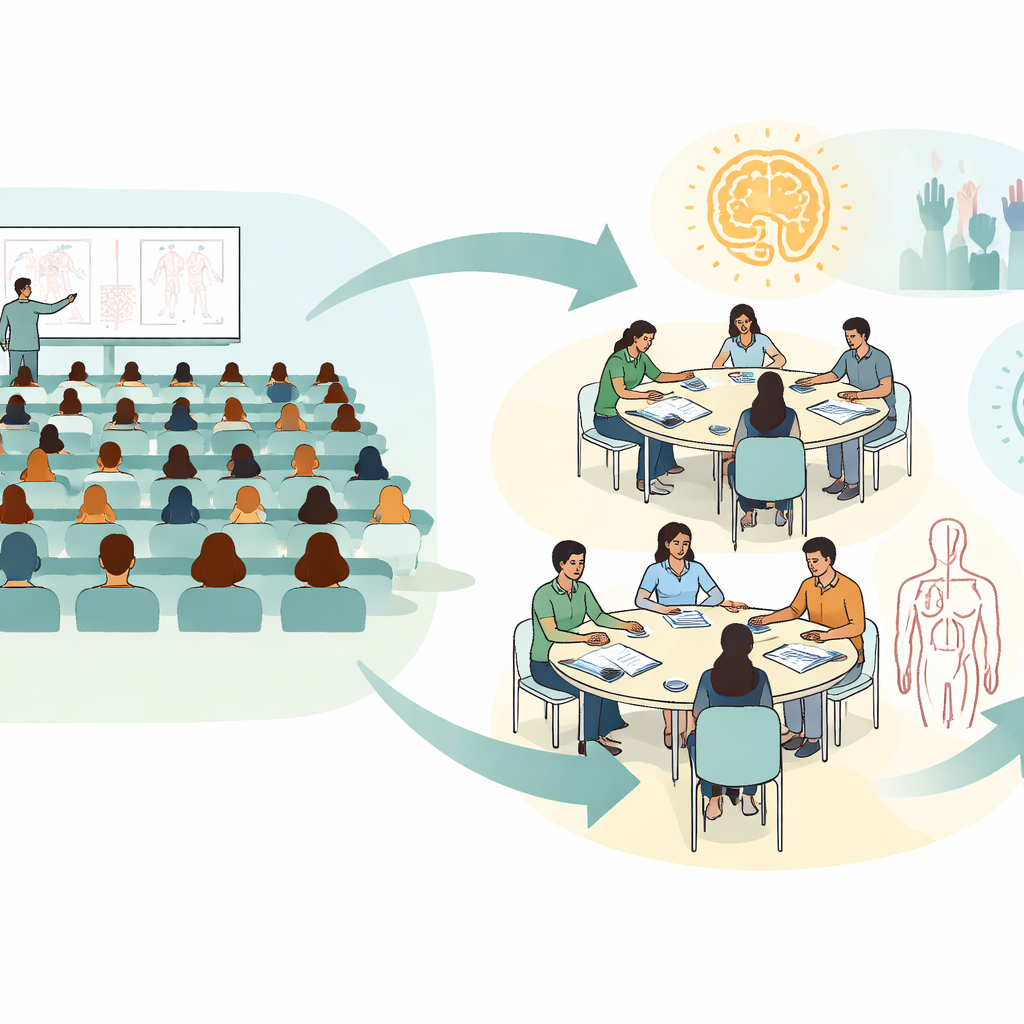
Instead of relying only on lectures, case-based learning asks students to work through short patient scenarios in small groups. In this study, second-year medical students attended 17 such sessions covering topics like blood, heart, lungs, hormones, and the nervous system. Each 90-minute session placed about 15 students with a physiology teacher who guided them through written cases tied to recent lectures. The goal was not to make diagnoses, but to connect basic body processes to realistic clinical situations and spark discussion, questions, and reasoning.
What students say they gain
Students described these case sessions as the most lively part of their course. Compared with sitting through long lectures, they felt more awake, more curious, and more willing to participate. Working through a patient story helped them picture what was happening inside the body and remember difficult ideas weeks later. They reported that talking through steps of a case built habits of analytical thinking—how to approach a problem, consider possibilities, and use physiology to explain what might be going wrong in a patient. In their view, cases served as a bridge between textbook facts and the clinical thinking they will need on hospital wards.
Barriers in a tight setting
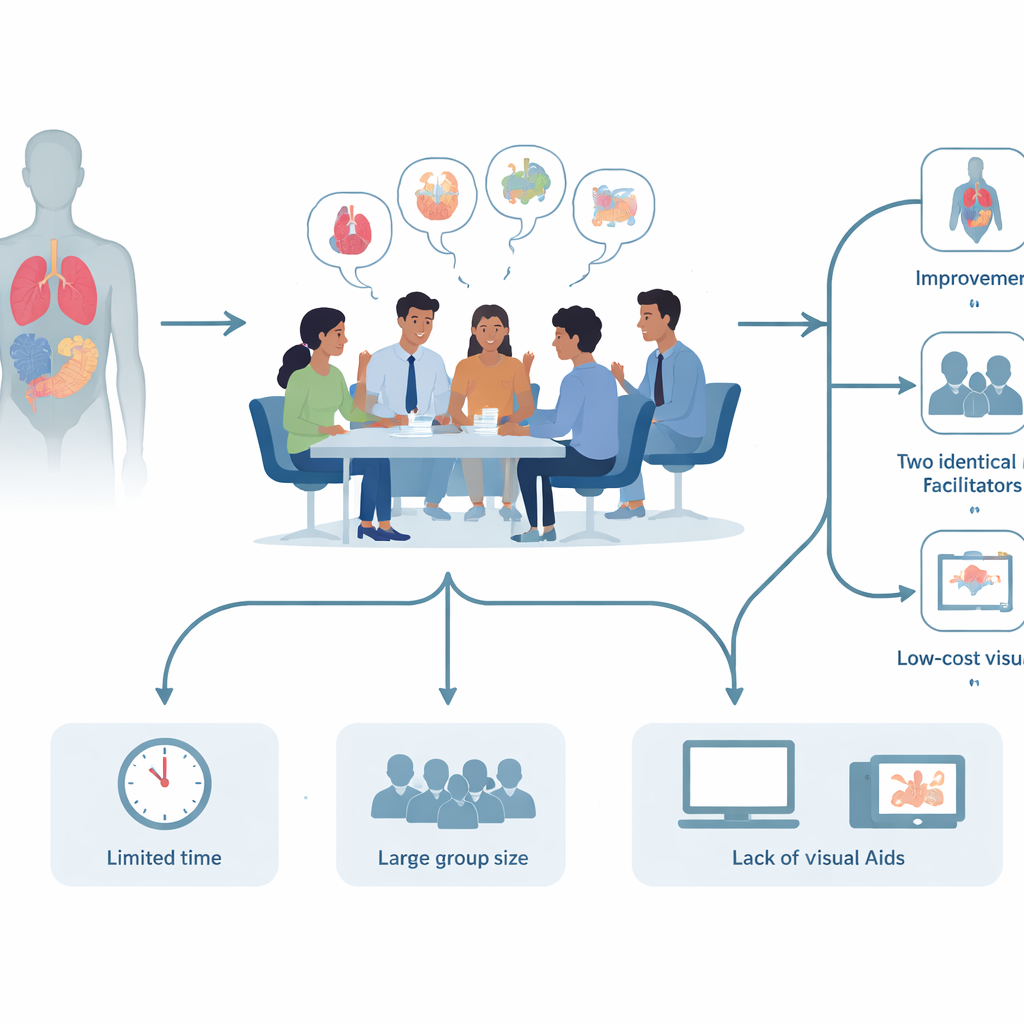
Yet students also highlighted how the realities of a resource-limited environment can blunt these benefits. Sessions often felt rushed because of crowded timetables and heavy syllabi, leaving little time to explore questions in depth. The quality of learning varied sharply from one teacher to another: some carefully guided discussion and involved everyone, while others simply read through the case with minimal interaction. Many students had not yet seen real patients, making some scenarios feel distant. They also struggled to picture complex body processes without diagrams, animations, or models, all of which were scarce due to limited infrastructure and technology.
Student ideas for making it work
Rather than rejecting case-based learning, students proposed concrete, low-cost fixes. They asked to start with simpler, single-system cases and slowly build toward more complex, multi-system stories as their knowledge grows. They wanted facilitators to follow a more consistent pattern in how they run sessions, so expectations and quality do not depend on who is in the room. They also stressed that even basic visuals—hand-drawn diagrams, flowcharts on a board, or simple digital images—would make a big difference in understanding. Together, these suggestions reflect a desire to keep the active, story-driven approach while adjusting it to the realities of crowded classes and limited tools.
What this means going forward
The study concludes that case-based learning can indeed make preclinical physiology more engaging and understandable, even where resources are scarce. However, simply copying models from well-funded universities is not enough. To succeed, case-based teaching must be adapted to local conditions: using clearer, simpler cases, preparing facilitators in a consistent way, and adding affordable visual supports. In other words, the method works best not as an imported package, but as a flexible approach reshaped to fit the constraints and strengths of each medical school.
Citation: Uqaili, A.A., Abbas, U., Khan, A.M. et al. Undergraduate medical students’ perceptions of case-based learning in preclinical physiology within a resource limited setting: a qualitative study. Sci Rep 16, 10163 (2026). https://doi.org/10.1038/s41598-026-40750-w
Keywords: case-based learning, medical students, physiology teaching, active learning, resource-limited education