Clear Sky Science · en
Extracting public opinion on typhoon disasters in China: a sina weibo case study of landfalling typhoon Muifa (2022)
Why online chatter matters in a storm
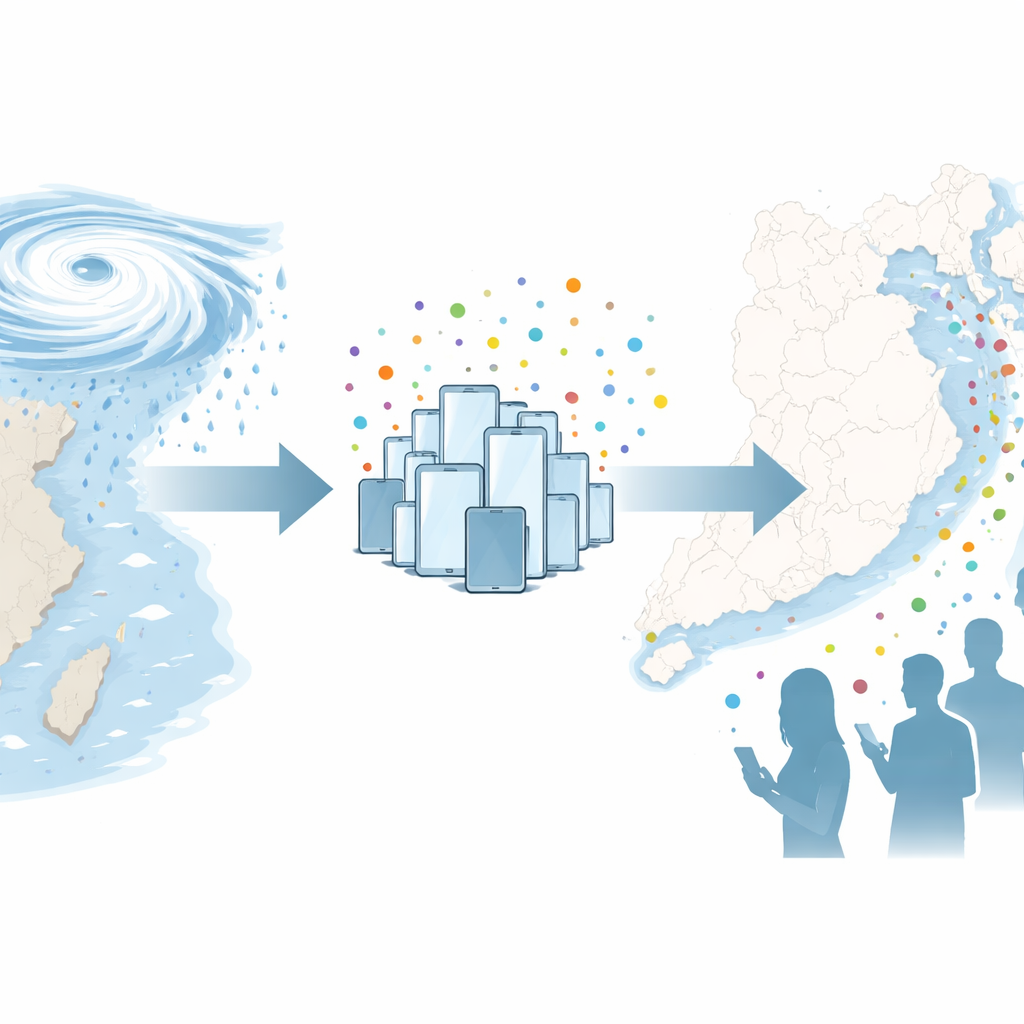
When a powerful typhoon barrels toward land, people no longer just wait for TV bulletins—they reach for their phones. During Typhoon Muifa in 2022, millions of posts appeared on China’s Sina Weibo platform as the storm made four rare landfalls along the coast. This study asks a simple but important question: can that flood of online messages help us understand what people are going through in real time, and guide how officials warn and protect them?
A storm that would not quit
Typhoon Muifa formed over warm seas east of the Philippines in early September 2022 and then crept toward eastern China. Over several days it strengthened, weakened, and re‑intensified before doing something unprecedented: it came ashore four separate times in four different provinces and cities—Zhejiang, Shanghai, Shandong, and Liaoning. Each landfall brought strong winds and heavy rain, and each new forecast update was pushed out through China’s national weather service account on Sina Weibo. Those official posts, along with the worsening rain, set the rhythm for how public attention rose and fell online.
What people talked about online
The researchers collected 19,417 Weibo posts mentioning Typhoon Muifa over a 15‑day period. Using computer text analysis, they found that most messages fell into four everyday themes: how the typhoon was disrupting life (such as flight cancellations, school closures, and flooded streets), what the sky and weather looked like, official storm information, and reports of rescue and emergency actions. Before Muifa hit, posts were dominated by forecasts and warnings. As the storm came ashore and rain intensified, conversations shifted sharply toward damage, daily inconveniences, and later to recovery and relief work. Short, casual posts from ordinary users described on‑the‑ground scenes, while longer messages often discussed multiple concerns in more detail.
Who speaks, and how they feel
The team also examined who was posting. "Official" accounts—such as government agencies and news outlets—tended to share neutral, matter‑of‑fact updates about storm tracks, rainfall, and emergency measures. Personal accounts, by contrast, focused on lived experience: being caught in sudden downpours, worrying about work and school, or marveling at dramatic sunsets after the storm. These personal posts carried much stronger emotion, especially frustration and worry. When the researchers used a modern language model to classify tone, they found negative feelings peaked on the days when the storm was strongest and making landfall, while positive feelings were more common in posts about rescue efforts and beautiful skies after the typhoon had weakened.
Rain on the ground, reactions online
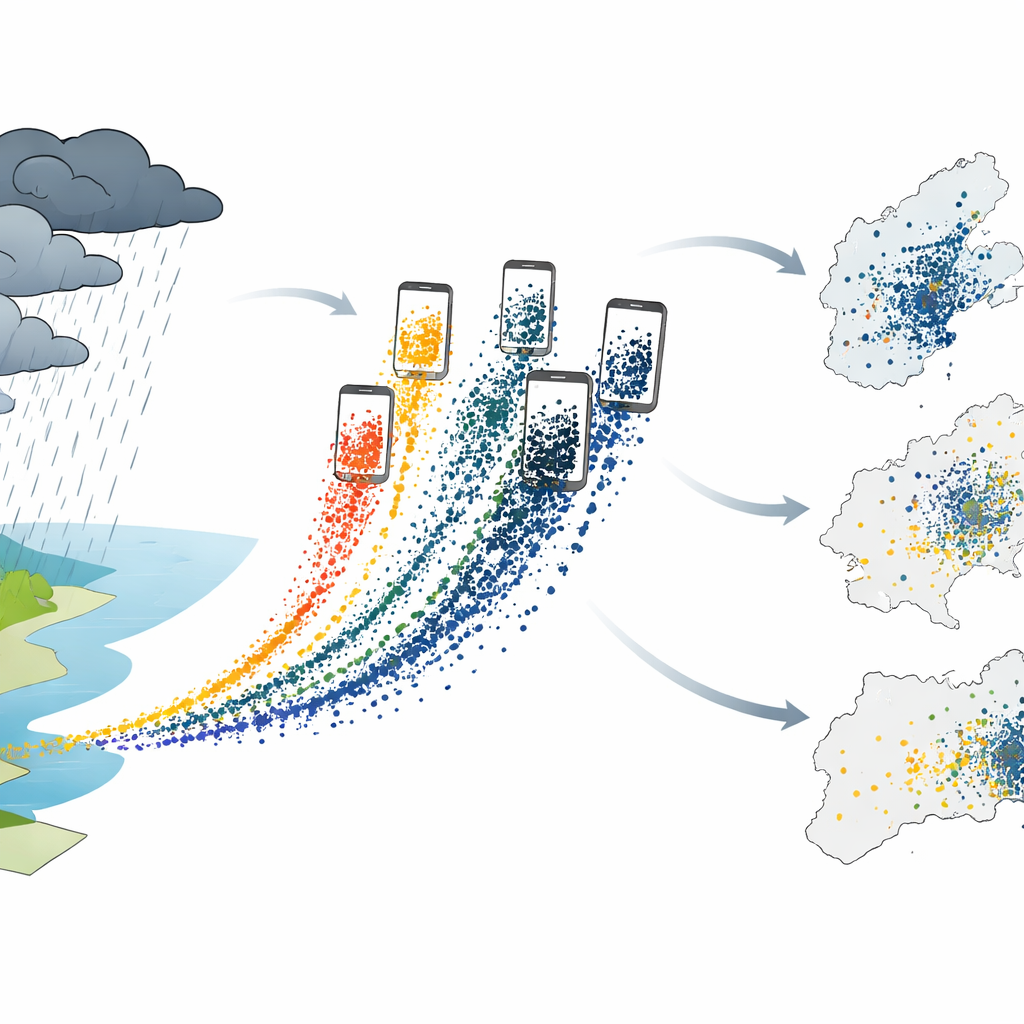
To see how closely online talk followed actual conditions, the study compared daily Weibo activity with measured rainfall in five affected provinces. Where the storm’s landfall had been highlighted in national forecasts, such as Zhejiang and Shanghai, days with heavier rain also had many more posts, especially ones expressing negative feelings. Where heavy rain arrived without the same level of official focus, the link between rainfall and posting was weaker. Overall, total daily rainfall showed a strong connection with both the volume of posts and the share that were negative in tone. Neutral posts, mainly official forecasts, rose with the storm as well, while positive posts did not track the weather as clearly.
What this means for future storms
For non‑specialists, the key message is that social media behaves like a giant, real‑time sensor for human experience in disasters. As rain intensifies and impacts spread, people turn to platforms like Sina Weibo to seek information, share worry, and report damage. At the same time, official accounts set the frame for where the public looks: when forecasts single out certain provinces, residents there respond more intensely online. The authors argue that emergency managers can use these patterns to fine‑tune storm warnings—timing messages to match public attention, pairing hard facts with practical advice and empathy, and watching surges in negative posts as an early sign of distress. While the study focuses on one typhoon and one platform, it shows how carefully reading online conversations could help keep people safer when the next big storm arrives.
Citation: Sun, Y., Wang, Q., Zhu, Y. et al. Extracting public opinion on typhoon disasters in China: a sina weibo case study of landfalling typhoon Muifa (2022). Sci Rep 16, 10227 (2026). https://doi.org/10.1038/s41598-026-40736-8
Keywords: typhoon risk communication, social media during disasters, public sentiment analysis, Sina Weibo case study, extreme weather impacts