Clear Sky Science · en
Effects of deload periods in resistance training on muscle hypertrophy and strength endurance in untrained young men using a randomized within subject design
Why Easing Off Your Workout Might Not Hurt Your Gains
Many people who start lifting weights worry that taking a lighter week in the gym will erase their progress. Coaches often talk about “deloads” – short periods of easier training meant to boost recovery – but hard data on whether these easy weeks hurt muscle and strength gains has been limited. This study looked closely at that question in beginners, asking whether briefly cutting back training during an eight‑week program would slow improvements in muscle size or strength endurance.
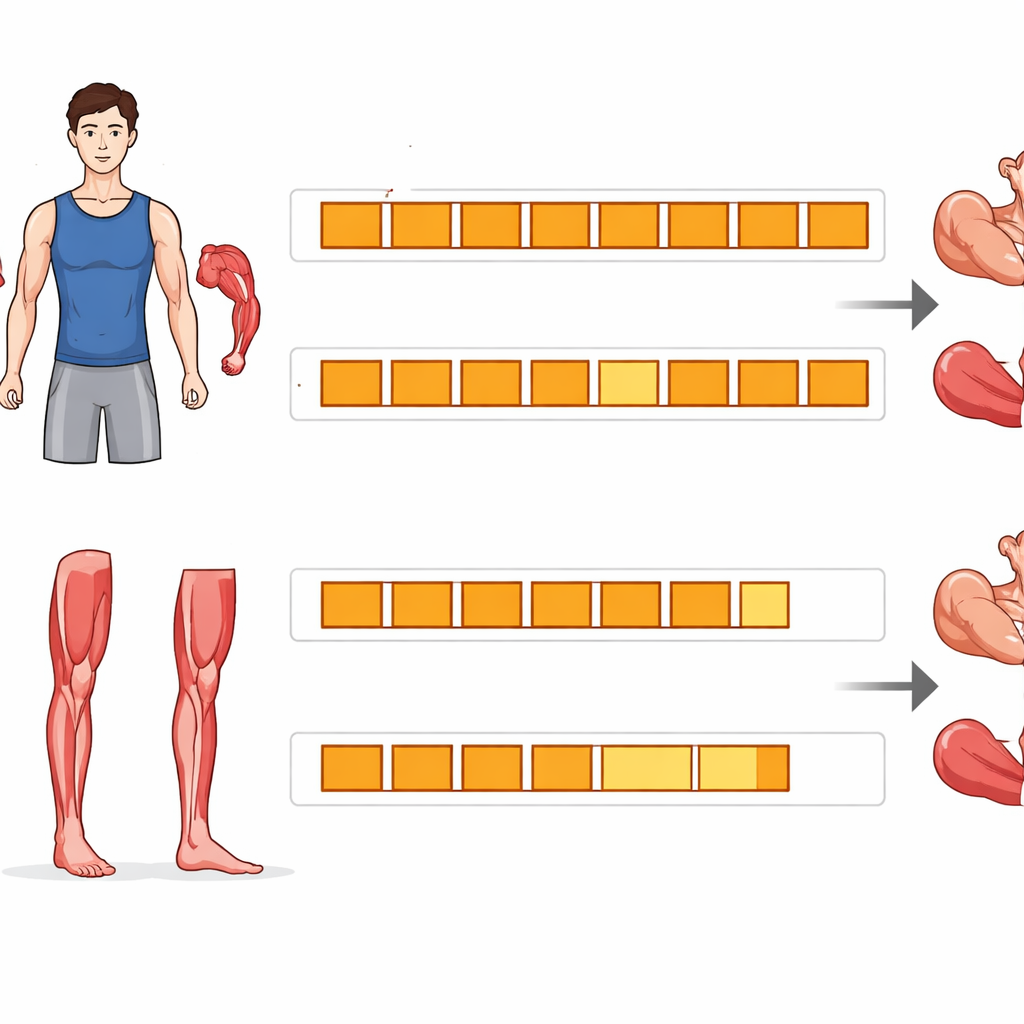
Two Different Paths Through the Same Training Plan
Researchers recruited nineteen healthy young men who had not been doing regular resistance training. Instead of putting people into separate groups, they used each person as his own comparison: for every participant, one arm and one leg followed a steady, “continuous” program, while the opposite arm and leg followed a program that included deload weeks. Everyone trained with just two classic exercises – a leg extension for the thighs and a dumbbell curl for the biceps – performed one side at a time.
What a Deload Week Looked Like
The continuous side trained twice per week for eight weeks, performing six to eight challenging sets of 8–12 repetitions per exercise, always to the point of technical failure. The deload side followed the same approach most weeks, but in weeks four and eight the workload was cut back sharply: only one training day and just two sets per exercise. Over the full program, this meant about 18 percent less total work for the deloaded muscles compared with the continuously trained muscles, while everything else – exercises, rep ranges, rest periods and supervision – was kept the same.
Measuring Muscle Growth and Everyday Strength
Before and after the training period, the team measured muscle thickness in the front of the thighs and upper arms using ultrasound, a noninvasive imaging method that can detect small changes in muscle size. They also tested “strength endurance” by finding the maximum weight each limb could lift ten times in a row on the same leg extension and curl movements. The study used rigorous statistics, including traditional and Bayesian methods, to compare how much the deloaded and continuously trained limbs changed over time.
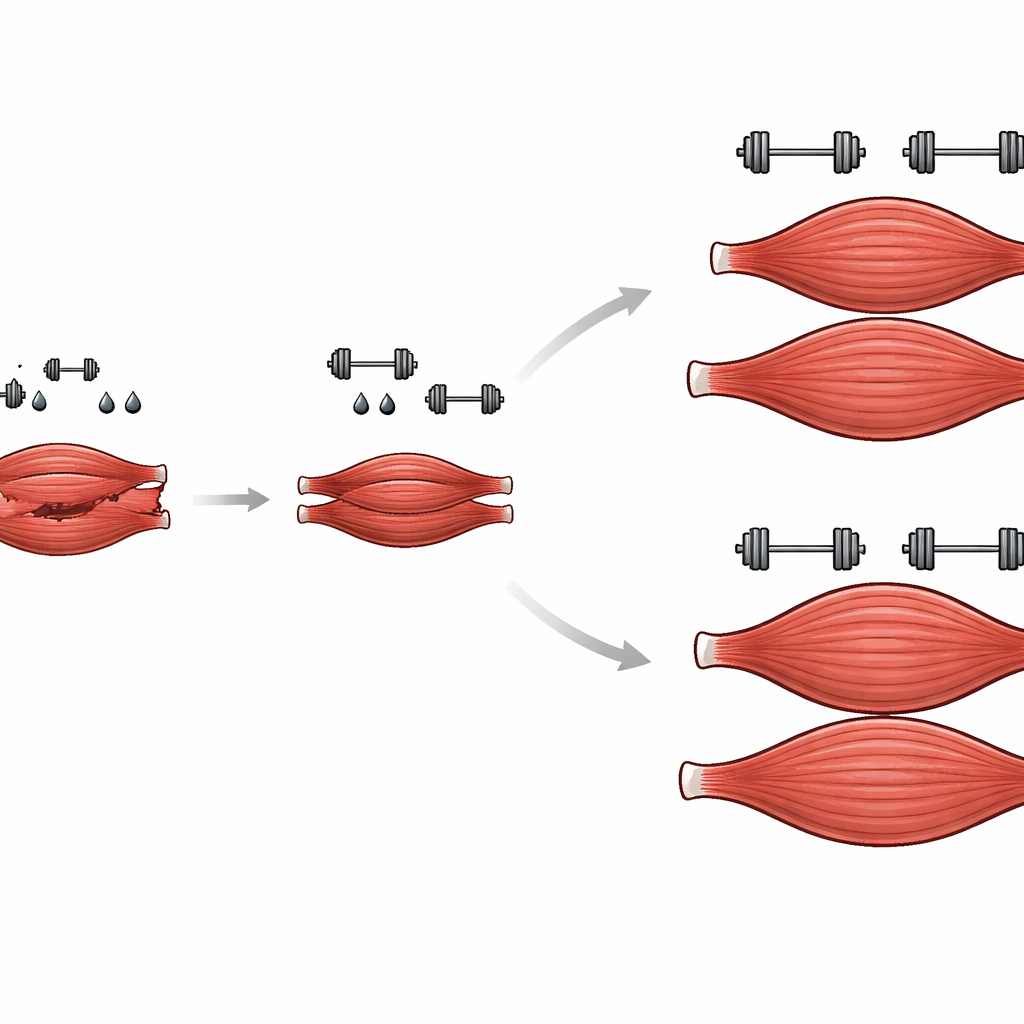
Similar Gains, Even With Easier Weeks
Both training approaches clearly worked. On average, muscles in the thighs and biceps grew thicker in every region that was measured, and the amount of weight participants could lift for ten repetitions increased markedly in both the legs and arms. Crucially, there were no meaningful differences between the deload and continuous conditions for either muscle growth or strength endurance. Any small numerical differences favored neither method consistently, and the confidence intervals around those differences always included zero – a signal that the two strategies were practically equivalent over these eight weeks, despite the deloaded muscles doing less total work.
What This Means for New Lifters
For untrained young men starting a simple resistance program, planning brief, lighter weeks that reduce how often and how much you train does not appear to blunt early gains in muscle size or the ability to handle repeated efforts with a given weight. In other words, easing off a bit at the midpoint and endpoint of a beginner program can still lead to similar improvements as pushing hard every week, while saving time and possibly helping recovery. The authors caution that their findings apply to a short, low‑complexity program in beginners, and not necessarily to advanced lifters or long‑term training. Still, the message is reassuring: thoughtfully placed easier weeks need not be feared as “lost progress” and may be a practical, time‑efficient way to structure early strength training.
Citation: Pancar, Z., Ilhan, M.T., Darendeli, M.K. et al. Effects of deload periods in resistance training on muscle hypertrophy and strength endurance in untrained young men using a randomized within subject design. Sci Rep 16, 10299 (2026). https://doi.org/10.1038/s41598-026-40612-5
Keywords: resistance training, deload weeks, muscle growth, strength endurance, beginner weight training