Clear Sky Science · en
Stakeholder-based assessment of historical urban landscapes as cultural heritage within the context of sustainable development: a case study of İznik (Nikaia)
Why This Walled City Matters Today
On the eastern shore of a tranquil Turkish lake lies the ancient walled town of İznik, once known as Nicaea. At first glance it is a quiet place of stone gates, churches, mosques, olive groves, and vineyards. Yet this small city now sits at the heart of a big question: how can we protect our cultural treasures while also improving everyday life, supporting local jobs, and caring for the environment? This study explores how İznik’s unique mix of ruins, farms, and lakeside landscapes can guide sustainable development, using the voices of local experts and practitioners as a compass.
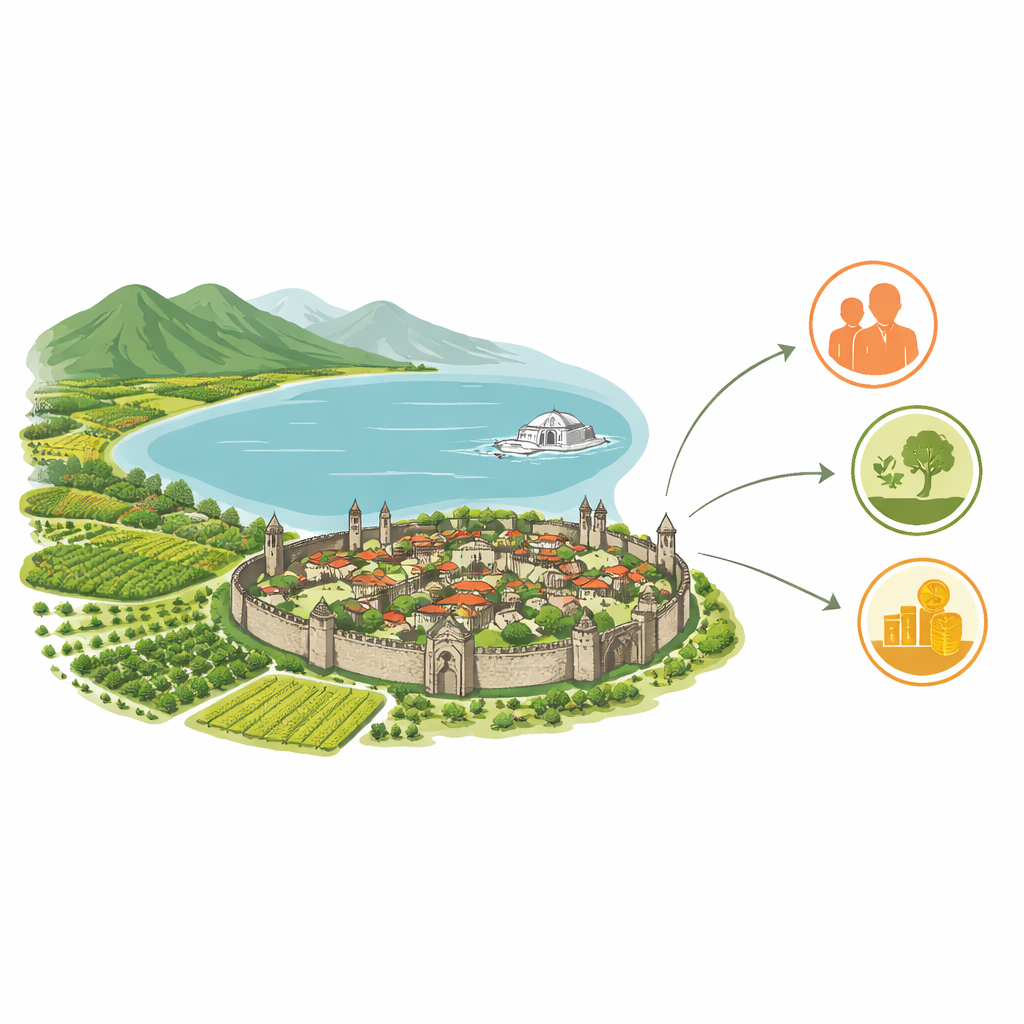
A City Shaped by Walls, Fields, and Water
İznik is surrounded by nearly five kilometers of ancient walls and four monumental gates, a grid of streets first laid out in the Hellenistic period, and layers of buildings from Roman, Byzantine, Seljuk, and Ottoman times. Within and around these walls stand churches such as Hagia Sophia, early Ottoman mosques and madrasas, Roman theaters, baths, and even an underwater basilica just offshore in Lake İznik. Equally important are the agricultural lands: olive groves, vineyards, and gardens that have supported the town for centuries and still provide the main source of income for many residents. Lake İznik itself ties these elements together, supplying water for farming, habitat for wildlife, and space for recreation and tourism.
Looking at Heritage Through a Wider Lens
Rather than treating monuments in isolation, the authors adopt the "historic urban landscape" idea promoted by UNESCO. This perspective views the whole city—its buildings, open spaces, farmland, lake, and living traditions—as a single, evolving cultural landscape. The study asks two core questions: how do İznik’s landscape components contribute to cultural, social, economic, and environmental sustainability, and what kinds of urban design strategies can guide future development? To answer these, the researchers mapped archaeological sites, agricultural areas, and natural features, and then examined how they interact to shape the city’s character and identity.
Listening to Those Who Know the City Best
To ground their work in real-world experience, the team surveyed 120 stakeholders, including landscape architects, architects, archaeologists, planners, engineers, tourism professionals, and local practitioners such as tile designers. These participants, most with more than a decade of experience, rated how strongly different parts of İznik’s landscape support four types of sustainability: cultural, social, economic, and environmental. Statistical analysis showed that the survey questions grouped cleanly into these four dimensions and that the responses were consistent and reliable. The results revealed very high appreciation for İznik as a well-preserved walled settlement with distinctive monuments, a strong sense of place, and valuable agricultural traditions.
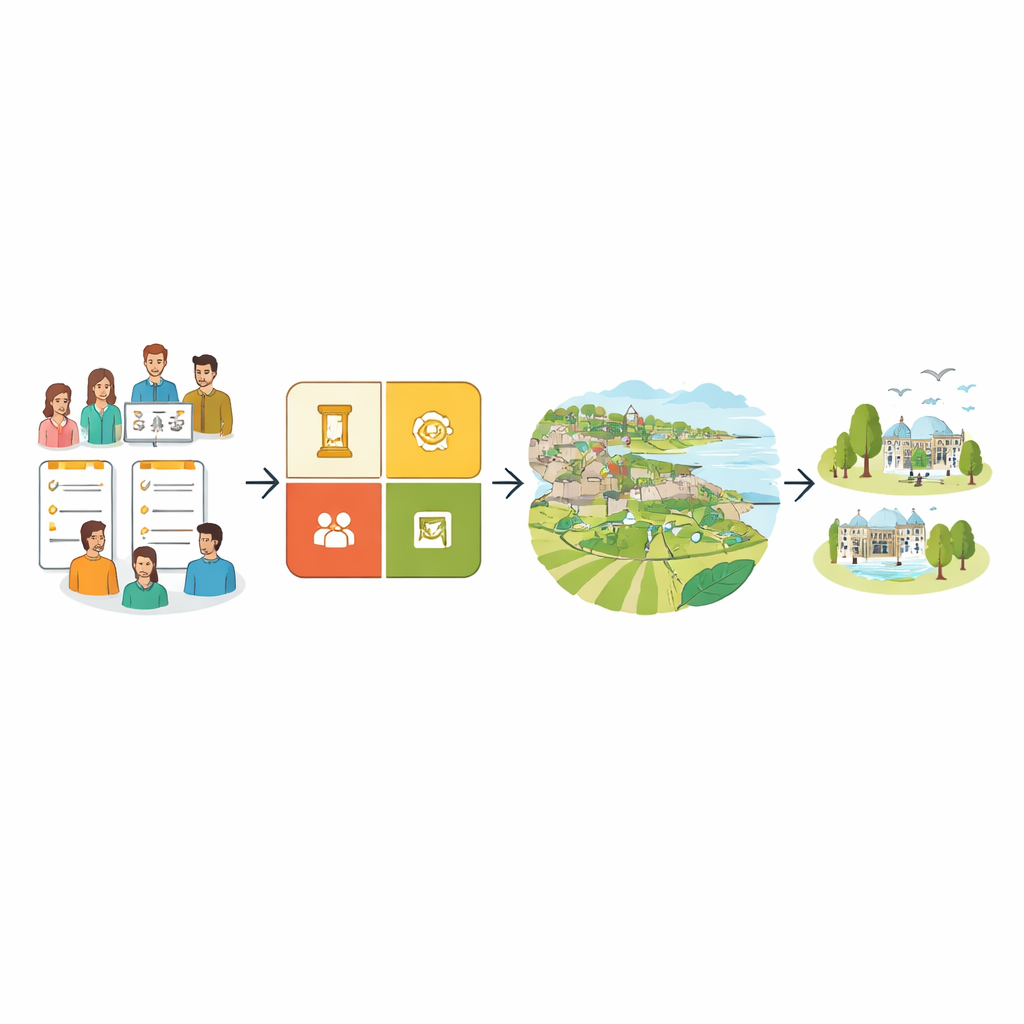
What the Stakeholders Said
Stakeholders saw İznik’s historic fabric and agricultural landscapes as powerful engines for cultural and economic sustainability. They emphasized that the unity of archaeological sites, olive groves, vineyards, and Lake İznik creates a recognizable identity that can attract visitors, support diverse forms of tourism, and keep local crafts and farming practices alive. Economic questions about olive cultivation, heritage-based tourism, and reusing historic buildings for new purposes all received very high scores. Social benefits—such as public enjoyment of archaeological parks, lakeside paths, and walkable streets—were rated positively, though somewhat less strongly. Environmental aspects, including climate‑sensitive design, green transport, and protection of the lake’s ecosystem, received the lowest scores, signaling that this dimension lags behind the others and needs focused attention.
Design Ideas for a Fair and Lasting Future
Building on these findings, the authors outline practical urban design proposals. Around the city walls and monuments, they recommend green buffer zones, better pedestrian routes, and linked public spaces that connect nearby historic buildings into inviting urban rooms. Along the lakeshore, they call for nature‑based solutions that both protect the ecosystem and create accessible recreation areas, stitched together by walking and cycling paths that link natural and cultural sites. They propose cultural routes, archaeological parks, and underwater heritage viewing areas to diversify tourism while balancing protection and use. For the countryside, they suggest agrotourism centered on olive oil production, vineyards, and traditional mulberry gardens, encouraging both green income and pride in local traditions.
What This Means Beyond One City
In everyday terms, the study shows that when a historic town listens carefully to the people who work in and care for it, its past can become a roadmap for a more sustainable future. İznik’s walls, fields, and lake are not just relics or scenery; together they form a living system that can support culture, community, jobs, and the environment—if guided by thoughtful planning. The authors argue that this stakeholder‑based, whole‑landscape approach can help other historic cities worldwide, especially those seeking recognition on the World Heritage List, to balance conservation with change and to turn their layered histories into long‑term strengths.
Citation: Kapuci, U., Cengiz, C., Smardon, R.C. et al. Stakeholder-based assessment of historical urban landscapes as cultural heritage within the context of sustainable development: a case study of İznik (Nikaia). Sci Rep 16, 13131 (2026). https://doi.org/10.1038/s41598-026-40429-2
Keywords: historic urban landscape, cultural heritage, sustainable cities, stakeholder participation, Iznik Turkey