Clear Sky Science · en
Radiofrequency radiation-induced changes in Leydig cell function
Why your phone and Wi-Fi might matter to fertility
Smartphones, Wi-Fi routers, and other wireless gadgets constantly bathe us in invisible radio waves. These signals are far too weak to break DNA directly, so they are often described as safe as long as heating does not occur. Yet some studies hint that long periods of exposure could still nudge cells into subtle stress. This work explores how such radio signals affect Leydig cells, the testis cells that make testosterone, to better understand potential links between everyday wireless use and male reproductive health. 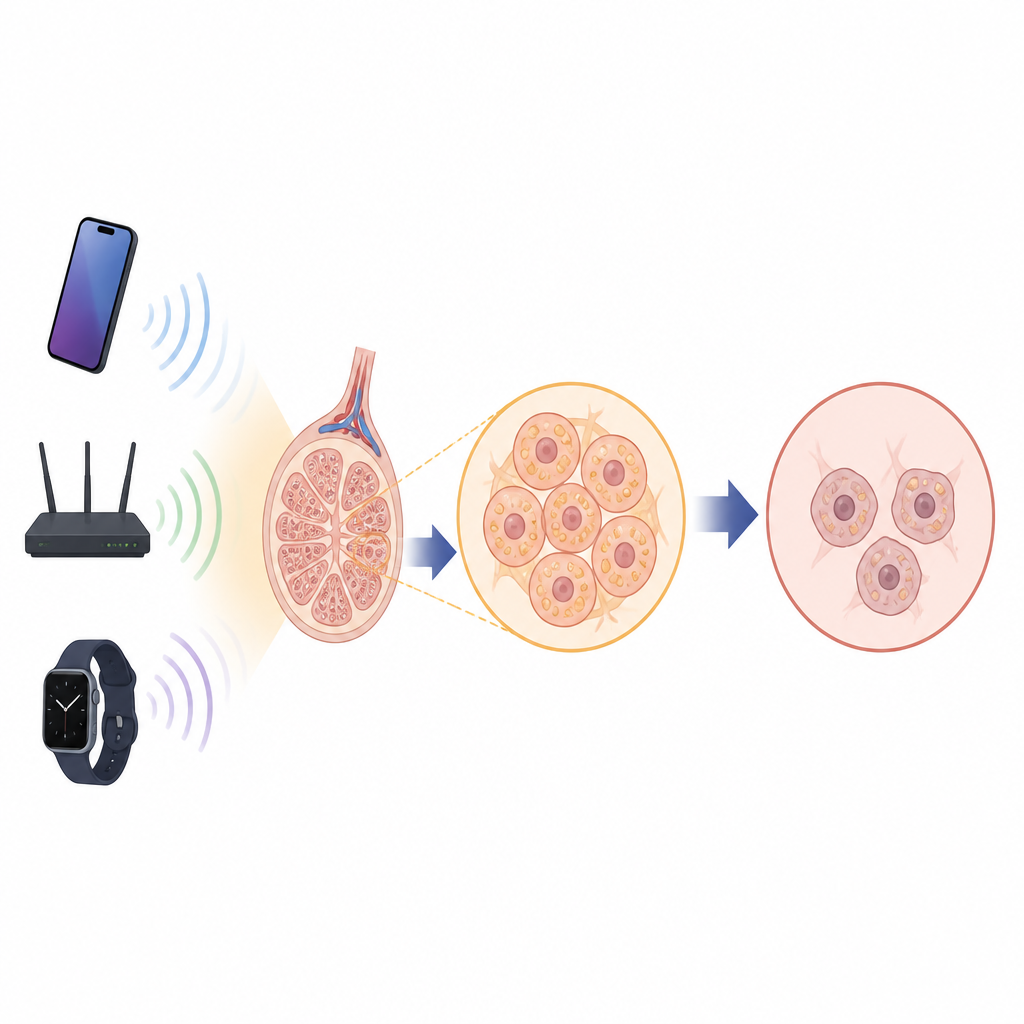
The hormone factories inside the testis
Inside the testis, Leydig cells sit between the sperm-producing tubes and act as miniature hormone factories. They produce testosterone, which drives sperm production, male puberty, and many features of adult health. To keep this system steady, Leydig cells must grow, divide, and repair their DNA in an orderly way. If their growth slows or they become damaged, testosterone levels and sperm support can suffer. Because these cells are busy and energy hungry, they may be especially sensitive to environmental stress, including radio waves from wireless devices.
How the researchers tested wireless signals on cells
The team grew a mouse Leydig cell line in the lab and exposed the cells to three types of radiofrequency radiation under carefully controlled, non-heating conditions. One source was a 4G mobile phone in active call mode, and the others were pure signals at 1800 and 2450 megahertz, similar to those used in mobile networks and Wi-Fi. Cells were exposed for 15 to 120 minutes, then examined for changes in shape, growth, and how they moved through the cell cycle, the stepwise path cells follow as they prepare to divide. Microscopy revealed structural changes, a DNA-labeling test tracked how much new DNA the cells made, and flow cytometry measured how many cells sat in each phase of the cycle.
What happened to the cells after exposure
When the cells were viewed under the microscope, unexposed Leydig cells appeared spindle shaped with flat, well attached bodies, a sign of good health. After longer exposure to radio signals, especially from the mobile phone and the 2450 megahertz source, many cells rounded up, shrank, lost their grip on the dish, and showed small bubbles on their surfaces, features linked with stress and cell death. The DNA-labeling test showed that, over time, exposed cells made less new DNA than controls, meaning they were dividing less. This drop in growth was strongest at the longest exposure time of 120 minutes and appeared sooner with mobile phone radiation than with the pure signal sources. 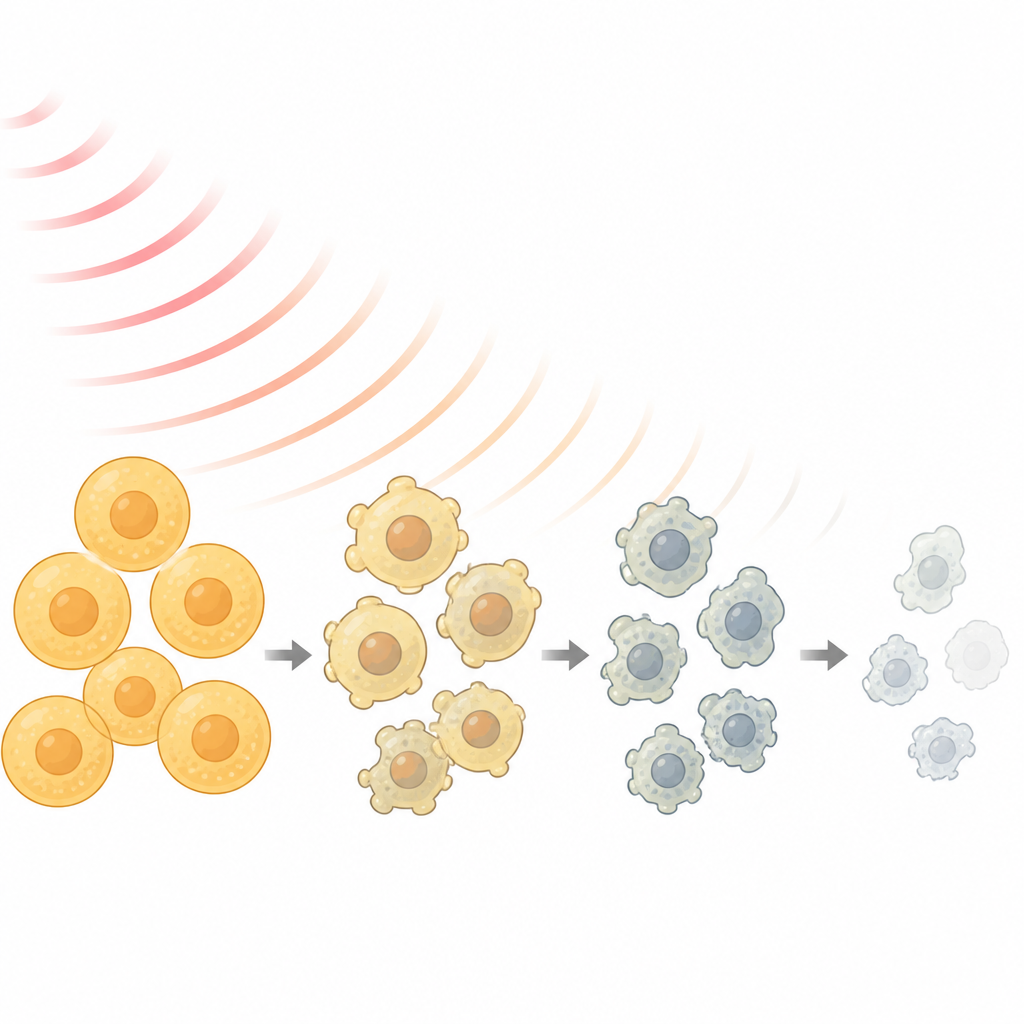
Hidden slowdowns in the cell cycle
The cell cycle analysis added another layer of insight. In all three exposure setups, more cells piled up in the first gap phase, when cells prepare to copy their DNA, while fewer reached the DNA-copying phase itself. The final phase, when cells divide into two, changed little. This pattern suggests that radiofrequency exposure triggers internal checkpoints that keep Leydig cells from moving forward, likely as a protective response to stress. The effect again depended on both the frequency and how long the exposure lasted, with stronger slowdowns at later time points.
What this might mean for everyday life
Taken together, the results show that non-heating levels of radiofrequency radiation can alter the shape, growth, and internal timing of mouse Leydig cells in the lab, in ways that point to stress and reduced ability to divide. The study does not prove that everyday wireless use harms fertility in people, and it was limited to one cell type in a dish. However, because Leydig cells are central to testosterone production, even modest long-term impacts on their health could matter. The work strengthens the case for further research in animals and humans to clarify how real-world exposure patterns affect the cells that underpin male reproductive function.
Citation: Jangid, P., Rai, U., Sevak, J.K. et al. Radiofrequency radiation-induced changes in Leydig cell function. Sci Rep 16, 14999 (2026). https://doi.org/10.1038/s41598-026-39244-6
Keywords: radiofrequency radiation, Leydig cells, male fertility, cell cycle, wireless devices