Clear Sky Science · en
Regular outdoor access decreases stress with positive effects on the health of growing pigs raised on a conventional farm
Why Time Outside Matters for Farm Pigs
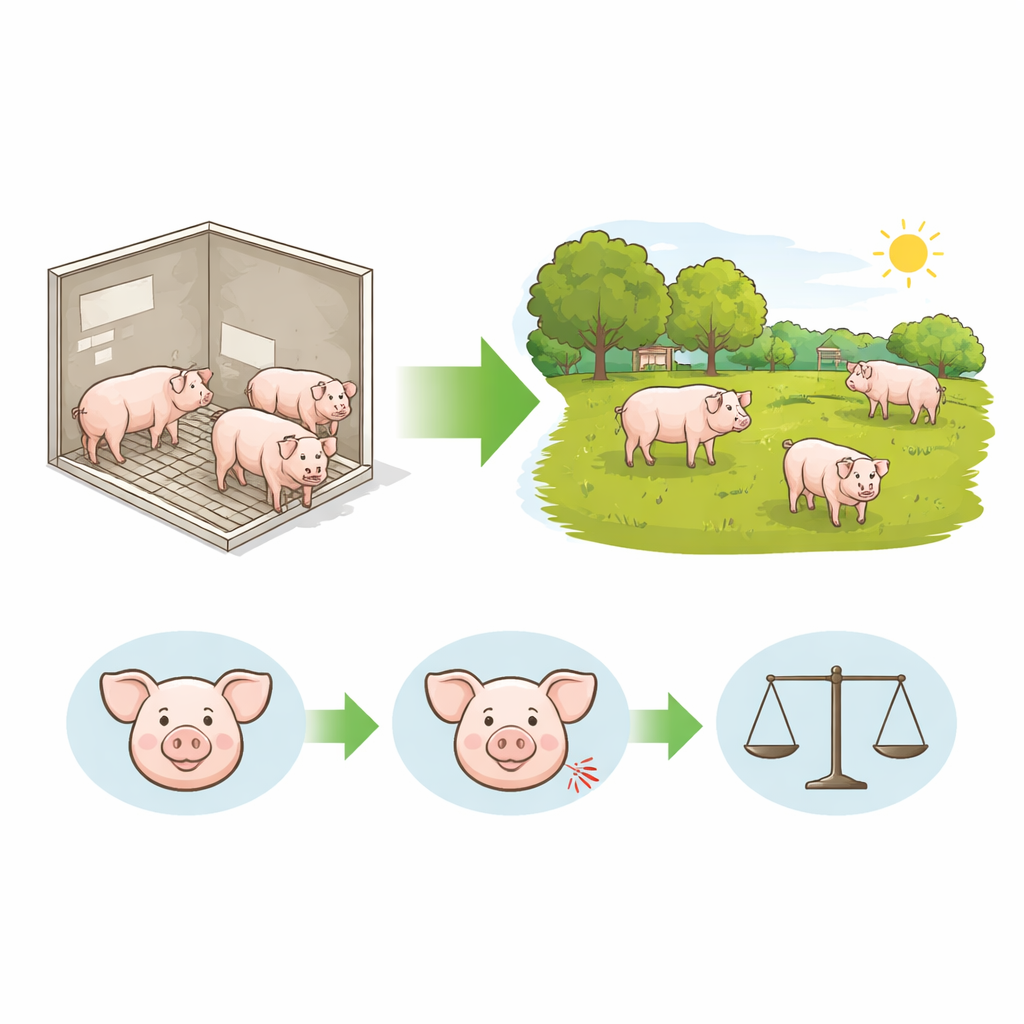
Many people like to imagine farm animals wandering in fields, yet most pigs today are raised indoors on bare floors with little to do. This study asked a simple but powerful question: if pigs kept on a standard commercial farm are given regular "recess" in a grassy paddock, does it actually make them less stressed and healthier—without slowing their growth? The answer matters not only for animal lovers, but also for farmers who worry that outdoor access could harm health or productivity.
Two Ways to Raise the Same Pigs
The researchers followed nearly 300 growing pigs, all bred and housed on the same high-health experimental farm in France. Half of the pigs stayed entirely indoors in conventional pens with slatted floors, feeders, and water troughs. The other half lived in identical indoor pens but, starting at about 11 weeks of age, were led to a 5000-square-meter grassy paddock twice a week for four hours at a time. These outdoor sessions continued through the finishing period, up to slaughter age. Inside and outside groups were matched by sex, litter, and weight so the only planned difference was access to pasture. The team then tracked stress, health, immunity, and growth across several months.
Measuring Stress from Saliva to Skin
To see how tense or relaxed the pigs were, the scientists measured cortisol, a hormone that rises with stress. They collected saliva twice, roughly one and three months after outdoor visits began, and also measured cortisol trapped in hair at the end of the experiment, which reflects longer-term stress. Across all three batches of animals, pigs that enjoyed regular outdoor breaks had consistently lower cortisol in their saliva than pigs kept indoors, showing they were less acutely stressed during daily life. Hair cortisol told a more complex story, influenced by season and sex, but in at least one group of females outdoor access also corresponded to lower chronic stress. Overall, the hormonal picture pointed toward calmer animals when pasture time was part of their routine.
Fewer Wounds, Calmer Bodies
The team also examined the pigs’ bodies for scrapes and bite marks, which can signal fighting or frustration in crowded pens. At about 150 days of age, pigs with outdoor access had milder body lesions and more individuals with completely unmarked skin. Tail injuries—often linked to severe boredom and aggression—were rare in both groups. Inside the body, blood tests revealed that indoor-only pigs had higher counts of several white blood cell types, including lymphocytes, monocytes, and certain T cells. Rather than a stronger defense, such increases can indicate that the immune system is being chronically stirred up. In contrast, pigs with regular pasture time showed lower overall white cell counts without any loss of basic immune functions such as cell "eating" ability or production of key signaling molecules in lab tests.
Gut Health and a Key Pig Disease
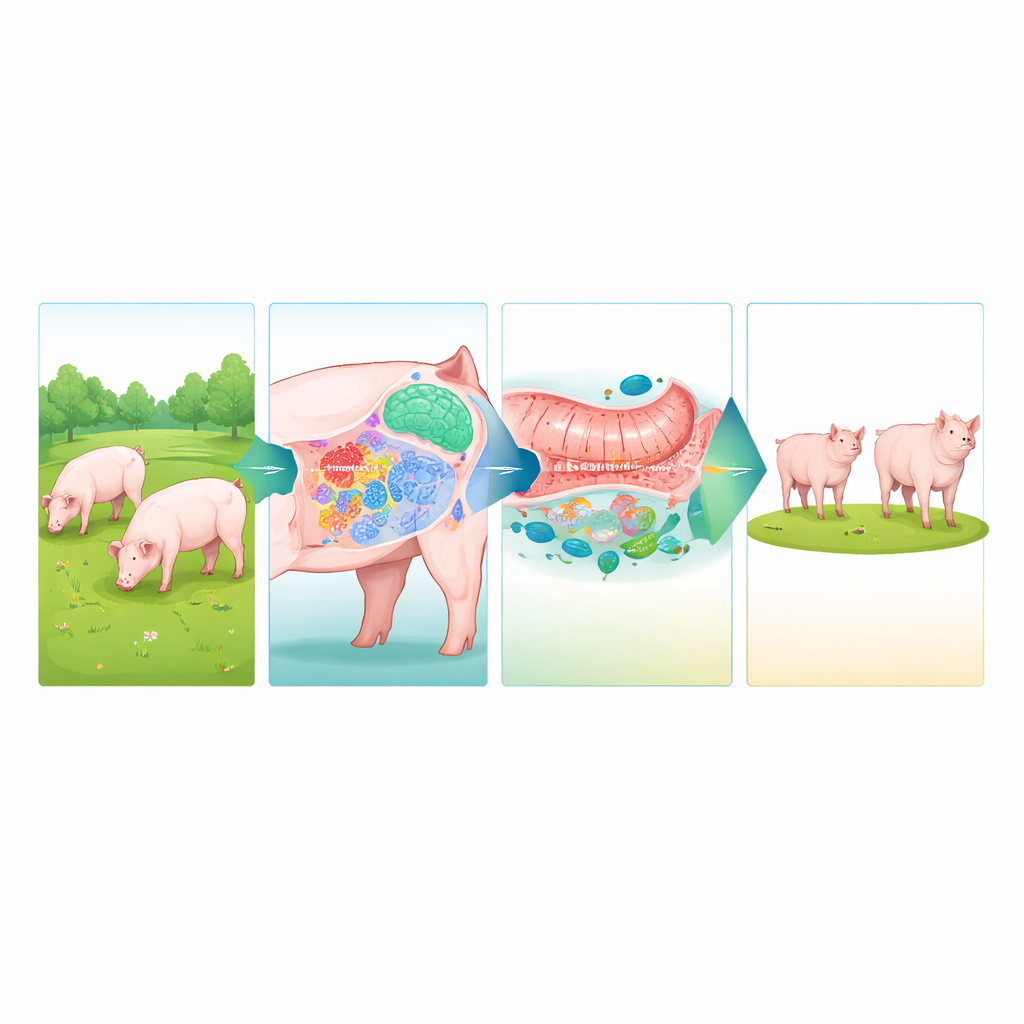
Digestive problems are common in growing pigs, and one bacterium, Lawsonia intracellularis, is a frequent culprit behind diarrhea. In this study, non-bloody diarrhea was the most frequent clinical sign across the herd, but it appeared significantly less often in pigs with outdoor access. Among the pigs that did develop diarrhea, every outdoor pig produced antibodies against L. intracellularis, suggesting their immune systems mounted a more effective response to infection. By contrast, only two-thirds of the indoor pigs with diarrhea showed such antibodies, and several indoor animals later died from severe, bloody diarrhea while none of the outdoor pigs did. Blood levels of another illness marker, haptoglobin, were similar between groups overall, again hinting that the main difference lay in how efficiently pigs handled gut challenges rather than in constant inflammation.
Growth and Practical Farm Concerns
Farmers often fear that giving pigs more space and stimulation will cost growth or create leg problems. Here, average daily weight gain and final body weight were virtually identical in indoor and outdoor-access pigs, and the number of pigs ready for slaughter at the first shipping date did not differ. Lameness was rare and similar in both groups, and no joints were condemned at the slaughterhouse. There were no visible parasite problems in the outdoor pigs, even though they did not receive anti-parasitic drugs, and overall rates of health issues such as abscesses or hernias were comparable. Bringing pigs in and out of the paddock did add to the workers’ daily tasks, but handlers reported that, over time, the animals eagerly anticipated their trips outside, which in turn made the work more rewarding.
What This Means for Pigs and People
This study shows that, on a conventional farm, giving growing pigs short but regular access to a grassy paddock can lower everyday stress, reduce skin injuries, and support better gut health—without sacrificing growth or triggering obvious new health risks. The pigs were calmer, fought less, and appeared better able to cope with an important intestinal infection. While the findings come from a single well-managed farm and need confirmation under a wider range of commercial conditions, they suggest that simple, scheduled "recess" in a pasture could be a practical way to boost both pig welfare and farm resilience.
Citation: Jahoui, A., Lion, J., Guiraud, F. et al. Regular outdoor access decreases stress with positive effects on the health of growing pigs raised on a conventional farm. Sci Rep 16, 11191 (2026). https://doi.org/10.1038/s41598-026-38461-3
Keywords: pig welfare, outdoor access, animal stress, pasture-based farming, livestock health