Clear Sky Science · en
Effectiveness of conventional surface water treatment processes in reducing natural radionuclides in Nile River drinking water
Why Cleaning River Water Matters
For Egyptians, the Nile River is more than a symbol; it is the country’s main source of drinking water. Along with silt and germs, this river water naturally carries tiny amounts of radioactive atoms that come from rocks and soil. Most of the time these levels are low, but people drink this water every day, year after year. This study set out to learn how well ordinary water treatment plants along the Nile in Upper Egypt remove these natural radioactive substances, and whether the treated water is safely below international health limits.
Invisible Guests in Our Drinking Water
The researchers focused on four naturally occurring radioactive substances that commonly appear in surface waters. Three of them are linked to long-lived elements in rocks: two forms of radium and one form of potassium. The fourth, radon, is a gas that seeps out of rock and dissolves into water. When people use water at home, radon can escape into indoor air and be breathed in, while radium and other particles are mostly swallowed. Although the amounts found in rivers are tiny, long-term exposure has been associated with a small added risk of cancers, especially in the lungs and digestive system. That is why international agencies recommend careful monitoring of these substances in drinking water.
How the Treatment Plants Work
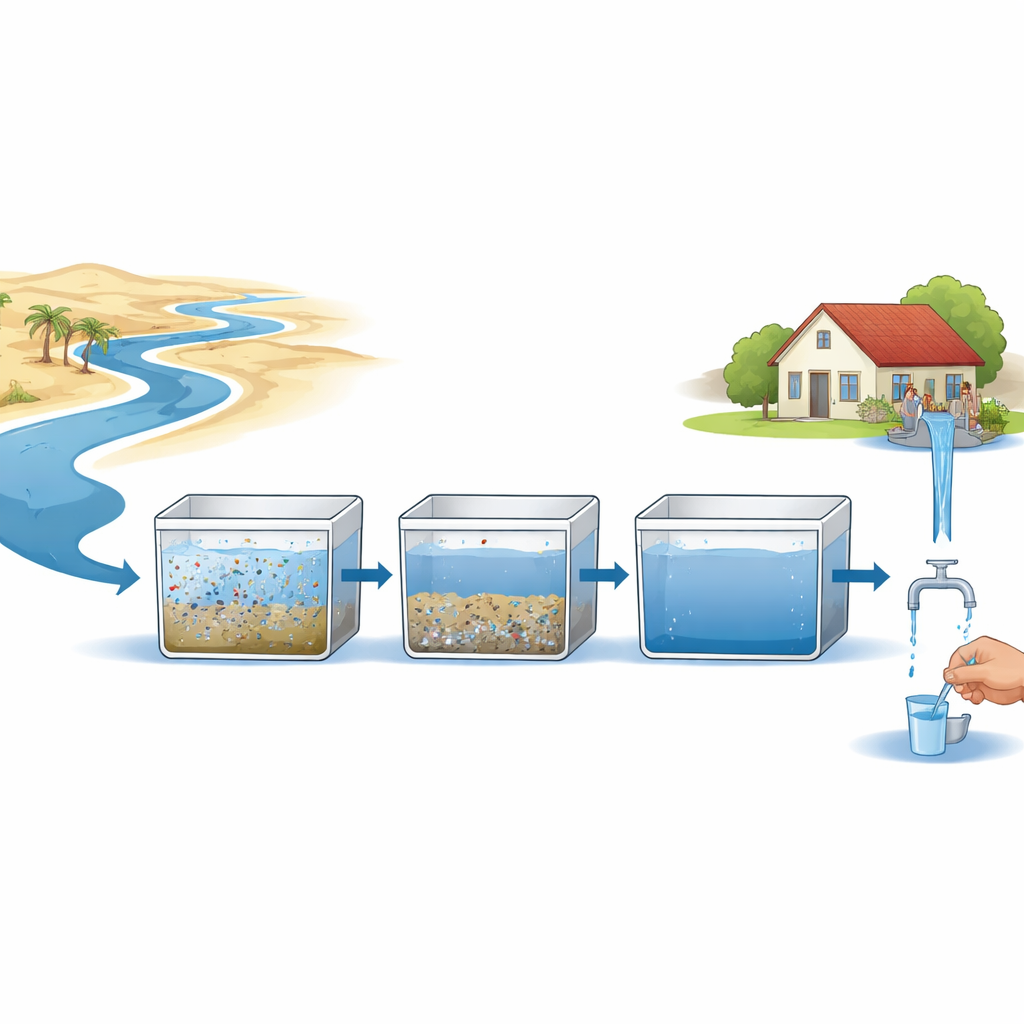
To see how these radioactive atoms change as water is cleaned, the team sampled ten large treatment plants in the Qena and Luxor regions of Upper Egypt. All of them follow a similar four-step routine: pulling raw water from the Nile, mixing it with chemicals so dirt clumps together and settles, passing it through sand filters, and finally storing and disinfecting it before sending it to homes. The scientists collected water at each of these stages, from river intake to finished tap water, for a total of forty samples. They then used specialized detectors to measure the amounts of radon gas and the three radioactive elements that emit gamma rays.
What Happens to Radiation During Cleaning
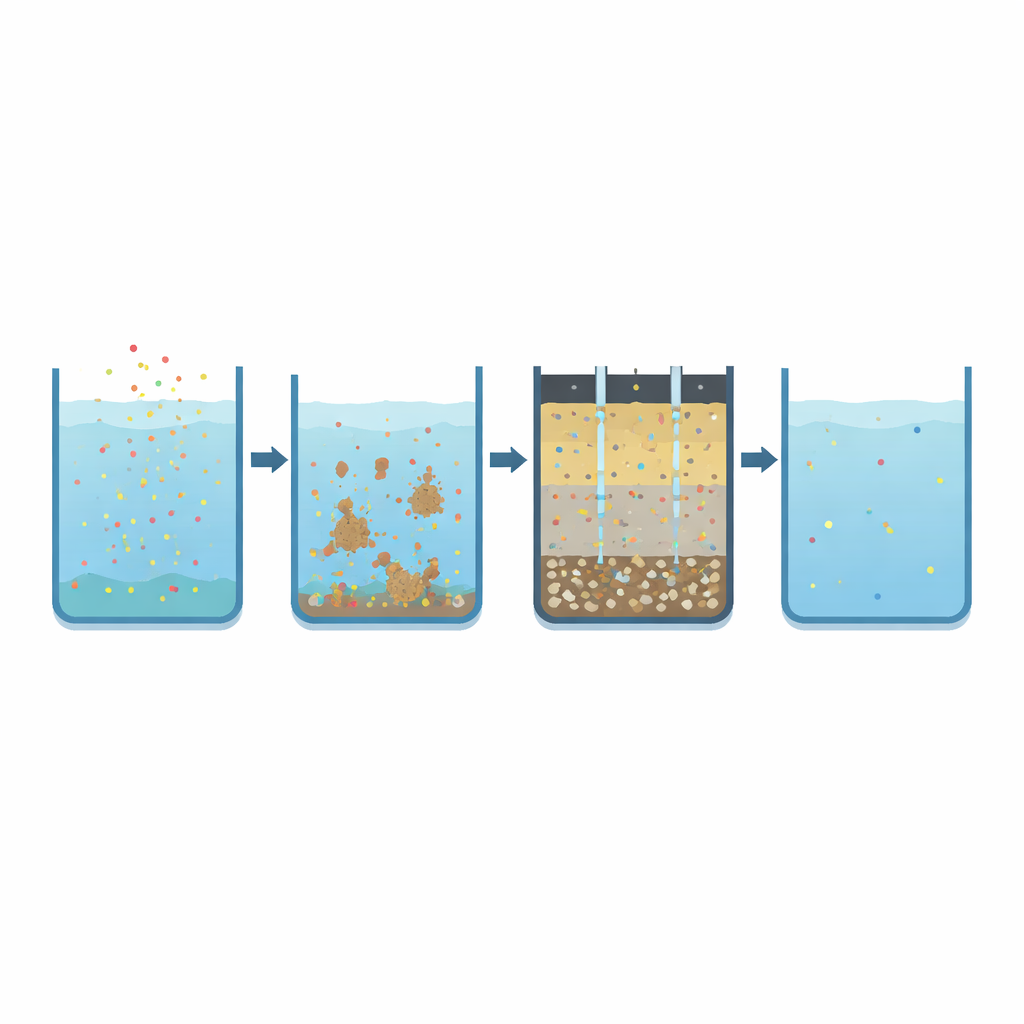
The study revealed that the treatment steps do not affect all radioactive substances equally. Radon, being a gas, is most easily driven out of the water whenever it is stirred, sprayed, or allowed to sit in open tanks. Across all stages combined, about three quarters of the original radon disappeared before the water reached consumers. The two forms of radium behaved differently because they tend to attach to fine particles in the water. When chemicals are added in the mixing basins, these particles clump into larger “flocs” that sink and are later trapped in sand filters. Through this combination of settling and filtering, the plants removed nearly half of one radium type and about one third of the other. Potassium behaved more like ordinary dissolved salt, so only about one fifth of it was taken out by the routine process.
How Safe Is the Final Water?
Using the measured values from the finished water, the researchers estimated the radiation dose that adults, children, and infants would receive in a year from drinking Nile-based tap water. They combined typical local water consumption with standard health models used by international agencies. For all age groups, the calculated yearly doses after treatment were well below the widely used health guideline of 100 microsieverts per year from any single source in drinking water. In fact, treatment cut the radiation dose from these substances by more than half for adults and children and by about seventy percent for infants, who are more sensitive and drink less water overall.
What This Means for Everyday Life
The findings show that the existing multi-step treatment plants along the Nile in Upper Egypt are doing their job in reducing natural radioactivity to levels considered safe by global standards. Stirring, settling, filtering, and storage together form a strong barrier against the most worrisome substances, especially radon and one of the radium forms. At the same time, the study highlights that some dissolved elements, like potassium, are harder to remove with standard methods. While there is no current cause for alarm, the authors note that if the river’s natural background ever rises, more advanced methods might be needed. For now, their work offers reassuring evidence that tap water drawn from this stretch of the Nile poses only a very small radiological risk to the millions of people who depend on it every day.
Citation: Ali, K., Matar, Z.S., Harb, S. et al. Effectiveness of conventional surface water treatment processes in reducing natural radionuclides in Nile River drinking water. Sci Rep 16, 9802 (2026). https://doi.org/10.1038/s41598-026-36428-y
Keywords: drinking water safety, Nile River, water treatment, natural radioactivity, radon and radium