Clear Sky Science · en
Neurodiversity and mental health in adulthood: exploring the unique contributions of autism and ADHD to internalising problems
Why this topic matters
Many adults live with autism, ADHD or both, and often also face anxiety or depression. This study asks a simple but important question: when it comes to these mental health struggles, do autism and ADHD play different roles, and if so, how? Understanding these links can guide better support for neurodivergent adults and help friends, families and clinicians recognise who might be most at risk and why.
Looking beyond labels
The researchers did not just compare people with and without diagnoses. Instead, they also looked at traits related to autism and ADHD across nearly five thousand adults in the United Kingdom and United States, whether or not they had been diagnosed. Traits were measured with standard questionnaires that capture everyday patterns, such as social style, attention and impulsivity. Participants also reported if they had been diagnosed with anxiety, generalised anxiety disorder, depression or other conditions. This approach let the team see how different levels of traits across the whole population related to mental health, rather than treating neurodivergence as an all or nothing category.
Traits and the risk of feeling low or worried
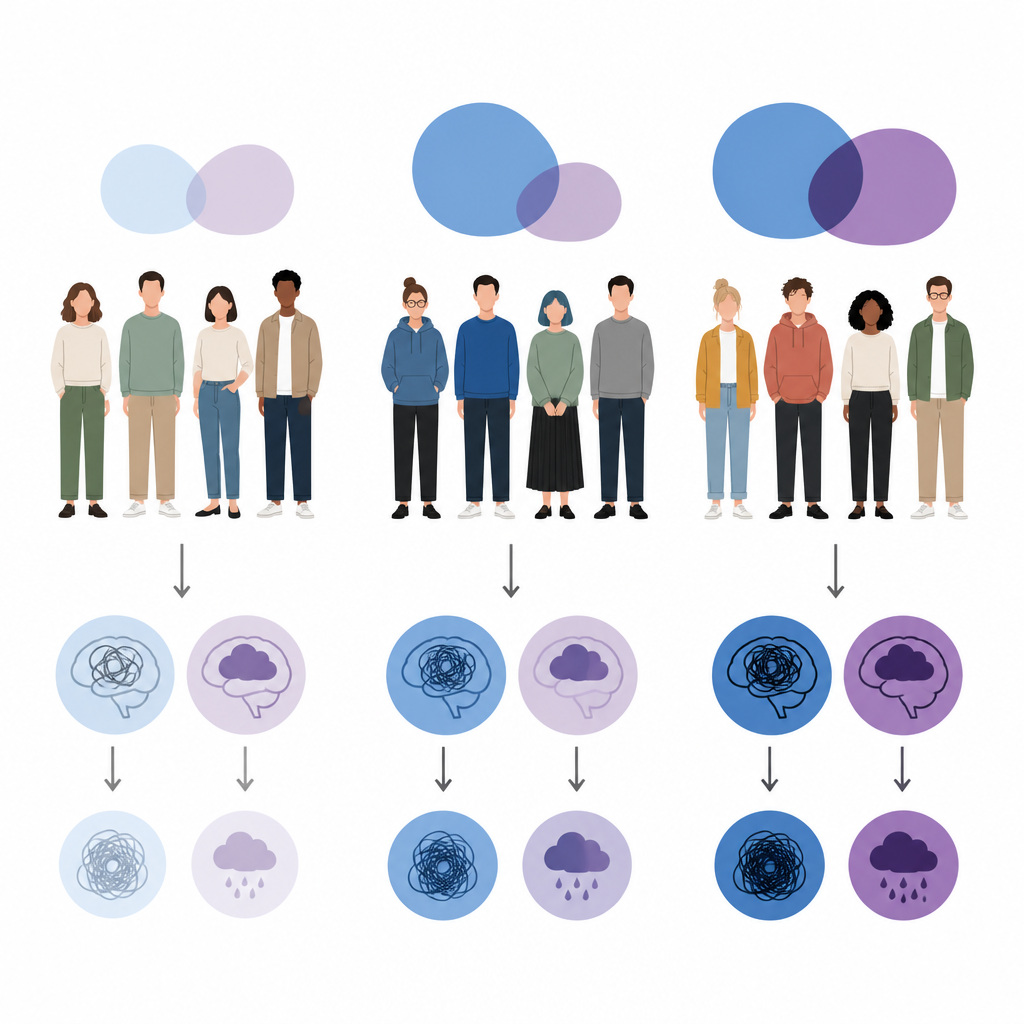
Across the full sample, both autistic traits and ADHD traits were linked to higher odds of having an anxiety or depression diagnosis. However, ADHD traits showed the stronger link. For every small step up in ADHD traits, the chance of having an internalising problem such as anxiety or depression rose more than it did for a similar step up in autistic traits. When the team looked separately at generalised anxiety and depression, the pattern held: increases in ADHD traits were associated with steeper rises in the odds of both conditions. This suggests that, in the general adult population, ADHD characteristics may carry a particularly strong connection to internal emotional distress.
Zooming in on diagnosed groups
The researchers then focused on a smaller group of adults who had clinical diagnoses of autism or ADHD, and compared them with a matched neurotypical group. These three groups were closely similar in age, sex and education, which helped isolate the role of diagnosis itself. Both autistic adults and adults with ADHD were several times more likely than neurotypical adults to report diagnoses of anxiety, depression or either of these conditions. While the two neurodivergent groups did not differ strongly when compared head to head, some patterns emerged: ADHD diagnoses tended to be more closely tied to depression, while autism diagnoses were more closely tied to generalised anxiety.
Screening tools tell a slightly different story
To test how robust these findings were, the team ran a second set of analyses using screening cut offs on the trait questionnaires to identify adults with “probable” autism or ADHD. Again, they matched these groups to neurotypical adults on age, sex and education. In this larger screened sample, adults who met the threshold for ADHD stood out as the most likely to have anxiety or depression diagnoses, roughly twice as likely as neurotypical adults. In contrast, adults who met the threshold for autism were only slightly more likely than neurotypical adults to report these diagnoses, and in several comparisons they did not differ reliably at all. This highlights that people who score highly on autism questionnaires are not always the same as those with clinical diagnoses, and that ADHD traits may be especially important when thinking about emotional wellbeing.
What might explain these patterns
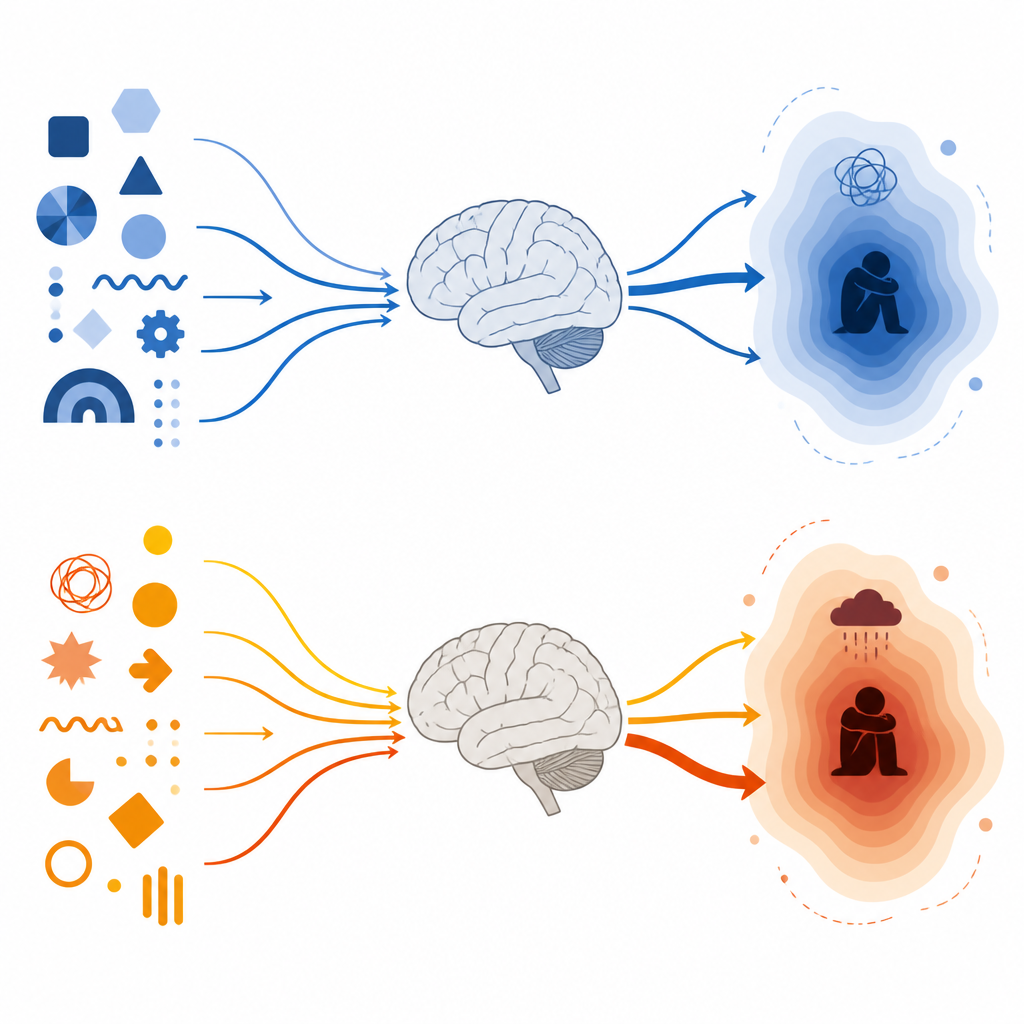
The authors discuss several possible psychological processes that could link neurodivergent traits to internal struggles. For ADHD, difficulties with stopping or steering behaviour, together with intense and shifting emotions, may make people more vulnerable to depression and anxiety over time. For autism, a strong need for predictability and discomfort with uncertainty may feed into anxiety, especially in a world that often feels confusing or unaccommodating. The study also notes that life circumstances such as income, social support and physical environments likely shape how these traits translate into mental health, and that future work should take these factors into account.
What this means for everyday life
To a layperson, the core message is that both autism and ADHD are linked with higher chances of anxiety and depression in adulthood, but in somewhat different ways. ADHD traits, whether or not they lead to a diagnosis, seem especially tied to feeling low or overwhelmed, while autism, at the diagnostic level, shows a particularly strong tie to ongoing worry and tension. These findings do not mean that anxiety or depression are inevitable for neurodivergent adults, but they do underline the importance of recognising and responding to emotional difficulties early. By paying attention to both traits and diagnoses, and by adapting environments as well as offering psychological support, society can better support the mental health of autistic and ADHD adults.
Citation: Hargitai, L.D., Waldren, L.H., Livingston, L.A. et al. Neurodiversity and mental health in adulthood: exploring the unique contributions of autism and ADHD to internalising problems. Sci Rep 16, 16343 (2026). https://doi.org/10.1038/s41598-026-35440-6
Keywords: autism, ADHD, anxiety, depression, neurodiversity