Clear Sky Science · en
The Corpus of Bidirectional Reading of Traditional Chinese Text: An Extension of the Multilingual Eye-Movement Corpus
Why This Study Matters for Everyday Reading
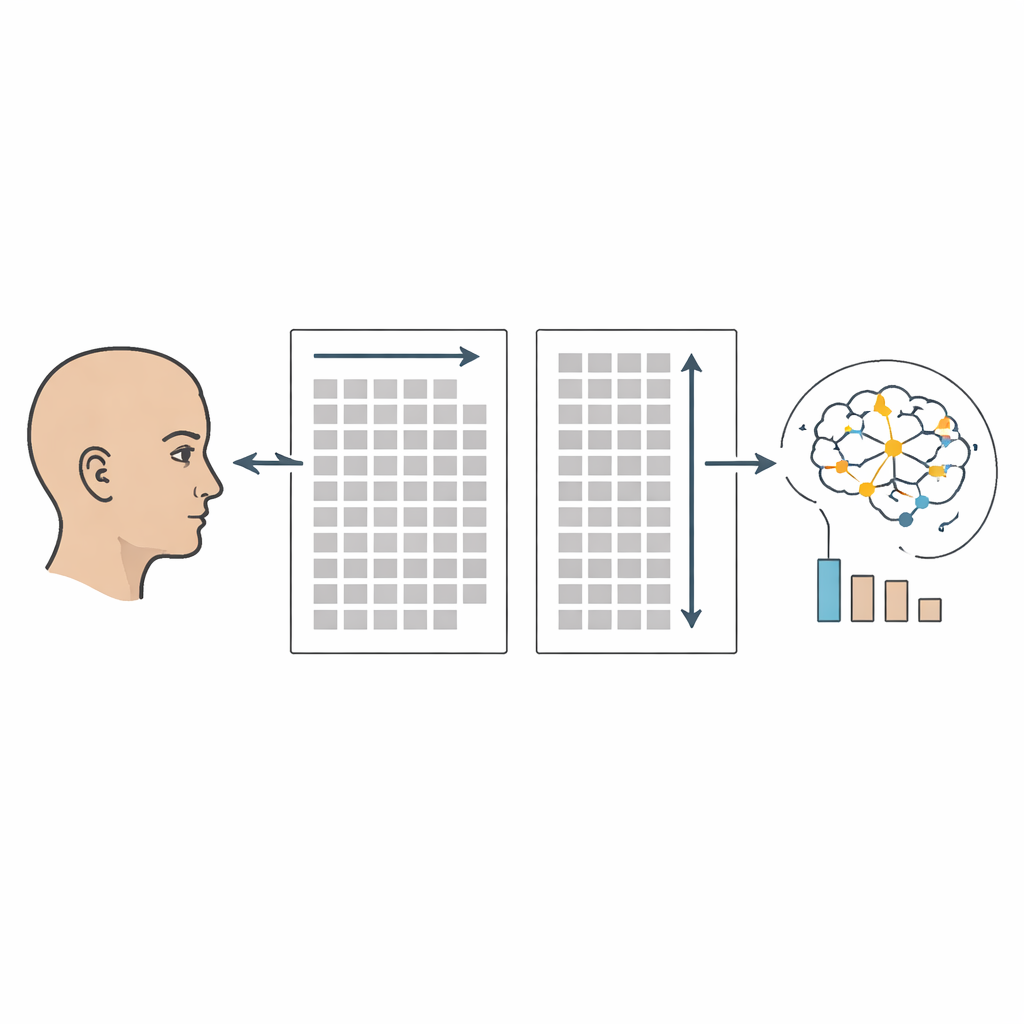
Most of us take for granted that we read from left to right across a page. But in traditional Chinese, text can run either horizontally or vertically, and many readers are comfortable with both styles. This paper introduces a large, carefully collected dataset that tracks readers’ eye movements as they read traditional Chinese passages in both directions. By comparing how the eyes move across horizontal and vertical layouts of the same texts, the researchers shed light on how our visual system and brain adapt to different ways of putting words on a page—and how similar reading really is beneath the surface.
Two Ways to Lay Out the Same Language
Traditional Chinese writing is visually dense and made up of characters that each fill the same square space. Unlike English, there are no spaces between words, and characters can be arranged in horizontal lines or vertical columns. Historically, Chinese was written vertically on bamboo or wooden strips; horizontal layouts only became widespread in the last century, especially for scientific and technical materials. Today, readers in places like Hong Kong still encounter both formats in daily life, from novels and newspapers to textbooks. This unusual flexibility gives scientists a rare chance to ask whether changing the direction of text alters the basic mechanics of reading—or whether the eye and brain handle both layouts in largely the same way.
Building a Rich Eye-Tracking Corpus
To explore these questions, the authors created the Bidirectional Chinese MECO corpus as part of the larger Multilingual Eye-Movement Corpus project. Sixty university students in Hong Kong read twelve expository passages in traditional Chinese, similar in style to short encyclopedia or Wikipedia entries on topics like history and natural phenomena. Each person read six passages in a horizontal layout and six in a vertical layout, with the same text lines carefully matched across directions. While participants read silently for comprehension, a high-precision eye tracker recorded where they looked and for how long, capturing moment-by-moment measures such as how many times each word was fixated, how long the eye lingered, and how often it jumped backward.
What Eye Movements Reveal About Reading
The researchers processed the eye-tracking data to remove technical errors and unusual fixations, ending with over thirty thousand word-level observations. They then released the entire dataset, plus accompanying scripts and documentation, in formats that match other MECO resources, making it easy for scientists worldwide to combine and compare data across languages. The team estimated how reliable the measures were by splitting the data in different ways and asking whether the same readers and the same words showed consistent patterns. At the participant level, reliability was extremely high: people’s reading behavior was strikingly stable across different parts of the texts. At the word level, reliability was somewhat lower but still strong, in line with similar corpora in other languages, confirming that the dataset is robust enough for detailed analyses.
Horizontal and Vertical Reading: More Alike Than Different
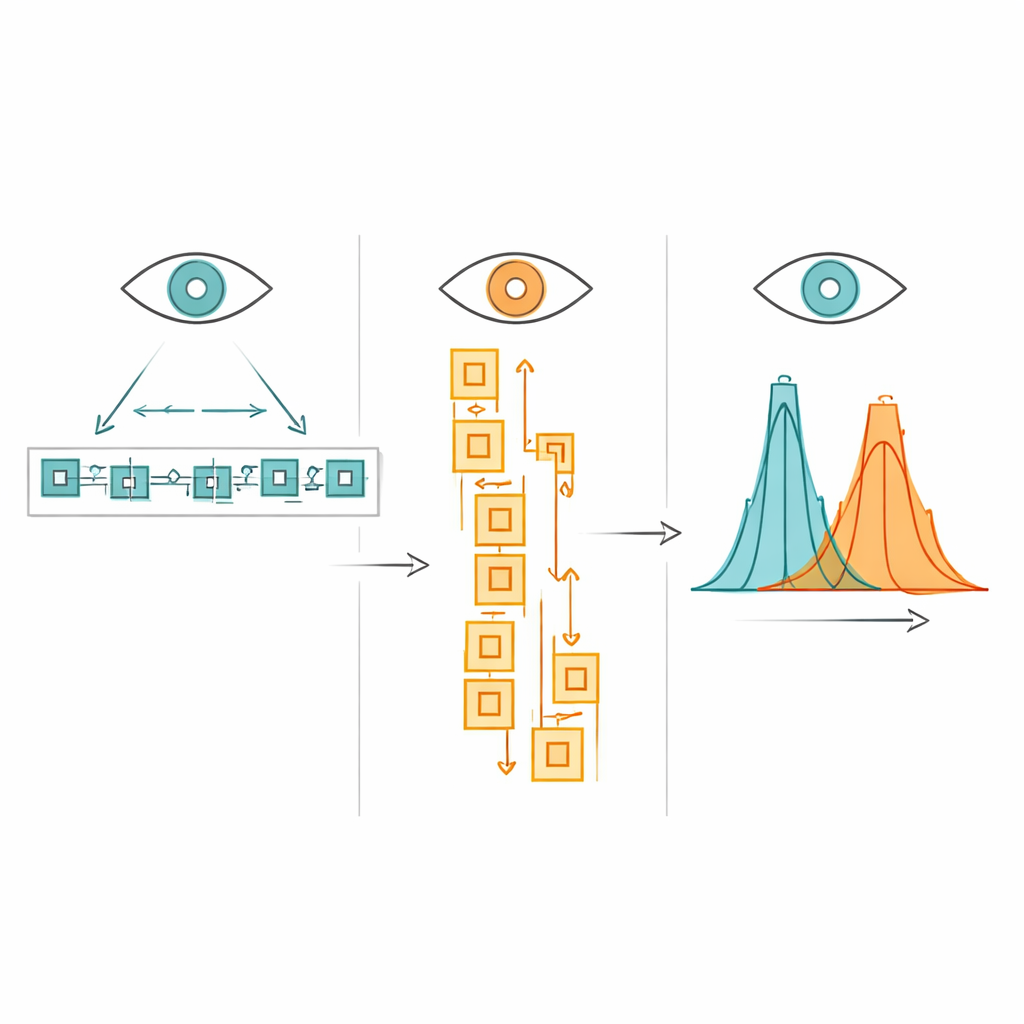
Next, the authors used advanced statistical models to test whether well-known influences on eye movements also appeared in this new corpus, and whether they changed with text direction. As in previous studies of Chinese, the eyes spent more time on longer words, rarer words, and visually more complex words with many strokes. These patterns held in both horizontal and vertical reading, showing that core processes of recognizing words and dealing with visual detail are shared across layouts. Reading vertically did lead to somewhat longer fixations and stronger effects of word length and visual complexity, suggesting that vertical passages can place slightly heavier visual demands, especially for readers who encounter them less often. Still, the overall similarities were far more prominent than the differences.
What This Means for Readers and Future Research
In everyday terms, this study shows that skilled readers of traditional Chinese handle horizontal and vertical text with broadly similar efficiency: their eyes slow down in predictable ways for harder or more complex words, no matter which way the lines run. The new corpus offers a rich public resource that other scientists can use to test theories of how the eyes move during reading, compare different writing systems, and design educational or assistive tools. Because vertical writing remains common in several Asian languages and among older Chinese readers, understanding how direction-specific experience shapes eye movements may also help in designing reading materials and interventions that are more comfortable and accessible for different groups of readers.
Citation: Pan, J., Xi, Y., Tan, D. et al. The Corpus of Bidirectional Reading of Traditional Chinese Text: An Extension of the Multilingual Eye-Movement Corpus. Sci Data 13, 628 (2026). https://doi.org/10.1038/s41597-026-06989-8
Keywords: eye-tracking, Chinese reading, text direction, reading research, visual word recognition