Clear Sky Science · en
Semaglutide on liver fibrosis and heart outcomes in patients at high risk of liver fibrosis: a prespecified analysis of the SELECT randomized trial
Why this study matters for everyday health
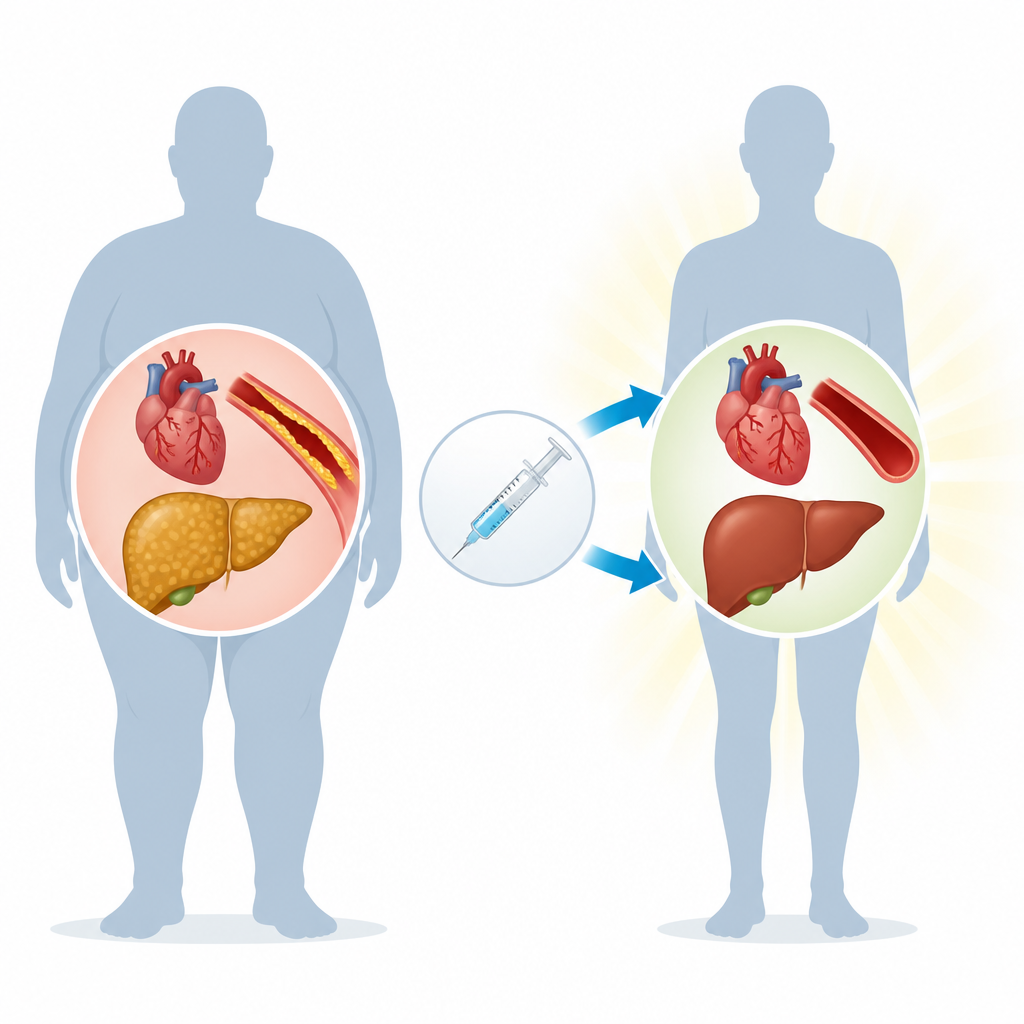
Heart disease and fatty liver disease are two of the most common health problems linked to excess weight, and they often occur together in the same person. This study asked a practical question with real-world importance: can a once-weekly weight-loss medicine called semaglutide help people who already have heart disease and are at high risk of liver scarring not only avoid heart attacks and strokes but also improve signs of liver damage?
Too much fat in the liver and strain on the heart
Many people with overweight or obesity develop a condition in which fat builds up in the liver, now often called metabolic dysfunction-associated steatotic liver disease. In some, this progresses to inflammation and scarring, which can lead to serious liver problems. At the same time, this unhealthy liver state is closely tied to clogged arteries and higher chances of heart attacks and strokes. Doctors need simple tools to spot those at greatest risk. One such tool, the Fibrosis-4 score, combines age and routine blood tests to estimate how much liver scarring a person might have, without needing a biopsy.
The SELECT trial and who was studied
The researchers drew on a large international trial called SELECT, which followed more than 17,000 adults with excess weight and established heart or blood vessel disease but without diabetes. Participants were randomly assigned to receive either weekly semaglutide injections or placebo on top of their usual care and were tracked for several years. For this analysis, the team focused on about 16,500 people with enough data to calculate their Fibrosis-4 score, grouping them by higher or lower predicted risk of advanced liver scarring. They also used another simple measure called the fatty liver index that combines body size, waistline, blood fats and a liver enzyme to estimate how likely a person is to have a fatty liver.
Heart event rates in people with risky livers
The main outcome was the rate of major heart problems, defined as heart attack, stroke or death from cardiovascular causes. Among people with signs pointing to at least moderate liver scarring, those who took semaglutide had substantially fewer of these serious events than those who received placebo. Depending on how high their Fibrosis-4 scores were, semaglutide lowered the risk of major heart problems by roughly one quarter compared with placebo, a pattern that mirrored the benefit seen in the full SELECT population. Importantly, this protection did not seem to depend strongly on changes in body weight or blood sugar alone, suggesting other biological effects may also be at work.
Changes in liver markers and liver fat
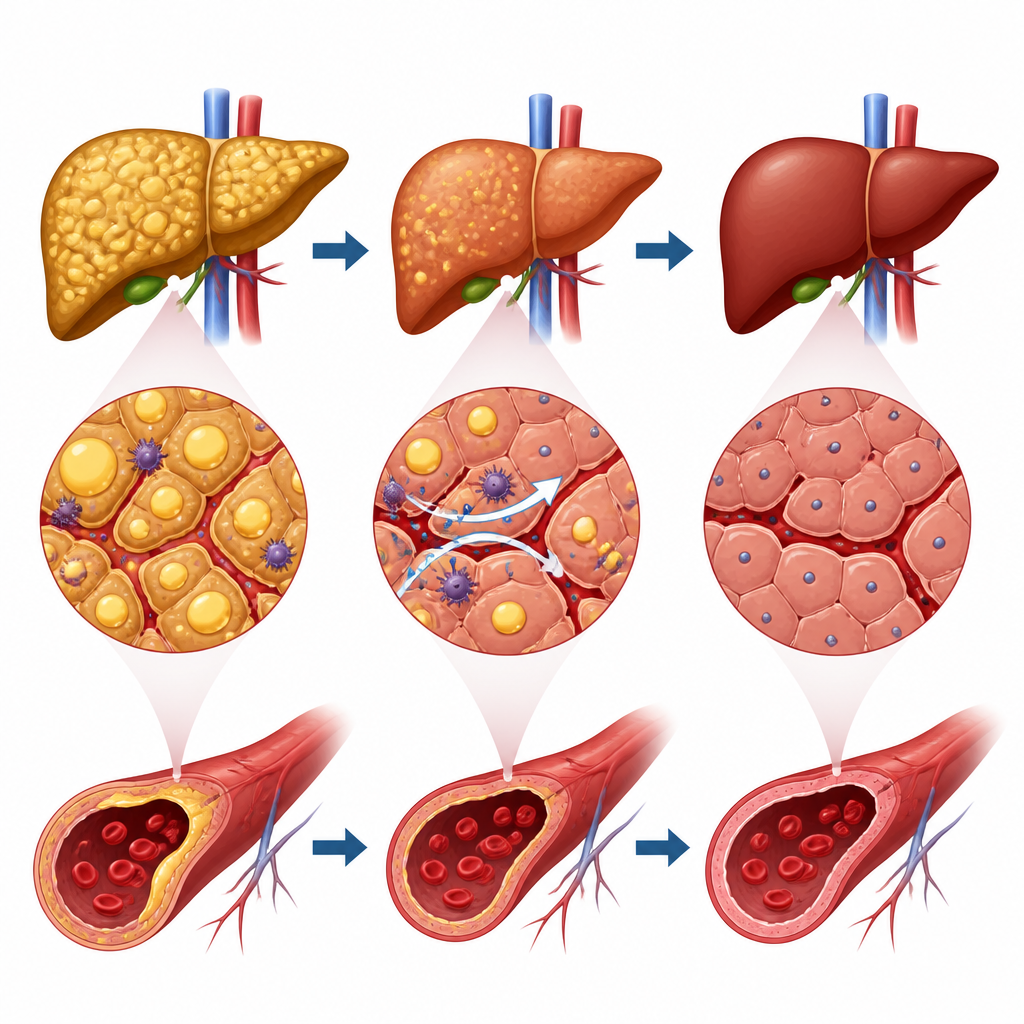
The team also looked closely at liver-related blood tests and the fatty liver index over two years. In both groups, starting levels of key liver enzymes were mostly within the normal range, but people taking semaglutide showed early and lasting reductions in these enzymes compared with those on placebo. A liver enzyme linked to bile ducts and fat handling fell particularly strongly. The fatty liver index also dropped far more with semaglutide, and more participants moved to lower-risk categories while fewer worsened. These changes occurred alongside notable weight loss in the semaglutide group, but some liver improvements appeared before maximum weight reduction was reached.
What this means for patients and doctors
To a non-specialist, the message is that a once-weekly medicine already used for weight management and heart protection in people with excess weight may also help calm a stressed liver in those who already have heart disease and are at higher risk of liver scarring. While this analysis cannot prove that semaglutide directly heals liver tissue, it shows better liver-related blood tests and fewer major heart events in these higher-risk patients, much like in the wider trial group. Together with other ongoing studies that use scans and biopsies, these findings support a more joined-up approach in which one treatment may help tackle both liver and heart problems that stem from the same underlying metabolic strain.
Citation: Meyhöfer, S.M., Cariou, B., Cercato, C. et al. Semaglutide on liver fibrosis and heart outcomes in patients at high risk of liver fibrosis: a prespecified analysis of the SELECT randomized trial. Nat Med 32, 1686–1693 (2026). https://doi.org/10.1038/s41591-026-04281-1
Keywords: semaglutide, fatty liver disease, cardiovascular risk, obesity, liver fibrosis