Clear Sky Science · en
Proactive surveillance of foodborne bioactives by integrated dietary exposure and urinary excretion assessment
Hidden Drugs in Everyday Food
Many people use sports drinks, herbal powders, and protein shakes without realizing that some contain drug-like chemicals. These substances can slip into the food supply naturally, through contamination, or by being secretly added. For most of us, that raises general safety questions. For athletes who are tested for banned drugs, it can mean failing a doping test even when they have never touched a performance-enhancing pill. This study explains how researchers built a rapid testing system to find such compounds in common foods and supplements, and to estimate how much might end up in our bodies and urine.
Where Unseen Chemicals Come From
The authors first describe the many ways pharmacologically active substances, or “bioactives,” can appear in foods. Some plants naturally produce molecules similar to banned stimulants or hormones, such as higenamine-like compounds in traditional herbs or estrogen-like metabolites in moldy grains. Others enter foods as residues of veterinary medicines or illicit growth promoters in meat, or as contamination during harvesting, like opium alkaloids on poppy seeds. A third route is intentional adulteration, in which manufacturers spike dietary supplements with undeclared steroids, stimulants, or other drugs to boost effects. Whatever the source, the final point of contact is the same: people ingest these products and may carry traces of these chemicals in their blood and urine.
Building a High-Speed Chemical Scanner
To tackle this problem, the researchers designed a laboratory platform based on liquid chromatography and tandem mass spectrometry, a technique that separates and weighs molecules very precisely. Their method can screen 331 different compounds in a single run, and accurately measure 214 of them. They validated the method in three very different food types: pork (animal tissue), oats (plant solids), and beverages (liquids), and checked broader “matrix effects” in seven more foods including nuts, oils, milk, and ginseng powder. Most compounds showed clean, reliable signals even in these complex samples. This means the system can be used as a high-throughput scanner for many real-world products rather than just a few carefully chosen test foods. 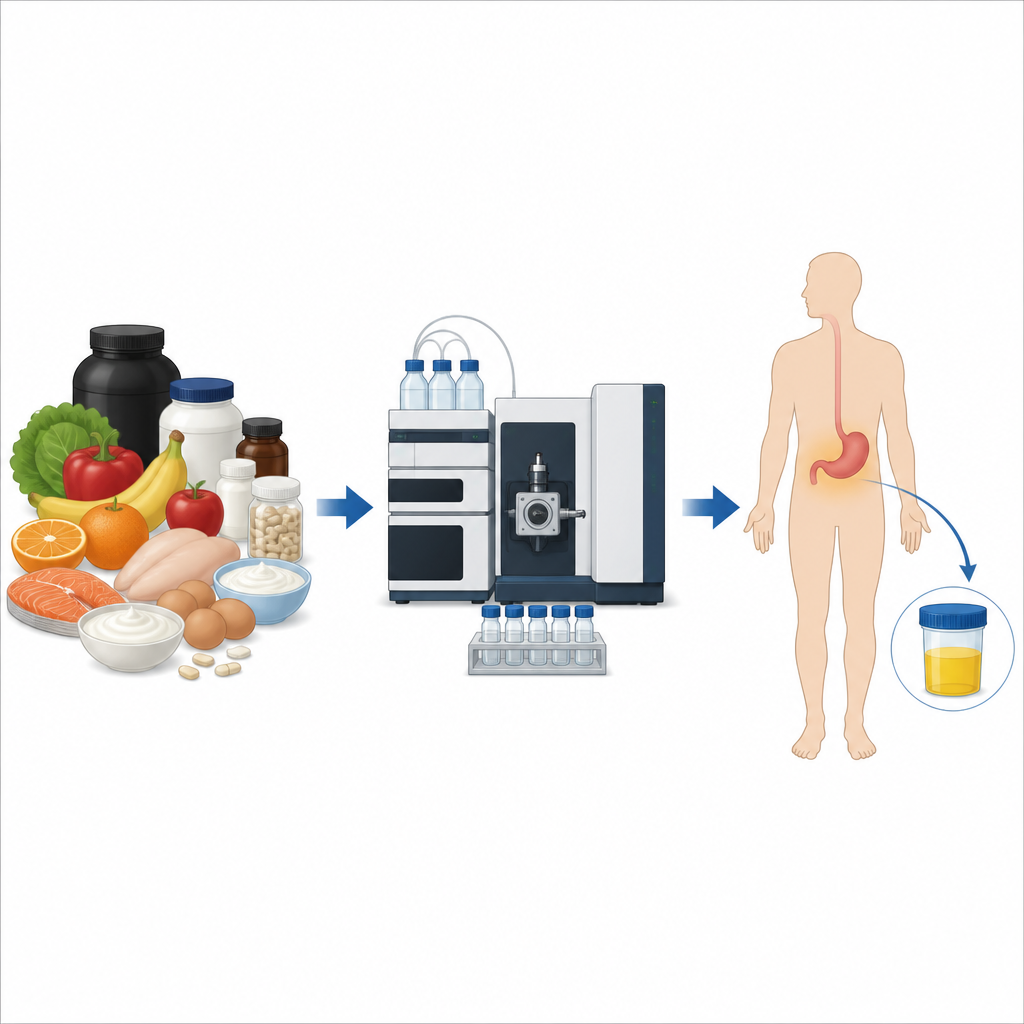
What Was Found on Store Shelves
The team then analyzed 78 commercial products bought in markets and online, from raw meats and spices to herbal capsules and drinks. They detected 29 different substances of interest in 34 of those products. Some findings were striking. A beetroot supplement contained extremely high levels of octopamine, a stimulant-like compound usually found only in tiny amounts in citrus fruits, suggesting heavy fortification or use of a concentrated extract. A Tribulus terrestris supplement contained the asthma drug olodaterol, a type of beta agonist that is banned for athletes at any detectable level. Several herbal powders and spices, including guduchi, sancho (mara) powder, and black pepper, were rich in coclaurine, a close chemical cousin of the banned stimulant higenamine. The researchers also found synephrine, caffeine, nicotine, and steroid-like hormones in various foods and supplements, sometimes at levels not expected from natural sources.
From Plate to Urine Sample
Finding a compound in a product does not by itself reveal the health or doping risk. To bridge that gap, the scientists combined their measurement data with national diet surveys and published information on how the body excretes specific chemicals. For the general population, estimated daily intake from ordinary eating patterns was usually very low, often far below levels that raise toxicological concern. However, certain herbal powders used more often by older adults, such as lotus seed products rich in coclaurine or sancho powder containing synephrine, gave noticeably higher estimated exposures. When the team focused on supplements and calculated how much of a compound would appear in a single urine sample, the picture changed sharply. Simulations showed that a recommended dose of the beetroot supplement could produce octopamine levels in urine nearly three times higher than the reporting threshold used by the World Anti-Doping Agency. The olodaterol-containing Tribulus product was predicted to yield a clearly detectable urine signal, enough to trigger a positive doping test, despite a user simply following label directions. 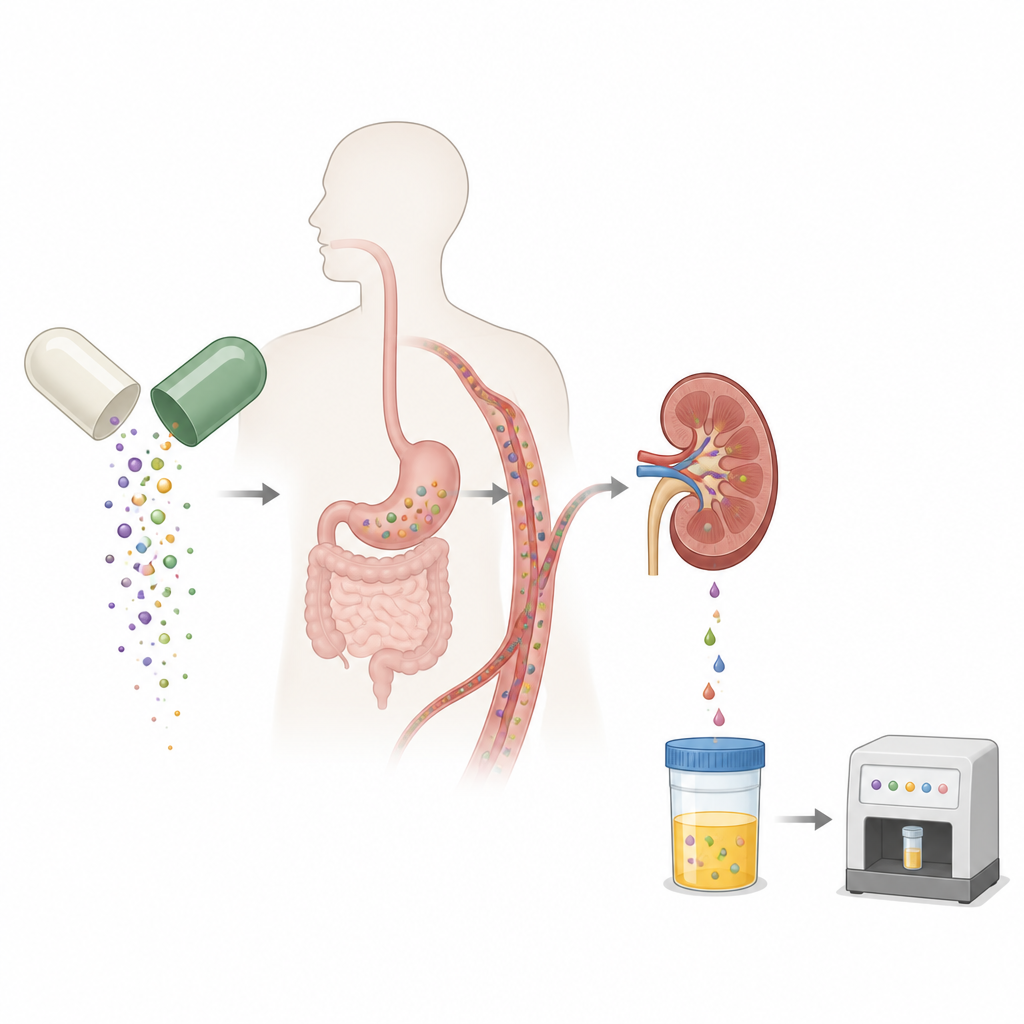
What This Means for Shoppers and Athletes
Overall, the study concludes that most people are unlikely to receive harmful doses of these bioactives through an ordinary diet. Yet for individuals who rely heavily on certain herbal products, or for athletes under strict testing rules, hidden pharmacologically active chemicals can pose serious practical risks. The new testing platform offers regulators, food safety agencies, and anti-doping bodies a practical way to screen large numbers of foods and supplements, link laboratory findings to realistic intake and urine levels, and identify products that merit closer scrutiny. In plain terms, the work shows that drug-like substances can hitch a ride into our bodies through everyday products, and provides a toolkit to spot these stowaways before they cause health problems or unfair doping violations.
Citation: Park, H., Son, J. Proactive surveillance of foodborne bioactives by integrated dietary exposure and urinary excretion assessment. npj Sci Food 10, 158 (2026). https://doi.org/10.1038/s41538-026-00818-3
Keywords: foodborne bioactives, dietary supplements, anti-doping, LC-MS/MS, urinary excretion