Clear Sky Science · en
Development of starter cultures for mahewu fermentation: affordable solutions for low and medium-income countries
Why this everyday drink matters
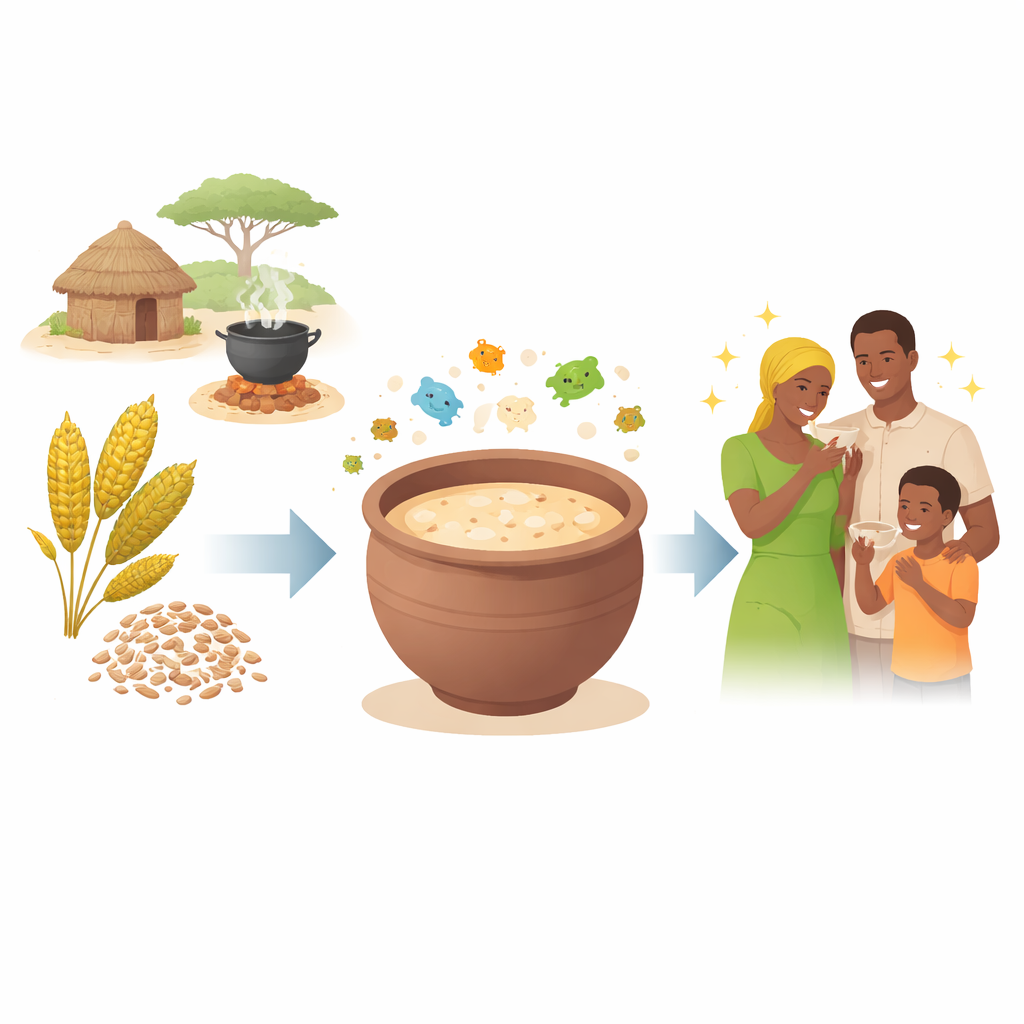
Across southern Africa, many families rely on a simple, tangy cereal drink called mahewu. It is made from cooked maize or millet and fermented at home, often without electricity, fridges, or packaged ingredients. For adults it is a refreshing beverage; for babies and young children it can be an important weaning food. This study asks a crucial question: how can households keep mahewu safe and nutritious, using methods that are cheap, simple, and workable in rural villages?
The challenge hidden in traditional grain drinks
In most homes, mahewu is made by “letting nature do the work.” After porridge is cooked and cooled, a little malted grain is added and the mixture is left to ferment on its own. The microbes that get in come from the grain, the water, and the surrounding environment. The researchers first examined the tiny life living on finger millet malt collected from Zimbabwean households. They found that many of the most common bacteria belonged to a large group called Enterobacteriaceae, which includes harmless plant dwellers but also disease-causing species such as Salmonella. Because only a small number of Salmonella cells can trigger illness, especially in children, their presence on malt used for baby food is a serious concern.
Following the microbial race during fermentation
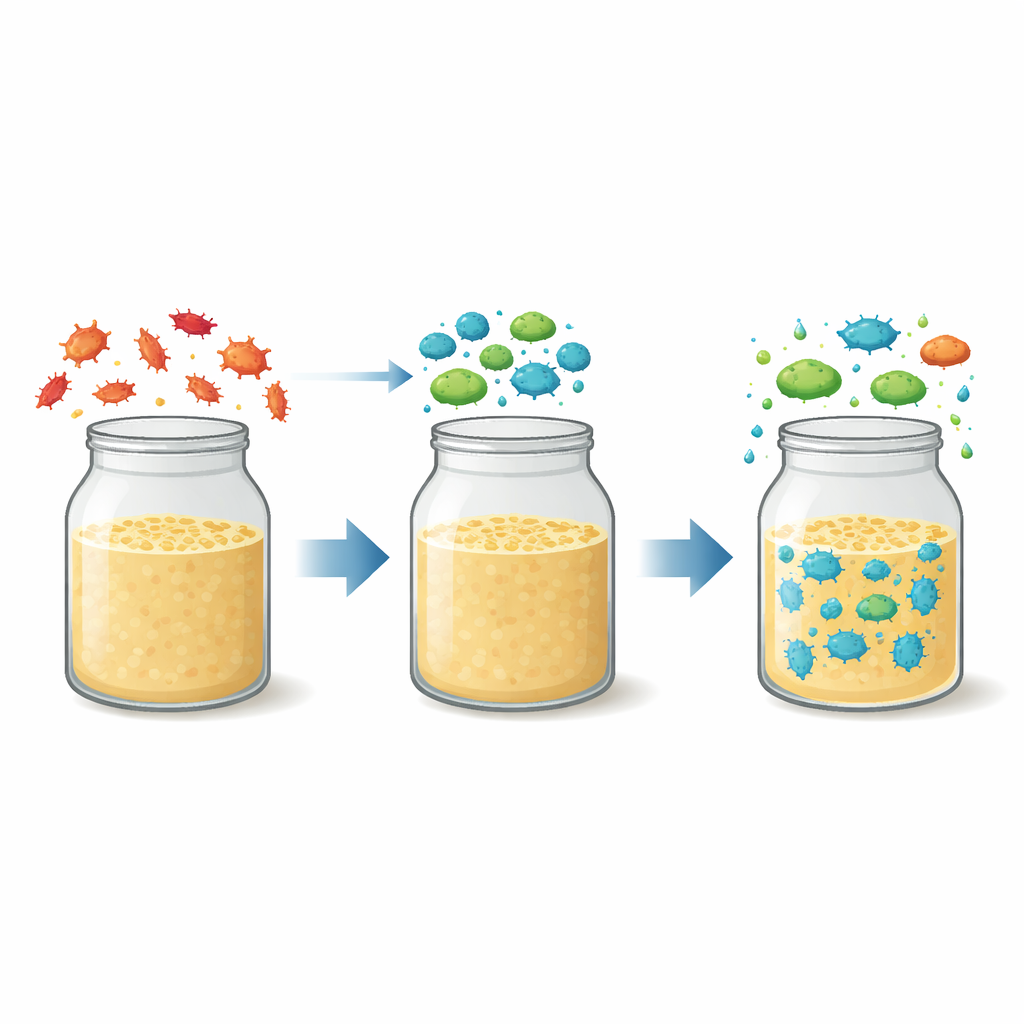
To understand what happens after the porridge is mixed, the team recreated mahewu in the lab using cocktails of bacteria that mimicked the real malt communities. They fermented these model batches at two temperatures: 25 °C, similar to a warm season, and 15 °C, closer to cool-season conditions. At the warmer temperature, sour-taste bacteria that produce lactic acid gradually took over and lowered the pH, making the drink more acidic. Harmful Enterobacteriaceae peaked early and then declined as the acid level rose. At the cooler temperature, however, acid production was slower, the final acidity was milder, and the potentially risky bacteria persisted at high levels for much longer. In other words, simply relying on time and mild cooling is not enough to make this drink safe.
Harnessing helpful microbes as tiny workers
The researchers then tested whether hand-picked “starter” microbes could tip the balance. They selected strains of lactic acid bacteria already common in cereal fermentations, including Limosilactobacillus fermentum, Lactiplantibacillus plantarum, and Periweissella beninensis. When these starters were added at the beginning of fermentation, they quickly outcompeted the background microbes. At 25 °C, they became dominant almost from the start, sharply reduced Enterobacteriaceae numbers, and drove the pH down to very acidic levels in about a day. At 15 °C they still improved acidification compared with spontaneous fermentation, though some cold-tolerant species from the grain, such as Weissella, joined in and shared the job. Overall, batches with starters turned sour faster and gave dangerous bacteria less time to survive.
Making starter cultures that work without fridges
Industrial food producers in wealthy countries use frozen or freeze-dried starter cultures that must stay in a cold supply chain, something unrealistic for many rural African communities. To address this, the team created a mixed starter by fermenting mahewu with their three chosen strains, blending the fermented slurry with maize flour, and then drying it either by simple air-drying or by freeze-drying. Both methods preserved high numbers of live bacteria, with air-drying causing only a modest loss. When these dried starters were later added to fresh porridge, they again acidified mahewu quickly, even after up to six weeks of storage at room temperature or in the fridge. The drying method and storage temperature made little difference to how fast the drink became safely sour.
What this means for families and food security
This research shows that carefully chosen starter cultures can turn a traditional home-fermented drink into a safer, more reliable food using tools that are realistic for low- and middle-income regions. By speeding up souring, the starters push out dangerous bacteria that may hitchhike in on the grain, while also delivering large numbers of live microbes that may support gut health and help protect children from diarrhea. Because the starters can be prepared on a cereal base and simply air-dried, they could, in principle, be produced locally and shared as small packets of powder. While the study does not tackle how to organize such distribution, it demonstrates that affordable, shelf-stable starters can make everyday fermentation a stronger ally for both food safety and nutrition.
Citation: Pswarayi, F., Zulu, N.X., Dlamini, B.C. et al. Development of starter cultures for mahewu fermentation: affordable solutions for low and medium-income countries. npj Sci Food 10, 139 (2026). https://doi.org/10.1038/s41538-026-00771-1
Keywords: mahewu, starter cultures, fermented cereal, food safety, rural nutrition