Clear Sky Science · en
Decoding health disparities by gender, ethnicity and chronic diseases across three Latin American countries
Why everyday life shapes long-term health
Why do some groups of people develop chronic diseases such as diabetes or heart problems more often than others, even when they live in the same country? This study looks beyond biology to show how work, schooling, and basic services like clean water and sewage combine with gender and ethnicity to influence health in Brazil, Mexico, and Ecuador. By using modern data tools on millions of adults, the authors reveal patterns that help explain who gets sick, who gets diagnosed, and where public policies could make the biggest difference. 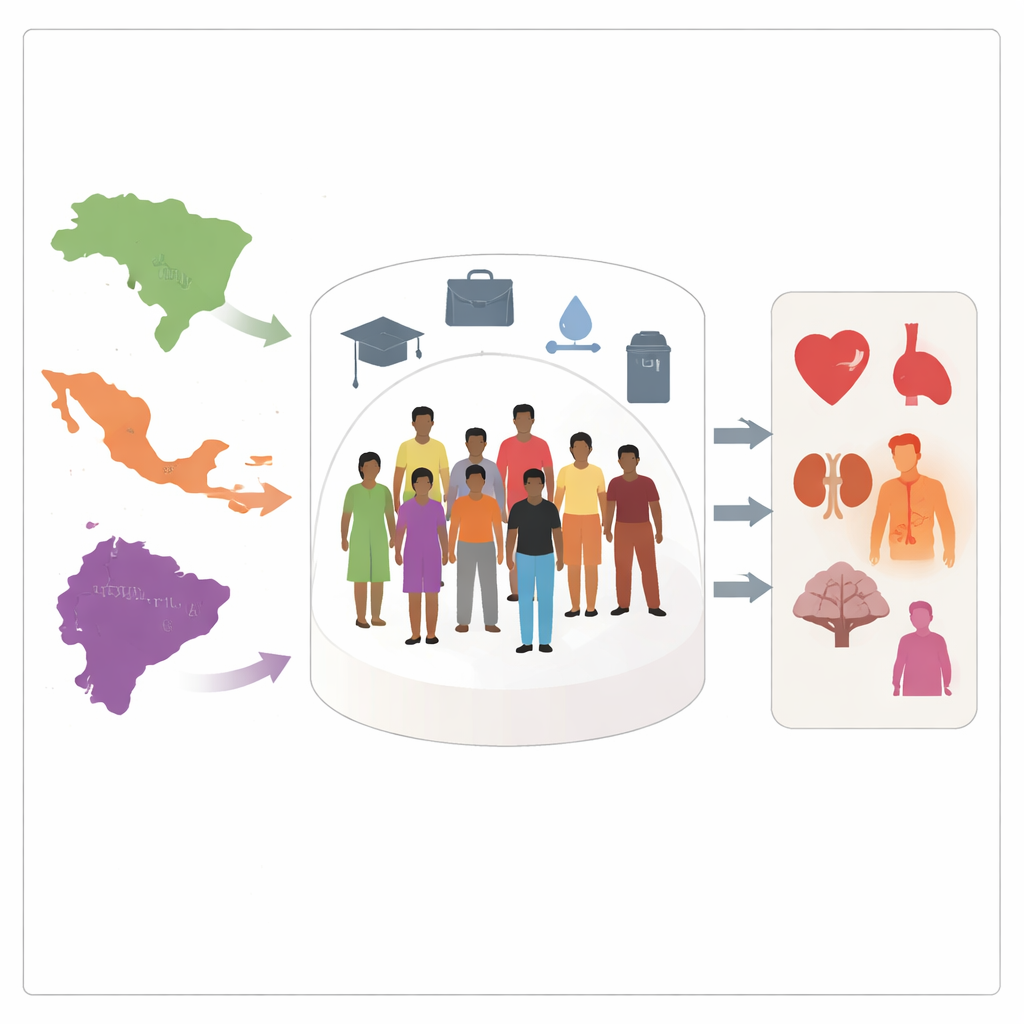
Looking at three countries side by side
The researchers pooled national health survey data from Brazil, Mexico, and Ecuador collected in 2018–2019, covering almost 97 million adults. They focused on whether people reported ever being told by a health professional that they had certain chronic conditions, including diabetes, cardiovascular disease, kidney disease, stroke, or obesity. Alongside these diagnoses, the team examined a small set of concrete aspects of daily life: level of schooling, type of job, and whether households had piped water, safe drinking water, sewage systems, garbage collection, and an urban or rural location. They grouped people by sex (used as a stand-in for gender) and by broad ethnic categories: indigenous, Black, mixed, and other groups such as white or mulatto.
Using machines to spot hidden patterns
Instead of traditional statistical methods that assume simple, straight-line relationships, the authors used a machine learning approach called random forests. This method can detect complex, tangled links between many factors at once. For each of the eight groups formed by gender and ethnicity, they trained a separate model to predict who had a chronic disease diagnosis. They then asked, in effect, “What happens to the model’s accuracy if we remove one factor at a time?” The drop in performance, measured by a change in the area under the curve (AUC), showed how important each social factor was for that particular group. 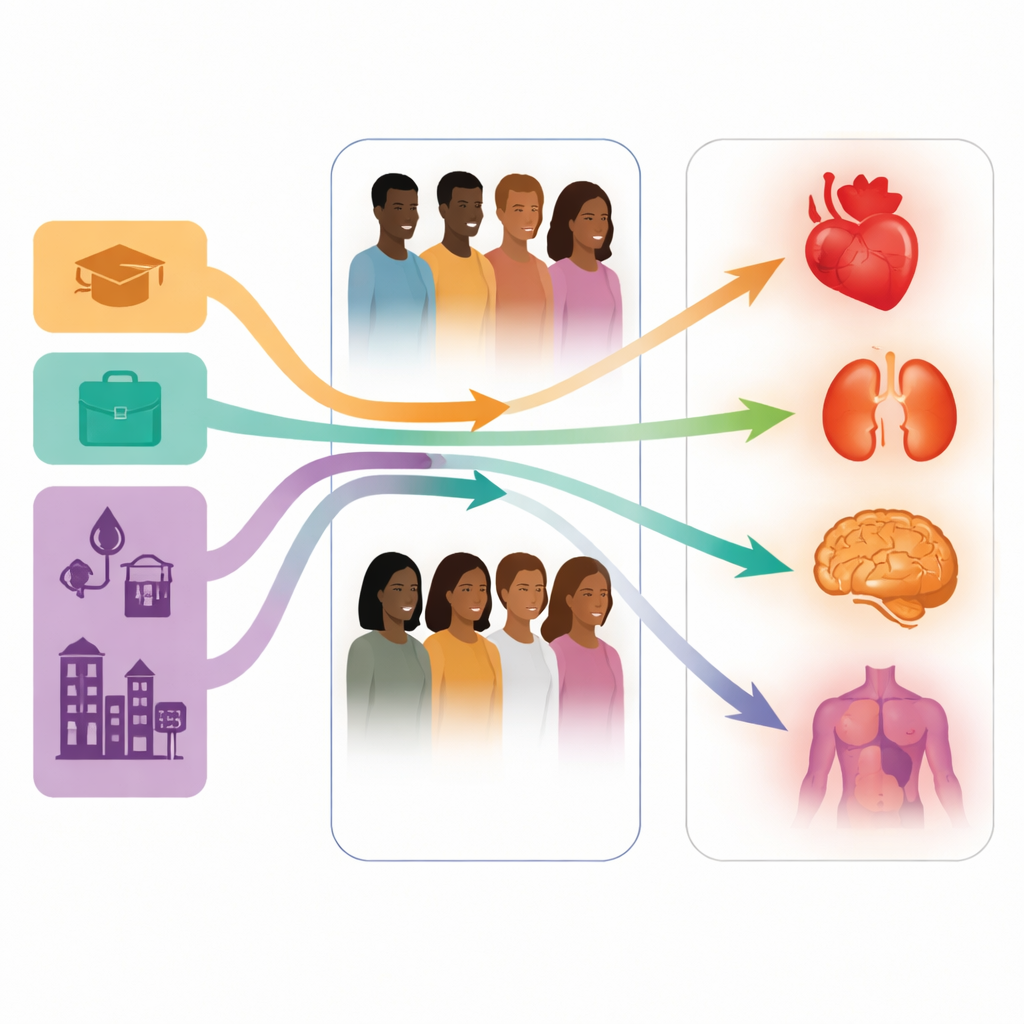
Who is most affected and why
The models worked best for indigenous men and women, followed by people of mixed ethnicity, and then Black and other groups. This means that, for indigenous people in particular, chronic disease risk closely tracked the social conditions the study measured. Overall, type of job and level of schooling mattered more than access to basic services. For men across ethnicities, occupation stood out as the single most important factor, especially for Black men, suggesting that having stable, formal work may lower stress, improve food security, and ease access to healthcare. For women, schooling consistently played a bigger role than it did for men, perhaps because education helps women recognize symptoms, navigate health systems, and adopt preventive habits.
Unequal services and a complex picture for indigenous groups
The study also found stark differences in living conditions. Indigenous people, especially men, were the most likely to lack piped water, sewage, and garbage collection, while those of mixed ethnicity generally fared best. Surprisingly, among indigenous adults and some “other” groups, more education and better services did not always line up with a lower chance of having a chronic disease diagnosis. The authors suggest two possible explanations: better-off indigenous individuals might reach clinics more often and thus have illnesses detected more frequently, or rising income could bring shifts in diet and substance use that increase disease risk. The machine learning models hint that, for these communities, it is the interaction of multiple disadvantages—ethnic identity, gender roles, work, schooling, and infrastructure—that drives health gaps, rather than any single factor alone.
What this means for policy and for people
To a lay reader, the conclusion is both sobering and hopeful. Chronic diseases are not just the outcome of genes or personal choices; they are strongly shaped by jobs, schools, and basic services, and these in turn are distributed unequally across gender and ethnic lines. The authors argue that effective solutions must be just as layered as the problems: improving education for women, strengthening employment conditions for men, expanding clean water and sanitation, and paying special attention to indigenous and Black communities who face multiple, overlapping barriers. In short, narrowing health gaps in Latin America will require treating social conditions as part of the health system itself, not as a background detail.
Citation: Chivardi, C., Zamudio Sosa, A., Cavalcanti, D.M. et al. Decoding health disparities by gender, ethnicity and chronic diseases across three Latin American countries. Nat Commun 17, 3854 (2026). https://doi.org/10.1038/s41467-025-67564-0
Keywords: health inequalities, social determinants, chronic disease, Latin America, gender and ethnicity