Clear Sky Science · en
A three generation family with VACTERL association is found to have a rare form of diamond-blackfan anaemia
Family Clues to a Hidden Blood Disorder
Some families seem to carry a mysterious thread of health problems across generations, from unusual bone shapes to blood issues that puzzle doctors. This article follows one such family and shows how modern DNA reading of the whole genome can unmask a rare inherited blood disorder hiding behind a complex mix of birth defects.
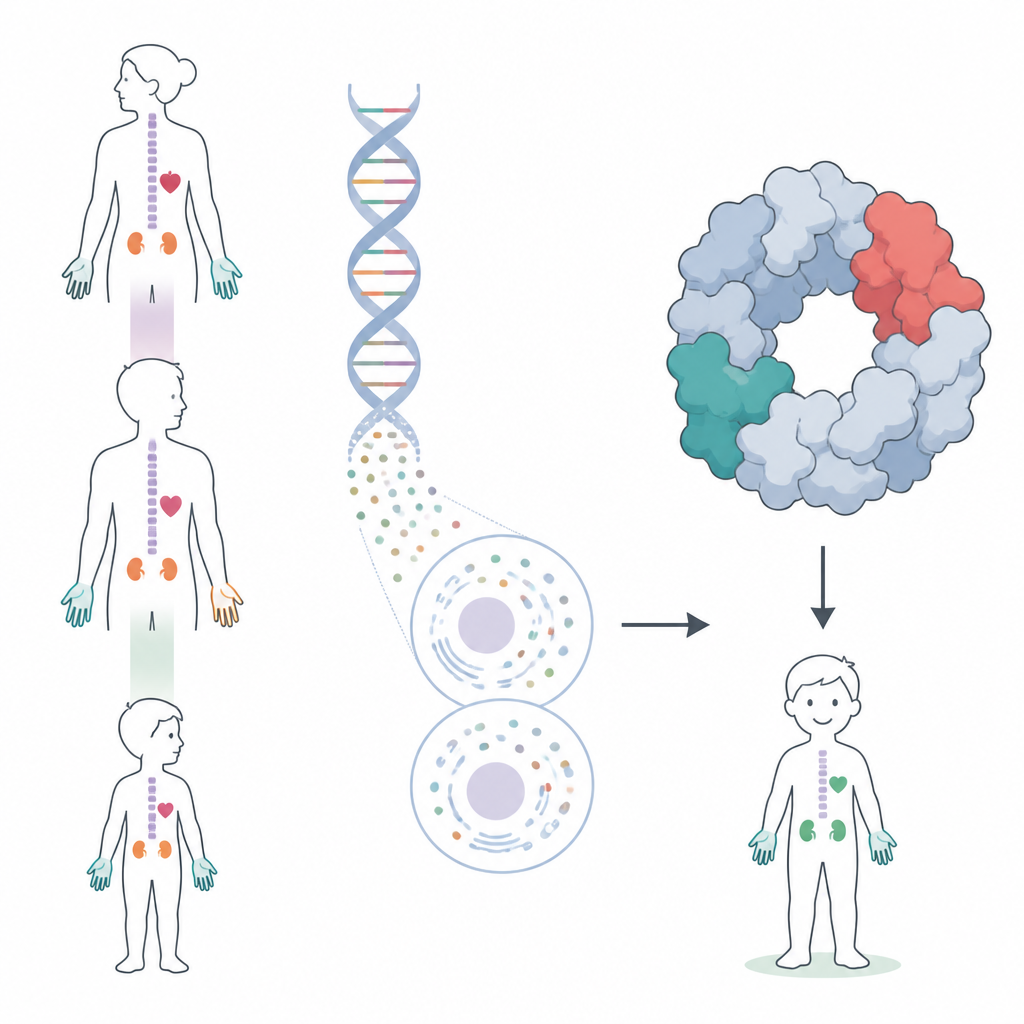
Many Birth Differences, One Family Story
The story begins with a boy born with several structural differences: missing and extra thumb bones, spine and rib changes, heart defects, a missing kidney, poor growth, and an underactive thyroid. Blood tests through childhood revealed periods of low red and white blood cells. His mother, grandmother, and other relatives also had mixtures of limb, spine, and thyroid problems, plus low white blood cell counts, suggesting a shared inherited cause rather than a series of unrelated events.
Untangling Look-Alike Conditions
Doctors first suspected VACTERL association, a label used when a child has a particular cluster of birth defects affecting the spine, bowel, heart, windpipe, kidneys, and limbs. However, VACTERL can overlap with several other rare disorders, including Fanconi anemia and a ribosome-related condition called Diamond-Blackfan anemia, which mainly affects blood formation. Because these disorders can look similar on the outside but arise from different genetic causes and carry different risks, the team chose not to limit testing to a small set of known genes. Instead, they read nearly all of the family members’ DNA using whole genome sequencing.
Finding Changes in Cellular Protein Factories
Whole genome sequencing uncovered rare changes in two genes, RPL18 and RPS6, which both make parts of the cell’s protein factories known as ribosomes. These protein factories build all of the body’s proteins, and damage to their parts can disrupt growth and blood formation. The same RPL18 change appeared in all affected relatives but not in their healthy family members, pointing strongly to it as the main culprit. The RPS6 change was present only in the boy and his mother, who had more severe problems, hinting that it might slightly worsen the main defect rather than cause disease on its own.
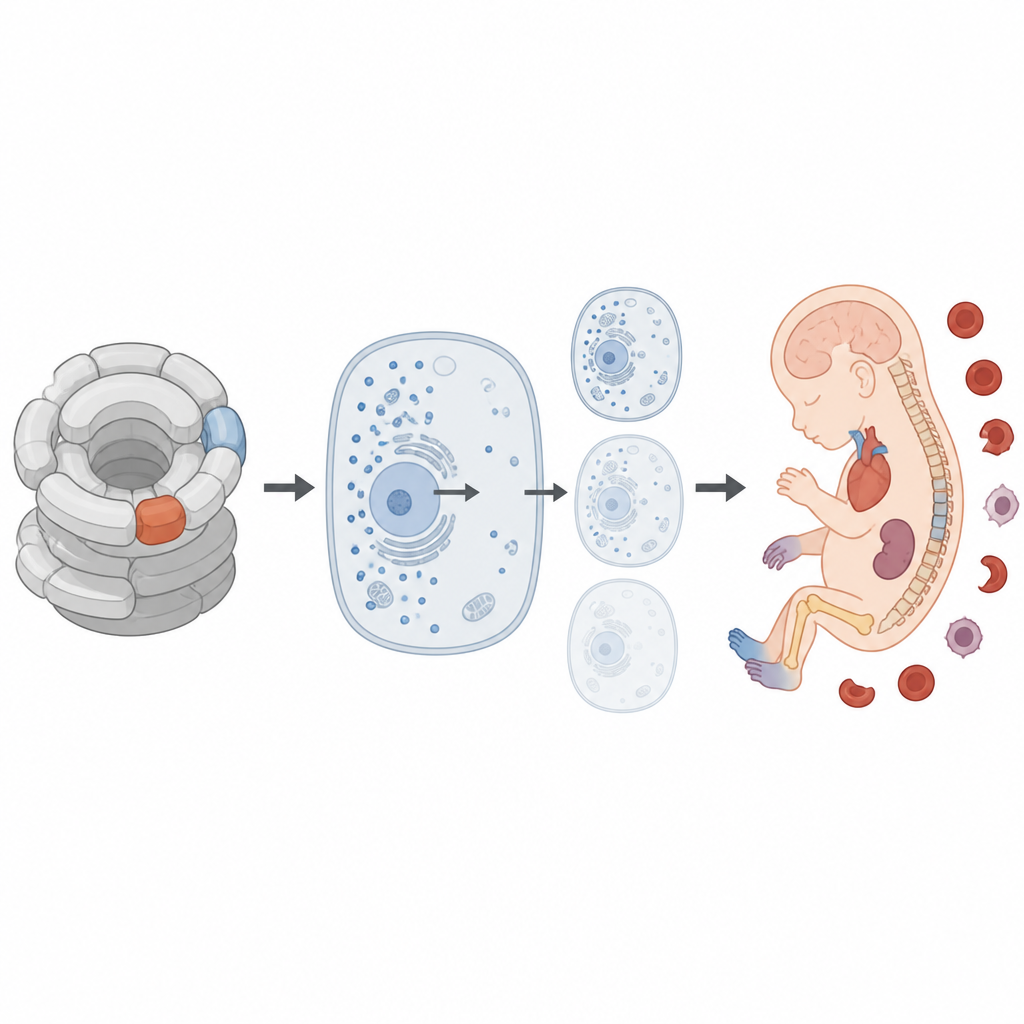
Testing the Suspect Genes in the Laboratory
To see how these altered genes behave inside cells, the researchers made fluorescent versions of the normal and changed proteins and watched them in human cell lines. The altered RPL18 protein was less stable, broke down faster, and showed an abnormal pattern inside the cell, especially where ribosomes are assembled. Most importantly, cells carrying the altered RPL18 made fewer new proteins overall. In contrast, the altered RPS6 protein was also reduced in amount and had a changed pattern in the cell, but it did not measurably slow protein production. Computer models of protein shape supported these observations, predicting that both changes would destabilize their proteins, with the RPL18 change having the stronger effect.
What This Means for Diagnosis and Care
Taken together, the clinical history, family pattern, computer modeling, and cell experiments show that this family’s condition fits a rare form of Diamond-Blackfan anemia linked to faulty RPL18, with a possible extra push from the RPS6 change in some members. The work highlights how broad, unbiased genome sequencing can reveal an underlying blood disorder in patients first thought to have VACTERL association alone. For families, this kind of precise diagnosis can guide monitoring for future blood problems and inform testing of relatives, turning a confusing collection of symptoms into a clearer, shared explanation.
Citation: Leshchynska, I., Das, D., O’Reilly, V. et al. A three generation family with VACTERL association is found to have a rare form of diamond-blackfan anaemia. Eur J Hum Genet 34, 619–629 (2026). https://doi.org/10.1038/s41431-026-02076-z
Keywords: Diamond-Blackfan anemia, ribosomal proteins, VACTERL association, whole genome sequencing, congenital malformations