Clear Sky Science · en
Targeting glioblastoma mitochondrial metabolism with S-Gboxin induces cytotoxicity under conditions of the tumor microenvironment
Why starving brain tumors might be their weakness
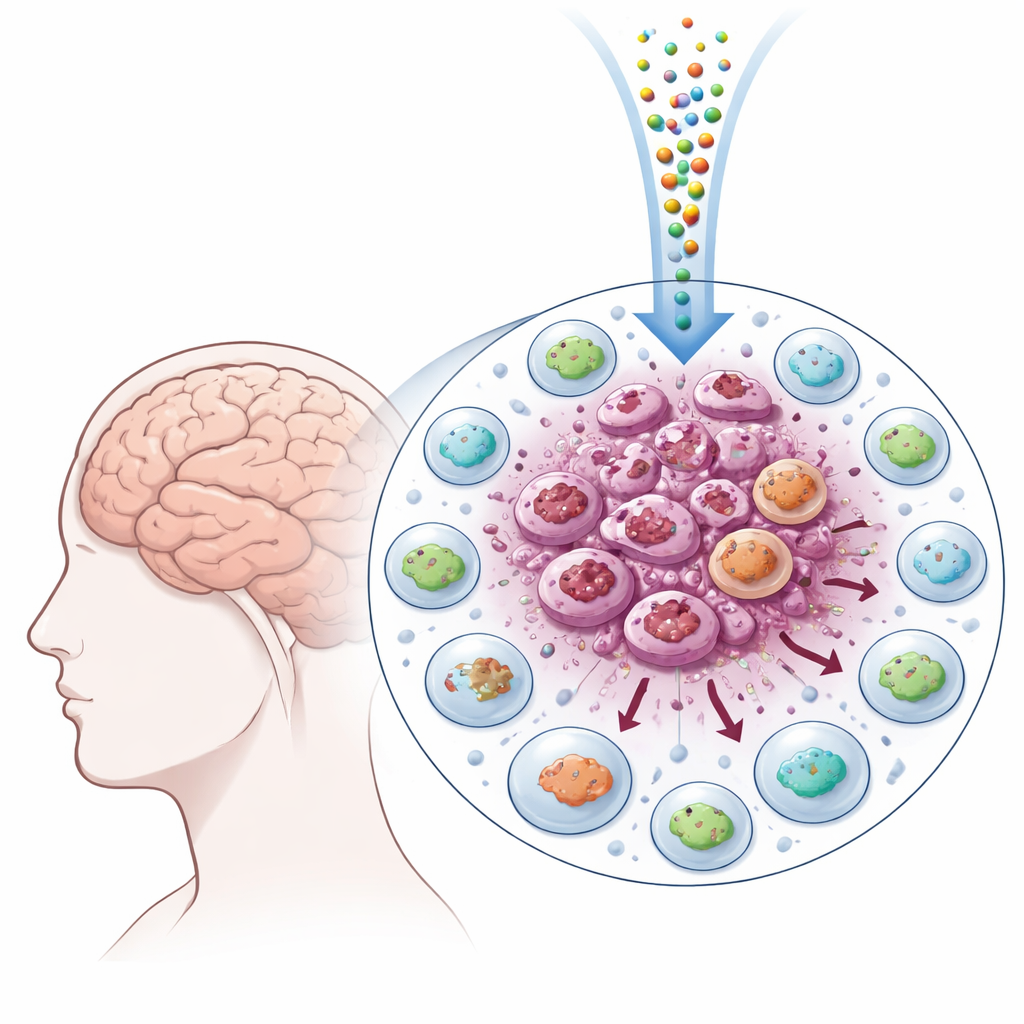
Glioblastoma is one of the deadliest brain cancers, in part because its cells are remarkably good at surviving in harsh conditions where oxygen and nutrients are in short supply. This study explores a drug called S-Gboxin, designed to hit the "power plants" inside glioblastoma cells, and asks a simple but important question: does this medicine still work under the tough, starved conditions found inside real tumors—and can its punch be strengthened by pairing it with other treatments?
A drug that goes after cellular power plants
Every cell relies on tiny structures called mitochondria to turn food and oxygen into usable energy. S-Gboxin is a refined version of an earlier compound, Gboxin, that was found to block a key energy-making step in glioblastoma cells more strongly than in normal cells. In dishes of human glioblastoma cell lines and patient-derived tumor cells, the researchers show that low micromolar doses of S-Gboxin slow growth and trigger cell death. Immortalized brain support cells (astrocytes that were genetically altered to divide indefinitely) also respond to the drug, but normal, non-transformed human astrocytes are much less affected at comparable doses, suggesting that S-Gboxin preferentially harms tumor-like cells.
Harsh tumor conditions make the drug hit harder
Real glioblastoma tumors are often poorly supplied with blood, leading to low glucose levels and low oxygen—conditions that can sometimes blunt the effect of targeted therapies. The team recreated this hostile environment by limiting glucose and oxygen in cell culture. Under these stress conditions, S-Gboxin actually became more toxic to glioblastoma cells: lower doses were sufficient to push them into cell death, especially when both glucose and oxygen were scarce. When cells were forced to rely more heavily on mitochondrial fuels—by feeding them galactose instead of easily burned glucose—the drug’s killing effect increased dramatically. In contrast, normal primary astrocytes remained comparatively resistant, even under low-glucose conditions.
Rewiring energy use and slowing cancer cell movement
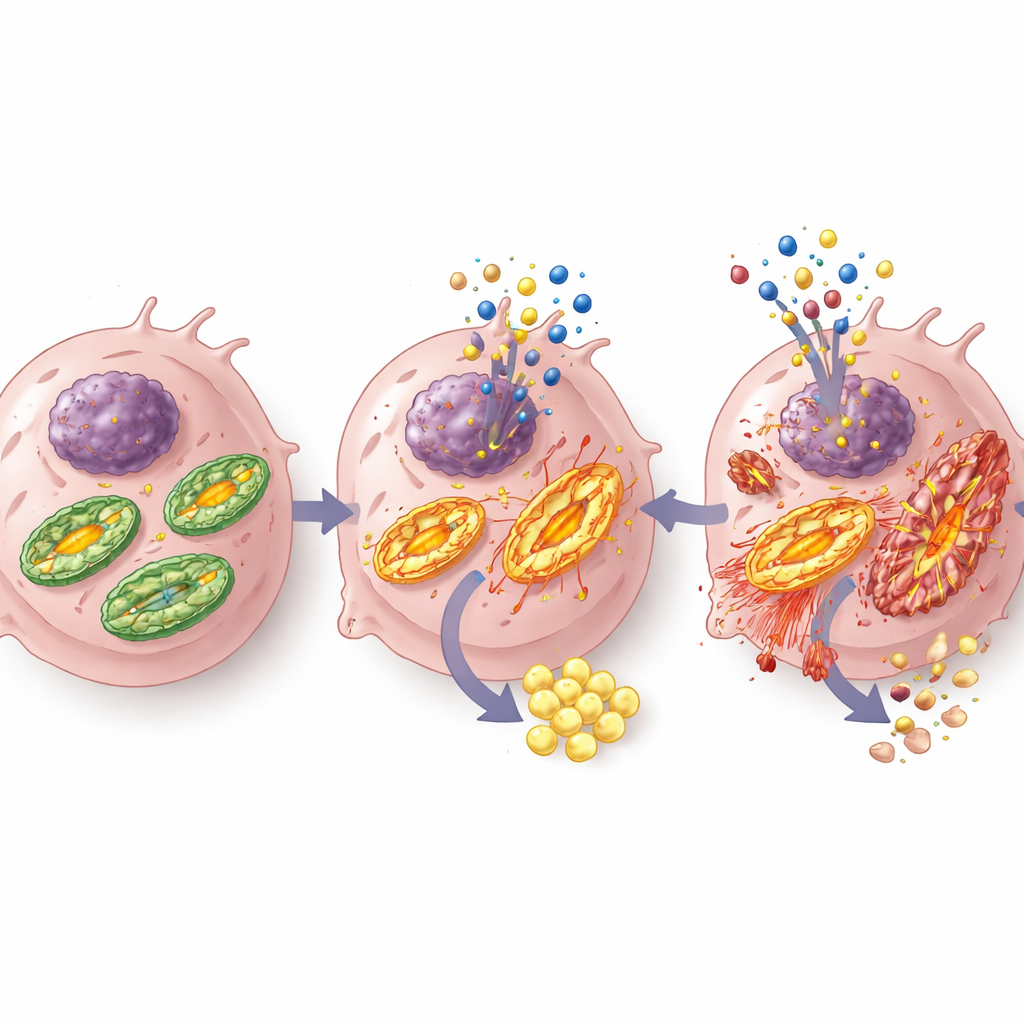
To understand how S-Gboxin changes tumor cell metabolism, the researchers measured oxygen use and acid production. Surprisingly, instead of behaving purely as a classical energy-blocking inhibitor, S-Gboxin made the mitochondria behave like leaky engines: oxygen consumption patterns resembled those seen when mitochondria are “uncoupled,” so that fuel is burned without efficiently making energy. Cells responded by ramping up glycolysis—the quicker, less efficient way of generating energy from glucose—leading to higher lactate release and faster glucose consumption. At the same time, energy-hungry behaviors such as cell migration were reduced, consistent with an internal energy crisis that leaves tumor cells less able to move and potentially spread.
Stress signaling helps little, but energy sensing matters a lot
Cancer cells possess built-in emergency programs to cope with stress. One such program, the integrated stress response, centers on a protein called ATF4, which helps cells adapt to nutrient and oxygen shortages. S-Gboxin clearly switched this response on, but blocking ATF4 with a small-molecule inhibitor or genetic knockdown did not make the drug noticeably more lethal, indicating that this stress pathway does not strongly shield glioblastoma cells from S-Gboxin. A different safeguard, however, proved crucial: AMPK, a master energy sensor that helps cells restore balance when ATP levels drop. When AMPK was genetically removed or pharmacologically blocked, glioblastoma cells became much more sensitive to S-Gboxin, especially under low-glucose conditions. Under these circumstances, even modest doses of the drug triggered pronounced cell death, while normal astrocytes were largely unaffected by the combination.
Turning a tumor’s hunger into a treatment advantage
Overall, the findings suggest that S-Gboxin turns glioblastoma’s reliance on flexible energy production into a liability. By disrupting mitochondrial function and forcing a wasteful overuse of glucose, the drug is particularly effective under the very nutrient-poor, low-oxygen conditions that define the tumor’s inner environment. Blocking the AMPK energy-sensing pathway strips tumor cells of a key survival tool, further tipping the balance toward cell death without adding major harm to normal brain cells in these experiments. While much work remains—especially to optimize delivery to tumors in the human brain—this study points to a strategy in which carefully designed metabolism-targeting drugs, combined with inhibitors of energy-sensing pathways, could one day help starve glioblastoma from within.
Citation: Weinem, JB., Urban, H., Sauer, B. et al. Targeting glioblastoma mitochondrial metabolism with S-Gboxin induces cytotoxicity under conditions of the tumor microenvironment. Cell Death Discov. 12, 181 (2026). https://doi.org/10.1038/s41420-026-03072-4
Keywords: glioblastoma, cancer metabolism, mitochondria, S-Gboxin, AMPK inhibition