Clear Sky Science · en
ITK-targeted immune remodeling enhanced the efficacy of anti-CD19 CAR-T cell therapy
Making Cancer-Fighting Cells Last Longer
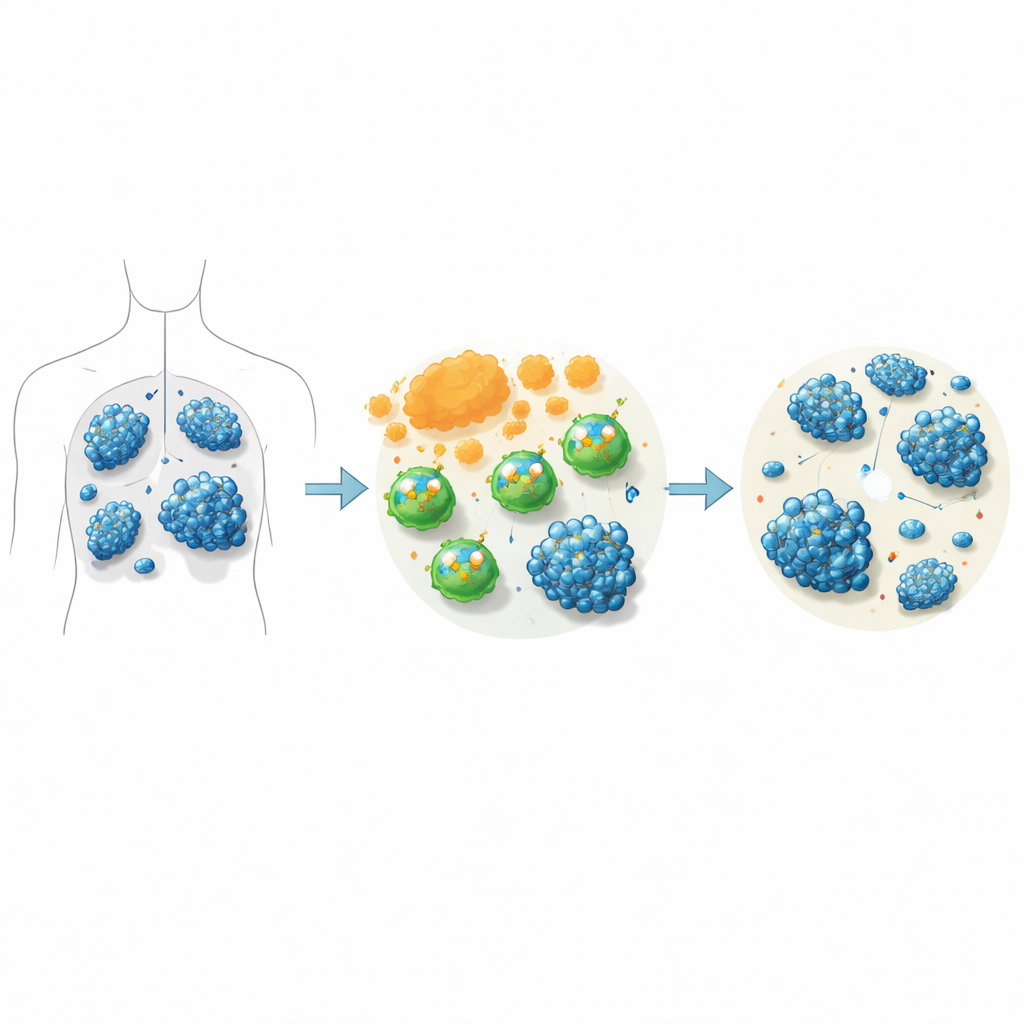
CAR-T cell therapy has transformed treatment for certain blood cancers by turning a patient’s own immune cells into targeted tumor hunters. Yet many patients still relapse because these engineered cells tire out and fade away too soon. This study asks a simple but powerful question: can we give CAR-T cells a kind of “immune endurance boost” so they stay active longer and wipe out more cancer?
Why Supercharged T Cells Matter
CAR-T cells are customized white blood cells that recognize markers on cancer cells, such as CD19 on many B-cell lymphomas and leukemias. After an impressive early attack, these cells often slow down in the hostile environment around tumors. They enter a worn-out state called exhaustion, where they divide less, release fewer toxic molecules, and stop killing cancer effectively. The researchers focused on a key internal switch in T cells, a protein called ITK, which helps transmit activation signals. Earlier animal work suggested that constantly pushing this switch contributes to burnout. Here, the team tested whether dialing down ITK with a highly selective drug, soquelitinib, could keep CAR-T cells both powerful and resilient.
Turning Down a Signal to Turn Up the Attack
In laboratory experiments, the scientists compared standard CD19-targeting CAR-T cells with CAR-T cells in which ITK was blocked either by genetic methods or by soquelitinib. When these cells were mixed with human lymphoma cells, the ITK-blocked CAR-T cells destroyed more cancer cells. They also released higher levels of key attack molecules like granzyme B, TNF-alpha, and interferon-gamma, and showed stronger signs of activation. Soquelitinib-treated CAR-T cells expanded better over weeks in culture, died less often, and in particular boosted the growth and killing power of CD8 T cells, the main “soldier” subset responsible for directly eliminating tumor cells.
Rewiring T Cell Fatigue
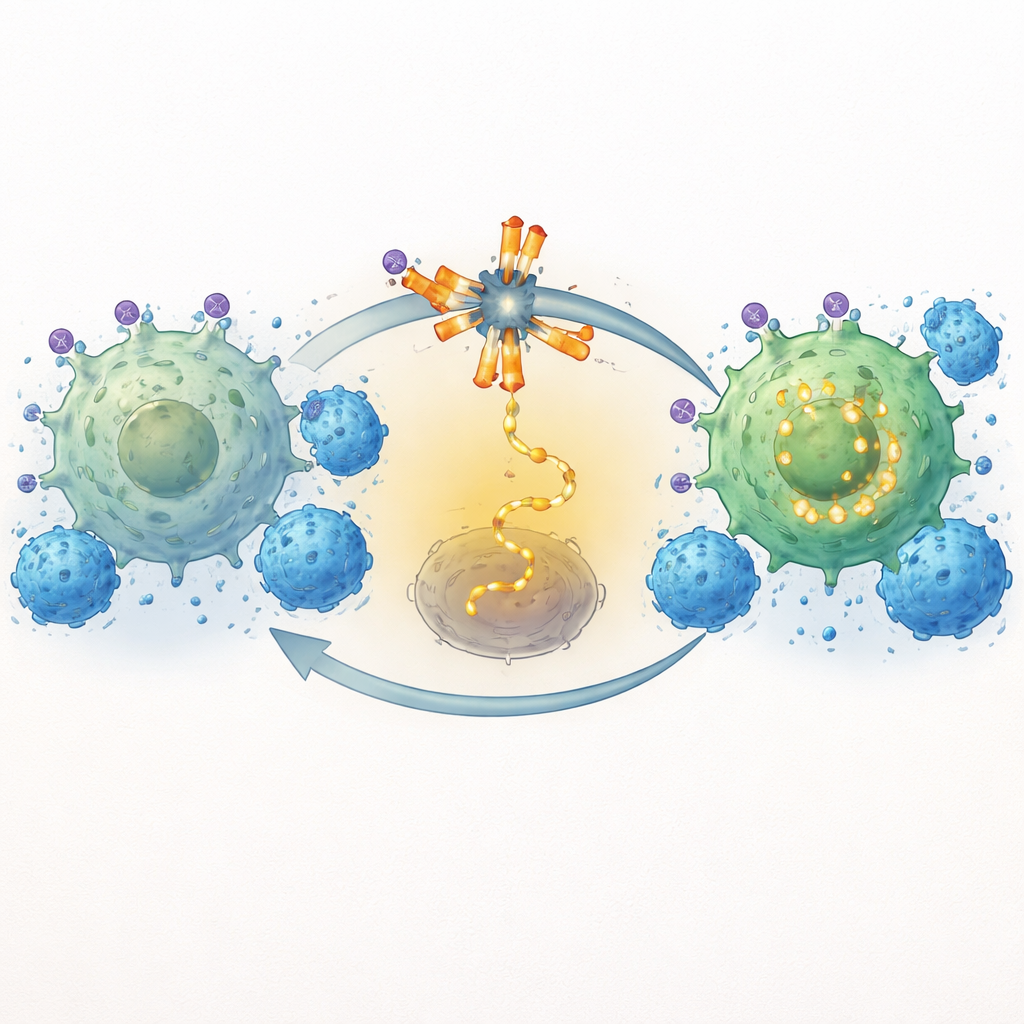
A major advance of this work is showing that ITK inhibition does more than briefly rev up CAR-T cells; it reshapes the programs that control exhaustion and memory. Using detailed cell profiling and gene expression analysis, the team found that soquelitinib both lowered multiple “brake” molecules on the CAR-T surface and quieted the internal genetic circuits that drive chronic fatigue. Markers such as PD-1, TIM3, LAG3, TIGIT, and CD39, all linked with worn-out T cells, were reduced even after repeated exposure to tumor cells. At the same time, genes and proteins associated with long-lived, stem-like or memory T cells—including TCF1 and molecules related to homing and survival—were increased. In effect, ITK blockade nudged CAR-T cells away from a spent, over-stimulated state and toward a more balanced, durable killer profile.
Proof in Animal Models
To see whether this reprogramming mattered in living organisms, the researchers tested the combination in mice bearing aggressive human leukemia. All animals received CD19 CAR-T cells, but only some also received daily soquelitinib. The combination group showed a far greater drop in leukemia burden, as measured by whole-body imaging, and lived longer than mice treated with CAR-T cells alone. Importantly, soquelitinib by itself did not slow tumor growth, indicating that its benefit comes from reshaping the immune response rather than acting as a conventional chemotherapy drug. These findings support the idea that precisely tuning T cell signaling, rather than simply pushing it harder, can yield a more effective and sustainable cancer attack.
What This Could Mean for Patients
For people facing B-cell lymphomas and leukemias, and potentially other cancers, this study points to a new strategy: pairing CAR-T therapy with an ITK inhibitor to prevent immune burnout. By modestly damping one signaling pathway, soquelitinib appears to help CAR-T cells grow, stay functional, and resist exhaustion, leading to stronger and longer-lasting tumor control in preclinical models. While clinical trials will be needed to confirm safety and benefit in patients, the work suggests that targeted immune “remodeling” could make next-generation CAR-T treatments more reliable, more durable, and possibly extendable to solid tumors that have so far resisted this powerful form of immunotherapy.
Citation: Li, Z., Lv, L., Yao, X. et al. ITK-targeted immune remodeling enhanced the efficacy of anti-CD19 CAR-T cell therapy. Cell Death Discov. 12, 131 (2026). https://doi.org/10.1038/s41420-026-03004-2
Keywords: CAR-T cell therapy, T cell exhaustion, ITK inhibition, B cell lymphoma, cancer immunotherapy