Clear Sky Science · en
ANGPTL2 inhibits macrophage pyroptosis and alleviates rheumatoid arthritis progression by regulating mitophagy via IGFBP5
Why This Matters for Aching Joints
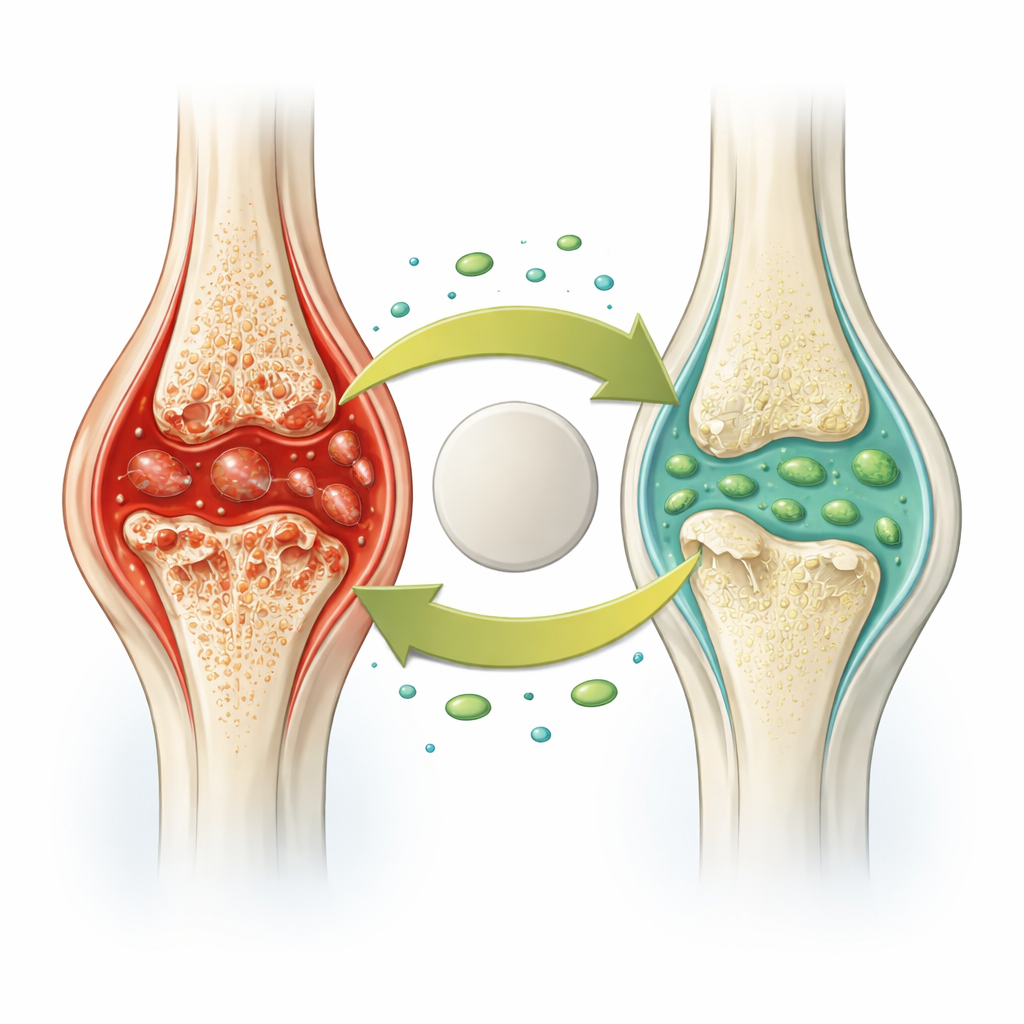
Rheumatoid arthritis is more than stiff, painful joints—it is an autoimmune attack that slowly eats away at cartilage and bone. Many current drugs tamp down the immune system broadly, which can leave people vulnerable to infections and still does not fully stop joint damage. This study uncovers a built‑in protective protein, ANGPTL2, that helps immune cells keep their internal power plants—mitochondria—in good working order. By doing so, it reins in an explosive form of cell death linked to joint destruction, pointing toward a new, more targeted way to protect joints from the inside out.
When Immune Cells Turn from Helpers to Wreckers
In rheumatoid arthritis, immune cells called macrophages flood the joint lining and become stuck in an aggressive state. Instead of quietly cleaning up debris, some of these cells undergo a fiery kind of cell death known as pyroptosis. During pyroptosis, protein complexes inside the cell punch holes in the cell membrane, causing the cell to burst and release potent inflammatory molecules. This fuels swelling and attracts yet more immune cells, setting up a vicious cycle that erodes cartilage and bone. The authors asked whether ANGPTL2, a protein previously linked to bone health and gum disease, might help break this cycle in arthritic joints.
A Protective Protein Missing in Diseased Joints
Using a mouse model that mimics human rheumatoid arthritis, the researchers compared normal animals with others genetically engineered to lack ANGPTL2. Mice without this protein developed worse arthritis: their paws were more swollen, bone scans showed deeper erosion, and tissue slices revealed heavier immune cell invasion and more active bone‑resorbing cells. At the microscopic level, macrophages in these mice carried higher levels of key pyroptosis proteins and released more inflammatory signals. In dish‑grown macrophages exposed to bacterial triggers, ANGPTL2 levels dropped while pyroptosis markers surged, hinting that loss of ANGPTL2 removes an important brake on harmful inflammation.
Mitochondrial Housekeeping as the Hidden Lever
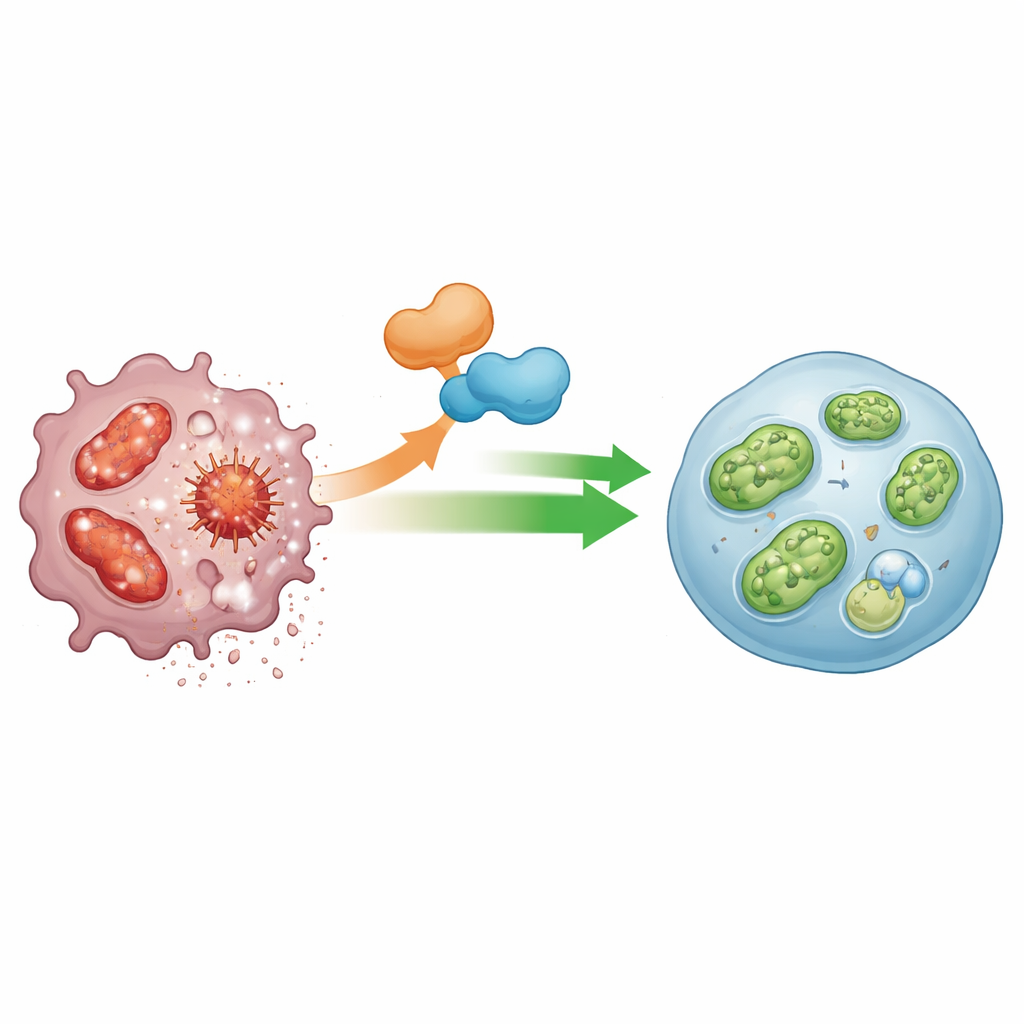
Diving deeper, the team discovered that ANGPTL2 helps macrophages perform mitophagy—the selective clean‑up of damaged mitochondria. Without ANGPTL2, macrophages showed faltering mitochondrial membrane potential, excess reactive oxygen molecules, and weakened markers of mitophagy. Damaged mitochondria are known to leak danger signals that activate the same protein machinery driving pyroptosis. When the researchers added back purified ANGPTL2 to macrophages, the cells restored mitophagy, stabilized their mitochondria, and dialed down pyroptosis—unless autophagy was chemically blocked, in which case the benefit vanished. This linked ANGPTL2’s protective effect directly to the cell’s ability to clear faulty mitochondria.
A Team Effort: ANGPTL2 and Its Molecular Partner
Gene‑expression profiling pointed to another player: IGFBP5, a protein involved in growth‑factor signaling and increasingly tied to cellular recycling pathways. ANGPTL2‑deficient macrophages had sharply reduced IGFBP5, and silencing IGFBP5 alone was enough to blunt mitophagy and boost inflammasome activity. The researchers showed that ANGPTL2 raises IGFBP5 levels and that the two proteins physically interact inside macrophages. When IGFBP5 was knocked down, ANGPTL2 could no longer rescue mitophagy, suggesting these proteins act together as a molecular switch that keeps mitochondria healthy and inflammasome activity in check.
From Mechanism to a Potential New Treatment
To test whether boosting ANGPTL2 could actually protect arthritic joints, the team delivered a harmless virus carrying the Angptl2 gene directly into mouse ankle joints. Treated joints showed less swelling, better‑preserved bone structure, fewer bone‑eating cells, and more bone‑forming cells. Macrophages in these joints displayed lower pyroptosis markers and stronger mitophagy signals. In plain terms, supplying extra ANGPTL2 locally helped the joint lining calm down, restored its mitochondrial housekeeping, and slowed the march toward irreversible damage. While these experiments were done in mice and not yet in people, they suggest that fine‑tuning the ANGPTL2–IGFBP5–mitophagy pathway could offer a more precise way to protect joints—by retraining overactive immune cells rather than simply silencing them.
Citation: Liu, Y., Yang, Q., Huang, Z. et al. ANGPTL2 inhibits macrophage pyroptosis and alleviates rheumatoid arthritis progression by regulating mitophagy via IGFBP5. Cell Death Dis 17, 309 (2026). https://doi.org/10.1038/s41419-026-08537-z
Keywords: rheumatoid arthritis, macrophages, mitophagy, pyroptosis, ANGPTL2