Clear Sky Science · en
Adipokines in oral squamous cell carcinoma—a narrative overview
Why fat signals matter for mouth cancer
Oral squamous cell carcinoma is the most common form of mouth cancer, especially in parts of South Asia where tobacco, betel quid, and alcohol use are widespread. Survival rates have not improved as much as doctors would like, in part because the hidden chemistry that helps these tumors grow is still being uncovered. This article focuses on hormone like substances released by body fat, called adipokines, and explains how they may influence the start, growth, and spread of oral cancer, as well as their potential use as warning signs of disease. 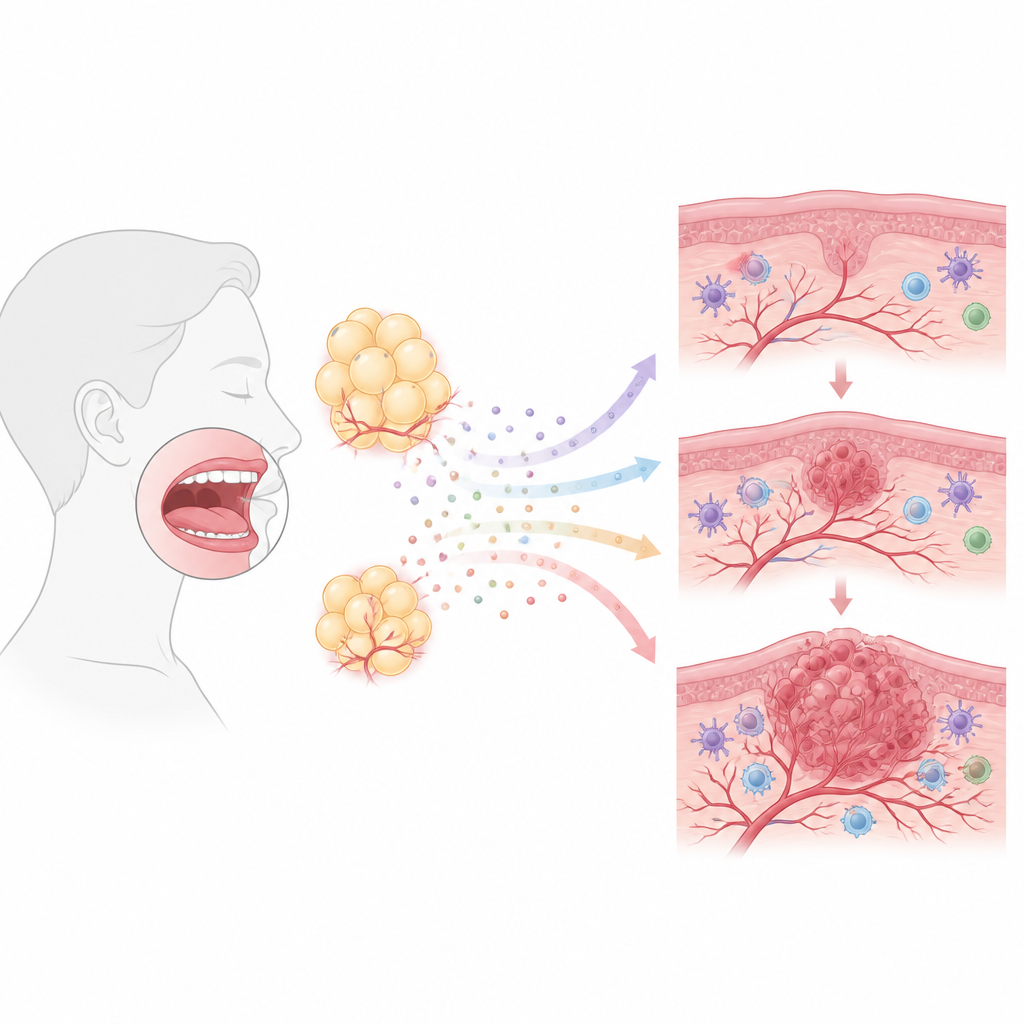
Signals from body fat and the cancer setting
Once seen as a simple energy store, body fat is now recognized as an active organ that sends out chemical signals throughout the body. These signals, the adipokines, are involved in metabolism, immunity, and inflammation. Oral cancer develops over many years under the influence of cancer causing substances, repeated irritation, and chronic inflammation. In this environment, tumor cells interact closely with nearby fat cells. As tumors grow and demand more energy, they can reprogram surrounding fat cells to release fatty acids and adipokines that help fuel growth, build new blood vessels, and support invasion into nearby tissues.
Good and bad messengers from fat tissue
The review examined 15 human studies and highlighted six key adipokines in oral cancer. Apelin, chemerin, resistin, and leptin generally act as "bad" messengers that favor tumor growth. Higher levels of apelin were linked to faster cell division, more movement of cancer cells, and shorter periods without disease after treatment. Chemerin levels in blood, saliva, and tumor tissue were higher in patients with more advanced disease and more lymph node involvement, and were associated with richer networks of blood vessels and poorer survival. Resistin and leptin were often tied to genetic differences that, together with lifestyle habits such as betel nut chewing or smoking, raised the risk of developing oral cancer or having more advanced tumors.
Protective messengers that fade with time
Not all adipokines act in favor of the tumor. Zinc alpha 2 glycoprotein and adiponectin showed patterns that suggest a protective role, especially in early disease. Zinc alpha 2 glycoprotein was present mainly in small, early stage oral tumors and absent in advanced cases, and its presence was linked to less spread to lymph nodes. Adiponectin followed a similar trend: levels in blood and tumor tissue were higher in early tongue cancers and dropped as the disease advanced. Laboratory experiments showed that adiponectin could slow the movement of cancer cells. However, as tumors outgrow their blood supply and become more starved of oxygen, this protective influence appears to weaken, and pro growth signals dominate. 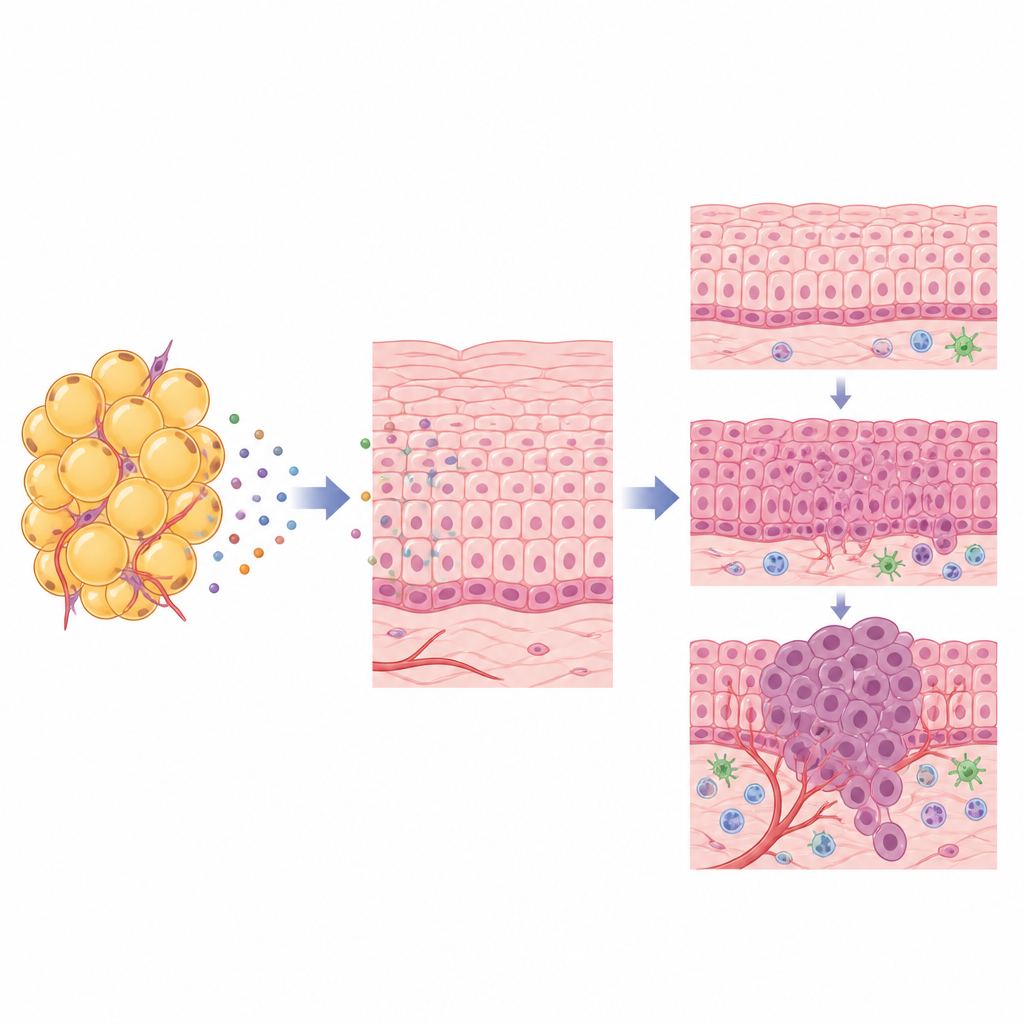
What this means for patients and doctors
Taken together, these findings suggest that fat derived messengers shape mouth cancer in complex, stage dependent ways. Some encourage tumor growth and spread, while others may act as early brakes that are later lost. Because the available studies use very different methods and often involve small groups of patients, the authors stress that it is too soon to use these signals routinely in the clinic. Larger, long term studies using standardized tests are needed to confirm whether specific adipokines can reliably act as early warning markers, guides to prognosis, or even future treatment targets. For now, the work highlights another way that whole body health, including body fat and inflammation, is closely tied to cancer risk and outcome.
Citation: Velusamy, P., Mathew, M., Kudva, A. et al. Adipokines in oral squamous cell carcinoma—a narrative overview. BDJ Open 12, 51 (2026). https://doi.org/10.1038/s41405-026-00444-x
Keywords: oral cancer, adipokines, inflammation, leptin, biomarkers