Clear Sky Science · en
Enhancing anandamide signalling through fatty acid amide hydrolase inhibition: An update on the pharmacological strategy for treating psychiatric disorders
Why this matters for mental health
The idea that our brains make their own cannabis like chemicals may sound surprising, but this built in system helps regulate mood, stress, pain and sleep. When it goes off balance, it seems to play a role in conditions such as depression, anxiety, post traumatic stress disorder and psychosis. This article reviews a strategy that aims to gently tune this internal system, not by giving cannabis, but by slowing the breakdown of one of its key messengers, anandamide, to see whether this can safely ease psychiatric symptoms.
The brain’s own cannabis system
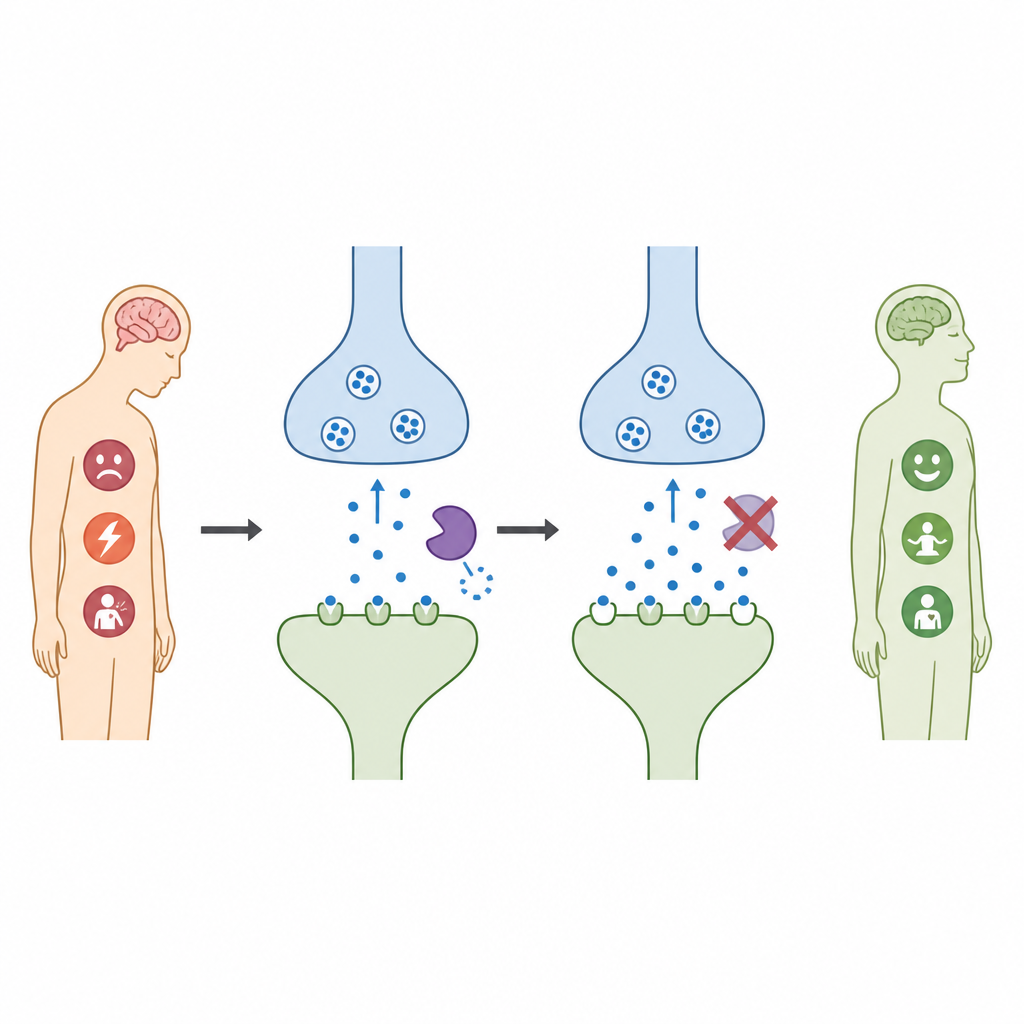
Our bodies produce endocannabinoids, fatty molecules that act as short lived messengers between nerve cells. The best known are anandamide and 2 AG. They are made on demand, travel backward across the synapse to quiet overactive circuits, and are quickly dismantled by enzymes so their effects remain brief and tightly controlled. In many psychiatric conditions, studies find altered levels of anandamide and changes in the receptors it binds to, particularly the CB1 receptor, which is abundant in brain regions involved in emotion, memory and thinking. These patterns suggest that disrupted endocannabinoid signaling is linked to how some mental health disorders arise and persist.
Anandamide, stress and emotion
Anandamide has attracted special attention because of its close relationship with anxiety, mood and stress responses. Higher anandamide levels have been linked to lower trait anxiety, better fear extinction and healthier communication between the frontal cortex and amygdala, areas that shape how we respond to threat. Genetic variants that reduce the activity of the main breakdown enzyme, fatty acid amide hydrolase, are associated with more circulating anandamide and milder anxiety symptoms. In contrast, people with depression, some people with post traumatic stress disorder and heavy cannabis users often show lower anandamide levels in blood or spinal fluid, and these shifts sometimes track with worse mood, sleep disturbance or hyperarousal. Although findings are not uniform across all studies, they point toward the idea that raising anandamide in a controlled way could benefit certain symptom clusters.
Blocking the brain’s anandamide “off switch”
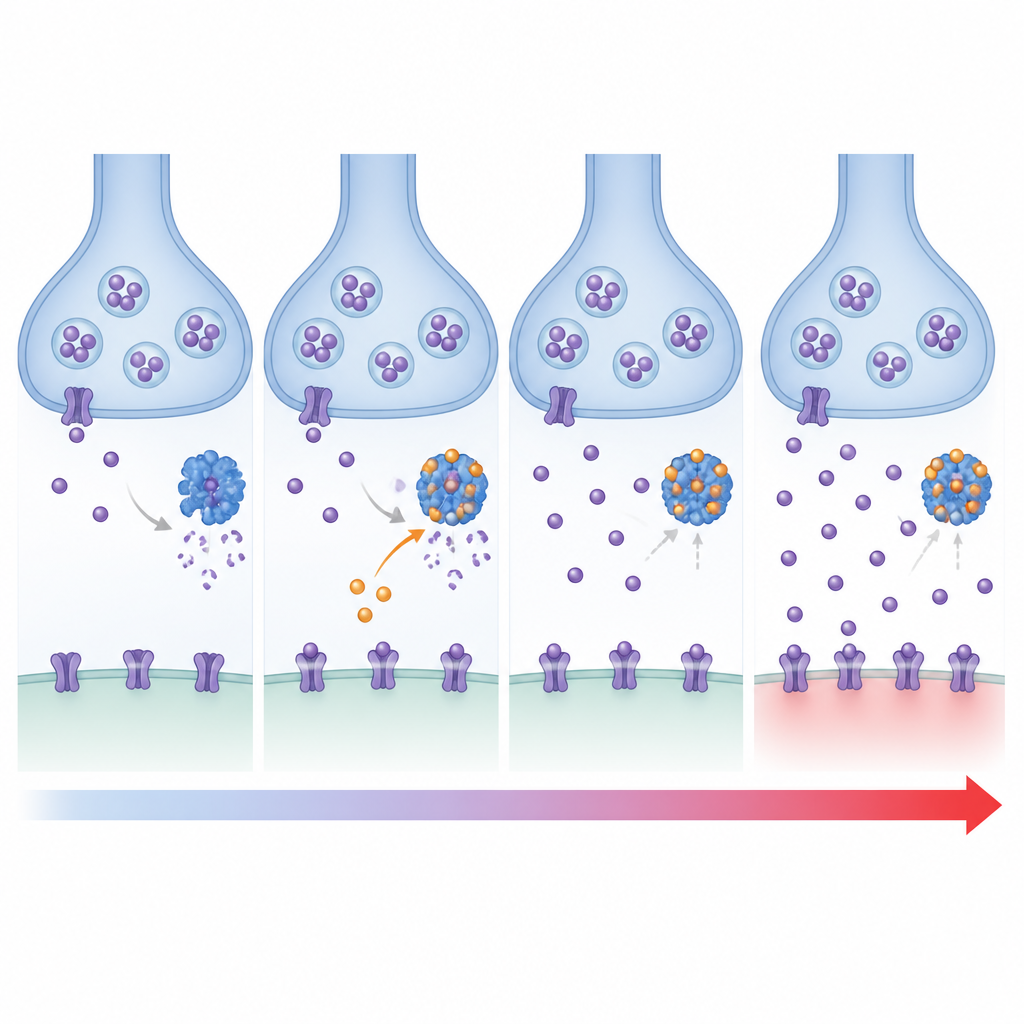
Instead of giving external cannabinoids, one strategy is to block fatty acid amide hydrolase so that the body’s own anandamide lasts longer. Several drug families have been designed to do this without directly stimulating cannabinoid receptors, which may reduce the risk of intoxication or addiction. Early work in animals showed that these inhibitors could reduce anxiety like behavior, dampen pain and improve signs related to psychosis and trauma. In people, first in human studies of compounds such as URB597, PF 04457845 and JNJ 42165279 have largely shown good short term tolerability, strong increases in anandamide in blood and spinal fluid, and no clear signs of abuse potential. However, one unrelated compound, BIA 10 2474, caused severe brain injury and a death in a French safety trial, likely due to off target effects on other lipid processing enzymes, highlighting the need for careful safety testing and enzyme selectivity.
What clinical trials have found so far
The review assembles results from recent human trials of fatty acid amide hydrolase inhibitors in conditions such as cannabis use disorder, social anxiety, post traumatic stress disorder, depression and autism spectrum disorder. Two drugs, PF 04457845, later renamed JZP150, and JNJ 42165279, have advanced to Phase II trials. Both clearly raised anandamide levels but produced modest or no benefit on main clinical outcomes. PF 04457845 showed some helpful effects on cannabis withdrawal and use in men with cannabis dependence, though a larger follow up trial has not yet published detailed statistics. JZP150 did not significantly improve symptoms in post traumatic stress disorder. JNJ 42165279 produced suggestive improvements in measures of social anxiety and in repetitive behavior and anxiety in autism, yet it did not beat placebo on primary rating scales in depression, post traumatic stress disorder or autism.
Where this research is heading
The mixed trial results suggest that simply boosting anandamide is not a one size fits all answer for psychiatric illness. The authors argue that the complexity of conditions like depression and post traumatic stress disorder, with their varied causes, symptom patterns and biological underpinnings, means that only certain subgroups may respond to this approach. They propose a precision medicine path that combines better patient selection, genetic markers linked to fatty acid amide hydrolase activity, baseline measures of endocannabinoid levels and brain imaging of stress circuits. Alongside this, new compounds must be screened for off target actions on other lipid enzymes and tested with stricter safety rules. In plain terms, the article concludes that keeping more of the brain’s own anandamide around remains a promising but unproven avenue; to unlock its value, future studies will need to match the right drug to the right patient, while taking great care to avoid repeating past safety failures.
Citation: Couttas, T.A., Hoffmann, A.E., Jieu, B. et al. Enhancing anandamide signalling through fatty acid amide hydrolase inhibition: An update on the pharmacological strategy for treating psychiatric disorders. Transl Psychiatry 16, 288 (2026). https://doi.org/10.1038/s41398-026-04120-4
Keywords: endocannabinoid system, anandamide, FAAH inhibitors, psychiatric disorders, PTSD