Clear Sky Science · en
Adult ADHD with comorbid major depression shows a distinguishable polygenic pattern and negative cognitive style
Why This Matters for Everyday Life
Many adults live for years with attention-deficit/hyperactivity disorder (ADHD) without realizing that their struggles with focus, organization, and restlessness are part of a neurodevelopmental condition. At the same time, depression and anxiety are increasingly common and often devastating. This study asks a question with very real consequences for patients and clinicians: when adults have both ADHD and major depression, is that combination mainly the result of the ADHD itself and its life difficulties, or is there a distinct underlying biological risk for depression on top of ADHD?
Looking at Genes, Not Just Symptoms
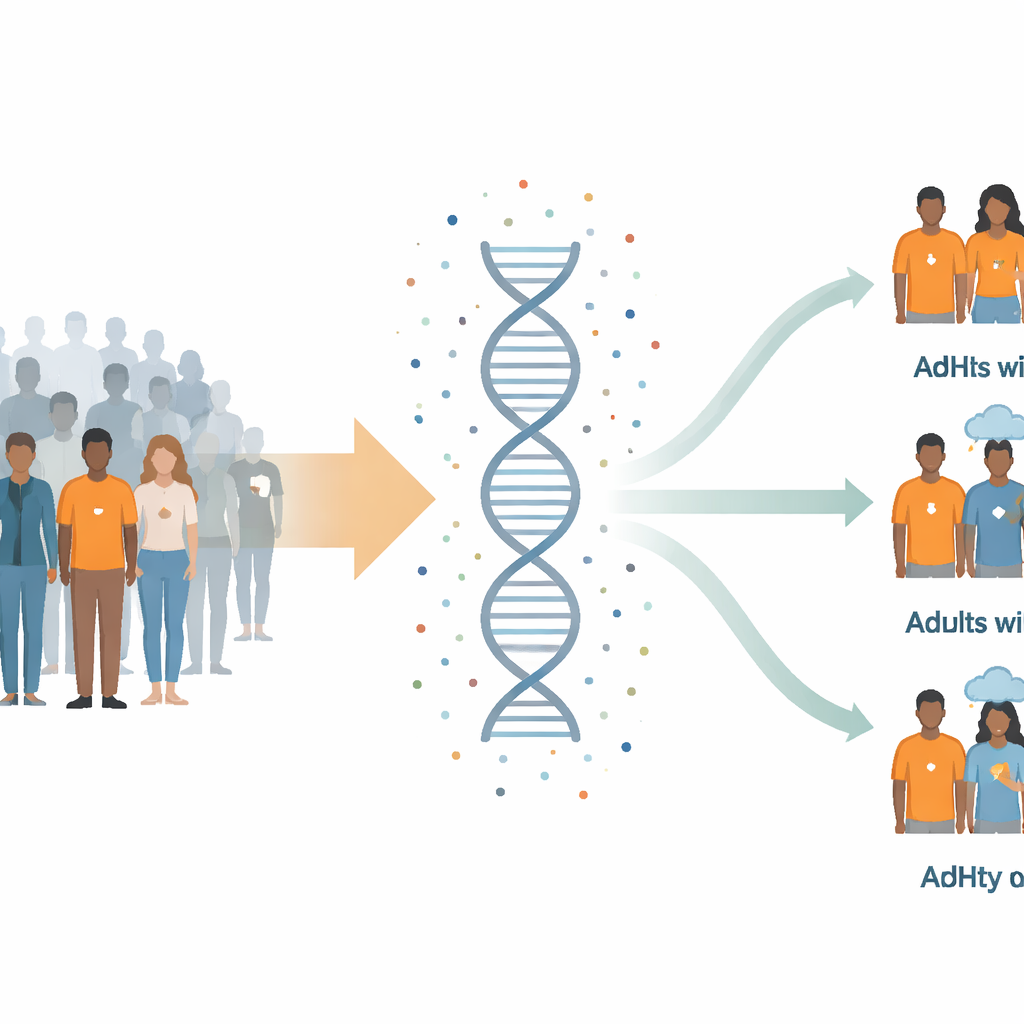
The researchers examined nearly 900 adults diagnosed with ADHD and compared them to just over 1,000 mentally healthy volunteers. They focused on so-called polygenic risk scores, which combine the tiny effects of hundreds of thousands of genetic variants to estimate a person’s inherited tendency toward a particular disorder. Here, they used polygenic scores derived from large international studies of ADHD and major depressive disorder (MDD). First, they checked whether these scores actually separated ADHD patients from healthy controls, and indeed both the ADHD-related and depression-related scores were higher in the ADHD group, confirming that these genetic measures were meaningful in this sample.
Two Groups of ADHD, One Key Difference
Within the ADHD patients, the team then separated those with and without a lifetime history of major depression. About half had experienced MDD at some point in their lives. Clinically, the depressed group stood out: they were more likely to have been hospitalized for psychiatric reasons, had more severe inattention symptoms as adults, scored higher on personality measures of emotional vulnerability (neuroticism), and recalled lower social confidence and more negative emotions in childhood. They were also more likely to have anxiety disorders, eating disorders, and somatoform complaints, pointing toward a broad internalized burden of distress rather than outwardly disruptive behavior.
Genetic Patterns Behind Combined Problems
When the scientists compared genetic risk between the two ADHD subgroups, an important pattern emerged. The depression-related polygenic score was clearly higher in ADHD patients who had experienced major depression than in those who had not. In contrast, the ADHD-related polygenic score did not differ between the groups. In other words, having ADHD plus depression was linked to additional inherited vulnerability to depression, not to an extra dose of ADHD-related genetic risk. The same depression-related score also tracked with anxiety disorders: ADHD patients with anxiety, and especially those with both anxiety and depression, tended to have the highest depression-related polygenic load, suggesting a shared genetic foundation for these internalizing conditions.
From Behavior Patterns to Inner Style
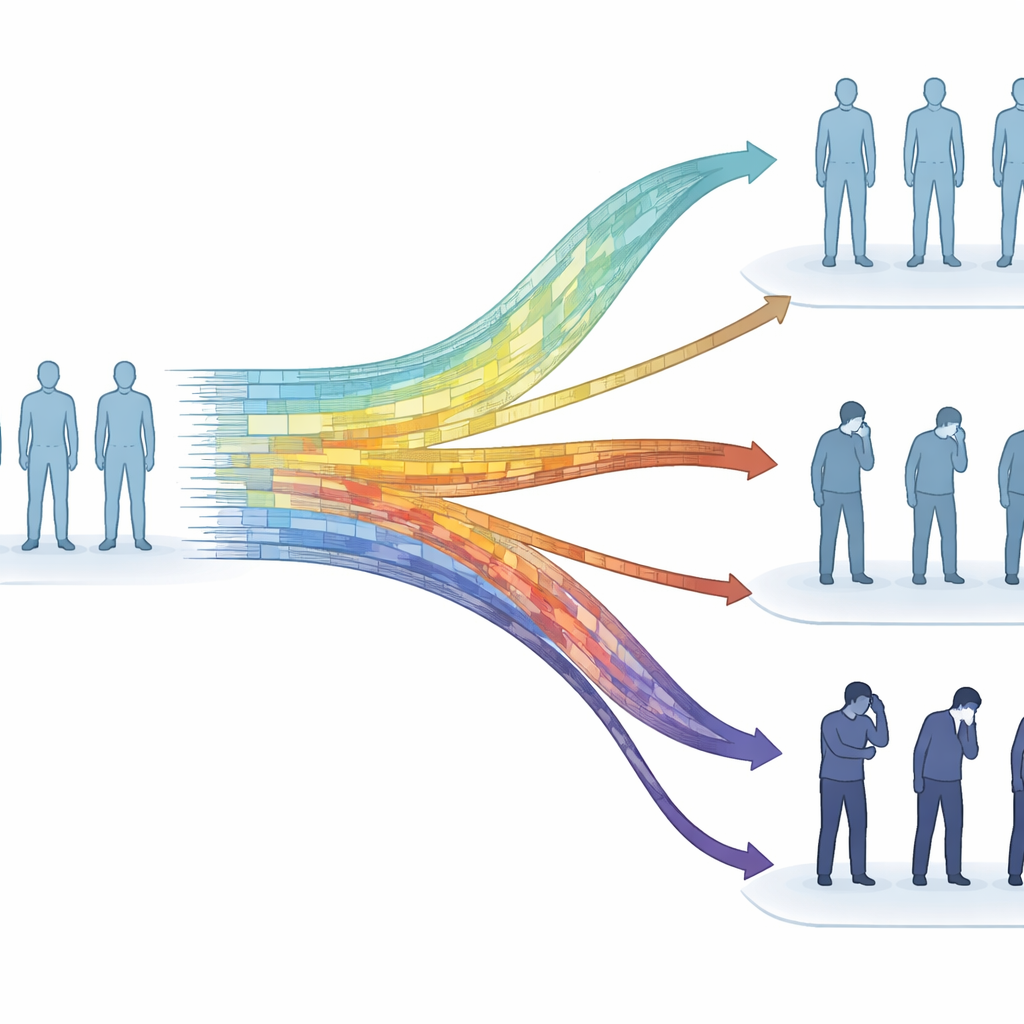
Beyond diagnoses, the study looked at how people described their lifelong emotional style. Those with both ADHD and depression showed a more “negative cognitive style”: they were more neurotic, reported more negative feelings in childhood, and felt less socially confident growing up. Yet, the genetic scores themselves did not strongly predict the fine-grained symptom ratings such as specific ADHD subscales or detailed mood scores. This supports the idea that polygenic scores capture broad inherited tendencies toward whole disorders, rather than explaining every nuance of how symptoms look in daily life.
What This Means for People with ADHD
To put the findings simply, adults who have both ADHD and major depression appear to carry a distinct inherited vulnerability to depression, layered on top of their ADHD risk, rather than depression being just a downstream consequence of having ADHD. Their difficulties cluster on an “inattentive and internalizing” profile—marked by focus problems, anxiety, and a negative emotional outlook—rather than an “impulsive and externalizing” picture of rule-breaking or substance abuse. Recognizing this pattern could help clinicians look more carefully for hidden ADHD in depressed adults, and for hidden depression and anxiety in adults with ADHD. It also suggests that prevention and treatment strategies should address not only the everyday challenges of living with ADHD, but also the separate biological susceptibility to depression and anxiety that some patients carry from birth.
Citation: Kranz, T.M., McNeill, R.V., Jacob, C.P. et al. Adult ADHD with comorbid major depression shows a distinguishable polygenic pattern and negative cognitive style. Transl Psychiatry 16, 235 (2026). https://doi.org/10.1038/s41398-026-04008-3
Keywords: adult ADHD, major depression, polygenic risk, anxiety, comorbidity