Clear Sky Science · en
Associations of oral contraceptives and hormone replacement therapy with incident dementia risk: a population-based cohort study
Why this study matters for women and aging brains
Dementia is a feared condition in later life, yet there is still no cure. Many women use hormone based medications at different stages of life, either to prevent pregnancy or to ease menopause symptoms. This study asks a question that concerns millions of women worldwide: could those common hormone pills be linked to a lower or higher chance of developing dementia and to how well the brain works with age?
Following women over time
The researchers used data from the UK Biobank, a large health project that has followed hundreds of thousands of volunteers for many years. They focused on nearly 234,000 women who had shared detailed information about their use of oral contraceptives and hormone replacement therapy, along with lifestyle and medical history. None of the women had dementia at the start. Over about nine years of follow up, the team tracked who developed dementia, measured thinking skills with simple computer based tests, and used brain scans from a subgroup to look at the size of key brain regions.
Hormone use and dementia risk
The central finding was that women who had ever used oral contraceptive pills had a lower risk of being diagnosed with dementia of any type, including Alzheimer’s disease and vascular dementia, compared with women who had never used them. Women who had used hormone replacement therapy after menopause also had a lower risk of dementia overall and of Alzheimer’s disease, though the link to vascular dementia was not clear. When the researchers looked more closely at how long women had taken oral contraceptives, they found a J shaped pattern: the risk of dementia dropped as use increased up to about six years and then slowly rose again with longer use, though it generally remained below the level seen in women who had never taken the pills. 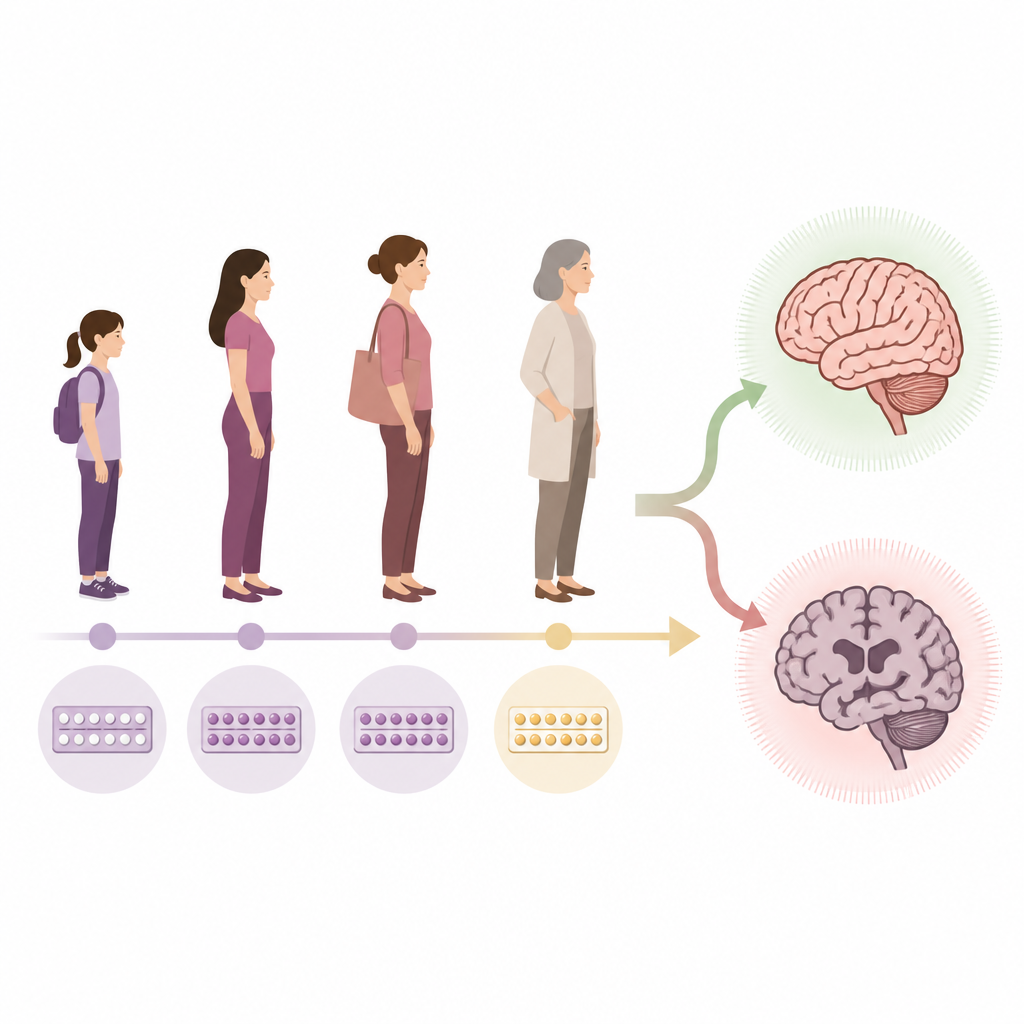
Links to thinking skills and brain structure
Beyond formal dementia diagnoses, the study examined everyday thinking abilities. Women who had used oral contraceptives tended to do better on tests of number and word puzzles and had faster reaction times and quicker matching of visual patterns. Longer use of these pills was tied to better scores, and stopping them at an older age was also related to slightly better performance. Measures related to hormone therapy showed smaller but still helpful links for certain tasks. Brain scans revealed that hormone use was associated with subtle differences in the size of specific deep brain areas, including structures involved in movement, motivation and the relay of information, as well as in regions often affected in dementia. Some of these areas were larger in users, while others were smaller, pointing to complex effects on brain wiring.
How deep brain hubs may help explain the effect
To probe how these brain changes might connect hormone use to thinking ability, the scientists used a type of analysis that looks for middle steps along a pathway. They found that two deep brain structures, called the pallidum and the thalamus, seemed to act as partial go betweens. For example, part of the link between longer oral contraceptive use and faster reaction time could be traced through small differences in the size of these regions. This suggests that hormone exposure over the course of a woman’s life might gently shape certain brain hubs, which in turn relate to how quickly the brain processes information. 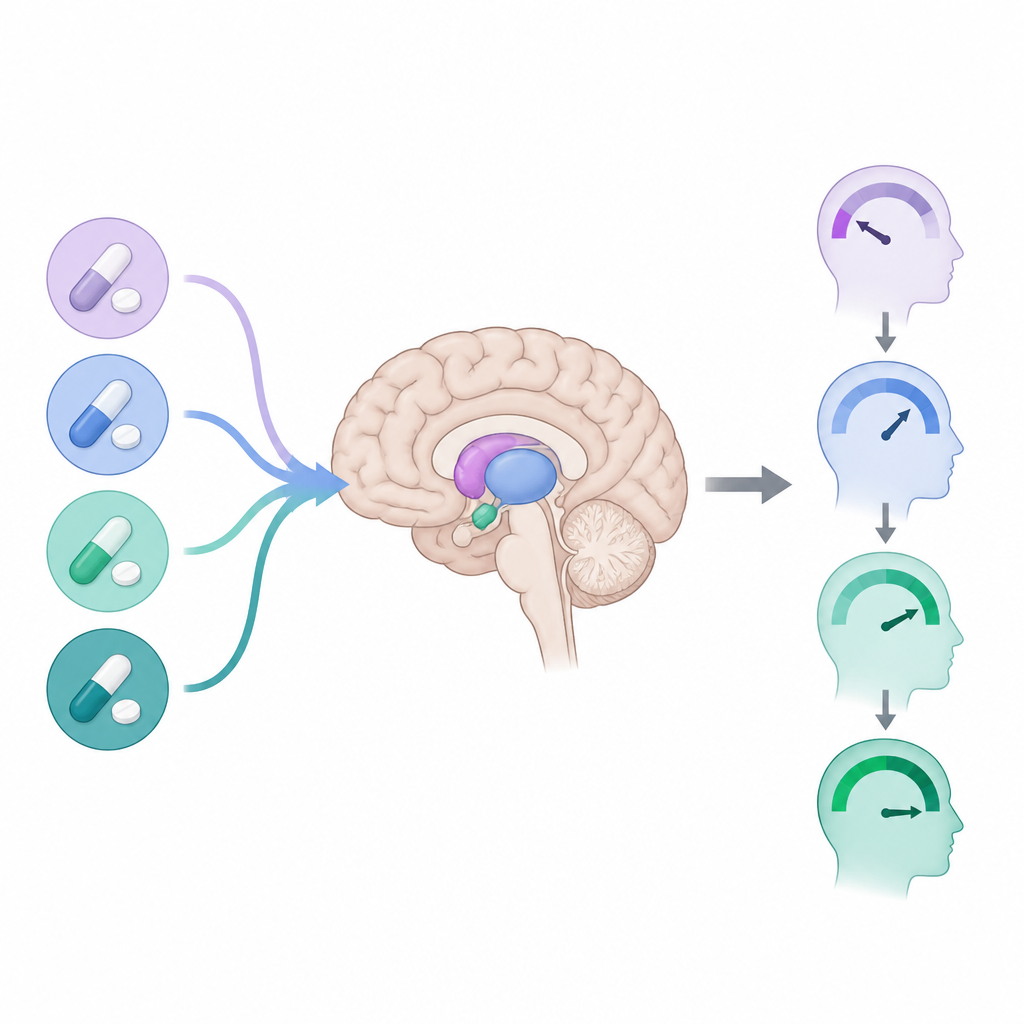
What this means for women’s brain health
For readers, the takeaway is that, in this large group of women, using oral contraceptives and hormone replacement therapy was associated with a modestly lower chance of dementia and with somewhat better thinking performance later in life. The study does not prove that hormone pills directly prevent dementia, and it cannot replace medical advice tailored to an individual woman. Still, it adds weight to the idea that women’s hormone history across adulthood is an important piece of the brain aging puzzle and that protecting brain health may start decades before symptoms appear.
Citation: Ou, YN., Liu, X., Gao, PY. et al. Associations of oral contraceptives and hormone replacement therapy with incident dementia risk: a population-based cohort study. Transl Psychiatry 16, 289 (2026). https://doi.org/10.1038/s41398-026-04007-4
Keywords: dementia, oral contraceptives, hormone replacement therapy, women’s brain health, cognitive aging