Clear Sky Science · en
MARCO promotes cholangiocarcinogenesis by inducing immunosuppression and its targeting reduces tumor growth
Why this matters for future cancer treatments
Intrahepatic cholangiocarcinoma is a rare but deadly cancer of the small bile ducts inside the liver. Most patients are diagnosed late, current treatments are largely palliative, and survival remains poor. This study uncovers how a specific type of immune cell inside the tumor helps the cancer grow, spread, and resist therapy—and shows that blocking a single molecule on these cells can slow the disease in experimental models. The work points to a new way to “reprogram” the tumor environment so that the body’s own defenses can better fight this cancer.
A stubborn liver cancer with few options
Cholangiocarcinoma is the second most common primary liver cancer and is usually silent until it reaches an advanced stage. Surgery is often no longer possible, and even when tumors can be removed, they recur in most patients. Standard treatment for advanced disease combines chemotherapy with immune checkpoint inhibitors, but this only modestly extends life, and only a minority of patients respond well. Many intrahepatic cholangiocarcinomas behave as “cold” tumors: they contain few cancer‑killing T cells and are packed instead with cells that dampen immune responses. Among the most abundant of these are tumor‑associated macrophages, immune cells that can either attack or assist tumors depending on how they are “programmed.”
A macrophage receptor comes into focus
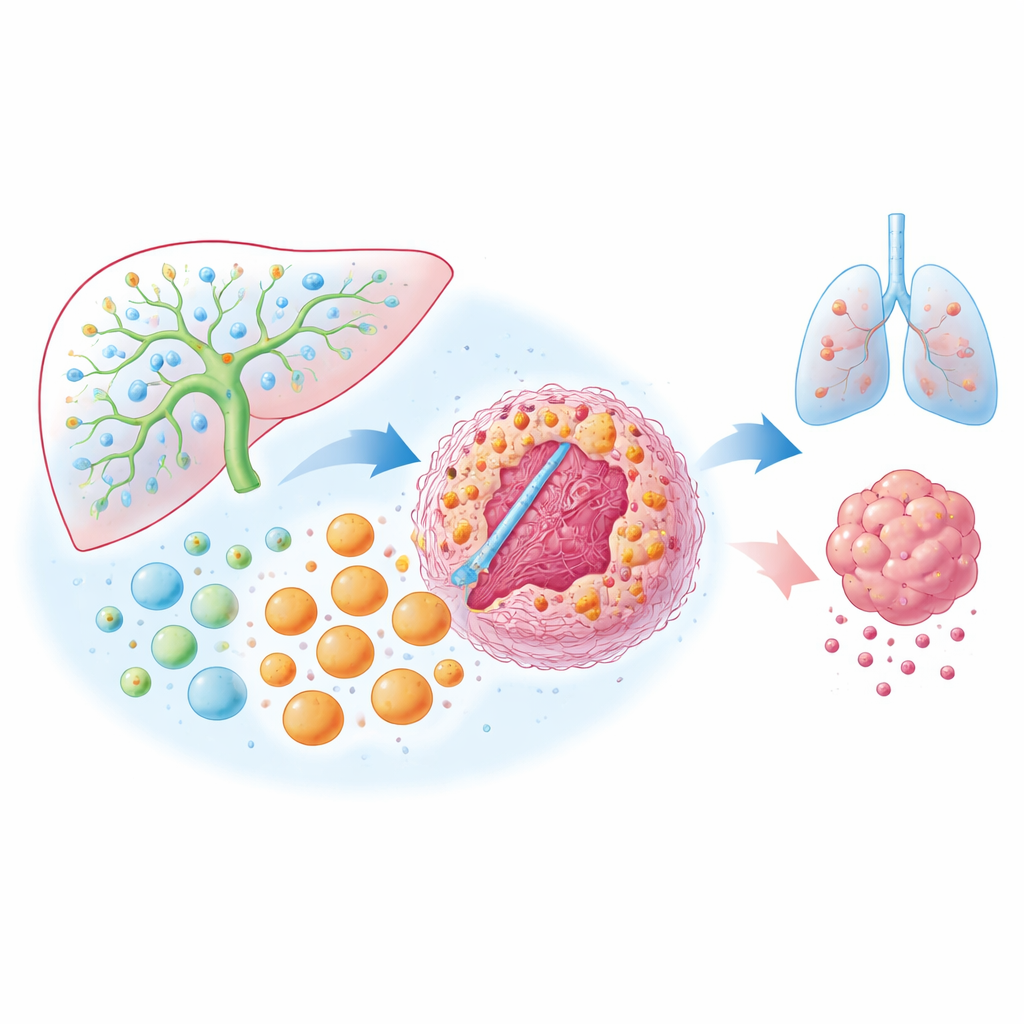
Using large single‑cell RNA sequencing datasets from healthy, cirrhotic, and cancerous human livers, the researchers found that a scavenger receptor called MARCO is mainly present on macrophages. In intrahepatic cholangiocarcinoma, MARCO appears almost exclusively on tumor‑associated macrophages rather than on the cancer cells themselves. Patients whose tumors contained more MARCO‑positive macrophages had worse overall survival across several independent cohorts. Detailed gene analysis showed that MARCO‑bearing macrophages display an immunosuppressive profile: they are linked to signaling pathways that blunt immune attack, encourage the activity of so‑called TH2‑type immune responses, and participate in remodeling of the tissue scaffold that surrounds tumor cells.
How the tumor environment is reshaped
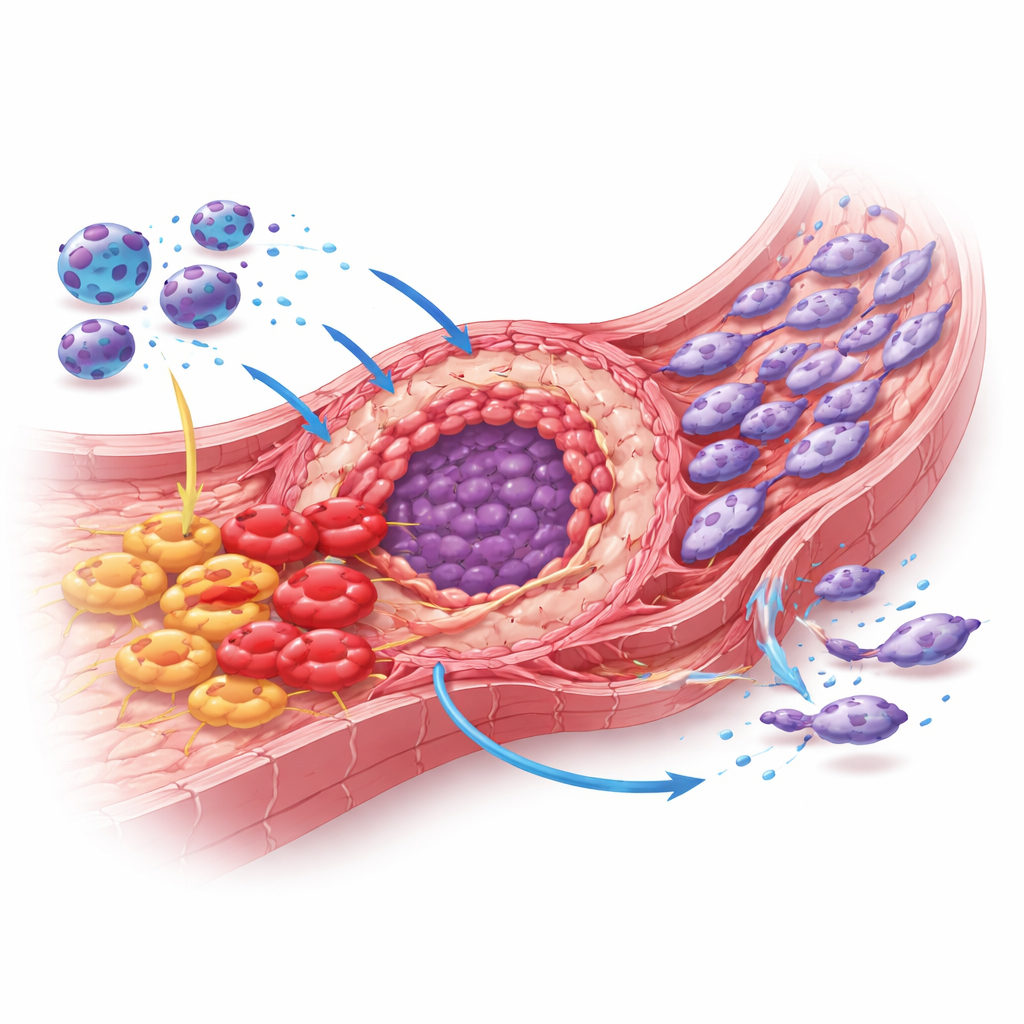
The team next asked what drives MARCO expression and what these macrophages do inside the tumor. They found that cytokines associated with TH2 responses, particularly IL‑4 and IL‑13 produced by T cells, strongly boost MARCO levels in macrophages. In tumor samples, MARCO‑rich areas were also rich in collagen and activated fibroblasts, hallmarks of a dense fibrotic stroma that can wall off tumors and hinder immune cell entry. Spatial protein profiling showed that regions containing MARCO‑positive macrophages had higher levels of checkpoint molecules such as PD‑L1 on immune cells and PD‑1 on T cells, consistent with a highly suppressed local immune response. Together, these findings paint MARCO‑positive macrophages as central organizers of a stiff, scar‑like, and immunologically silent niche around the tumor.
Lessons from mouse models
To test whether MARCO is merely a marker or an active driver of disease, the researchers turned to several mouse models of intrahepatic cholangiocarcinoma. Mice engineered to lack MARCO developed fewer and smaller bile duct tumors, showed less liver fibrosis, and maintained better liver function than their normal counterparts. Their tumors contained fewer macrophages bearing fibrotic or immunosuppressive features, fewer cells associated with TH2‑type responses, and cytotoxic T cells that were less “exhausted” based on checkpoint marker expression. In an orthotopic model—where bile duct cancer cells are implanted directly into the liver—MARCO‑deficient mice survived longer and developed fewer lung metastases. In cell‑culture experiments, tumor cells exposed to MARCO‑deficient macrophages became less mobile, suggesting that these macrophages directly influence the cancer’s ability to migrate. Importantly, treating normal mice with an antibody that blocks MARCO reduced tumor volume, mimicking many of the benefits seen in MARCO‑knockout animals.
Toward macrophage‑directed immunotherapy
Viewed together, the human data and mouse experiments suggest that MARCO‑positive macrophages both shield intrahepatic cholangiocarcinoma from immune attack and physically reshape the tumor surroundings to favor growth and spread. By nurturing a TH2‑skewed, fibrotic, and checkpoint‑rich environment, these cells help convert the tumor into a highly protective niche. The finding that a MARCO‑blocking antibody can shrink tumors in mice raises the possibility of a new class of treatments that specifically retune macrophages rather than targeting cancer cells directly. For patients with this difficult‑to‑treat cancer, therapies aimed at MARCO could someday complement existing chemotherapy and checkpoint inhibitors, turning “cold” tumors into ones more vulnerable to the body’s own immune defenses.
Citation: Agirre-Lizaso, A., Huici-Izagirre, M., O’Rourke, C.J. et al. MARCO promotes cholangiocarcinogenesis by inducing immunosuppression and its targeting reduces tumor growth. Sig Transduct Target Ther 11, 158 (2026). https://doi.org/10.1038/s41392-026-02657-w
Keywords: cholangiocarcinoma, tumor microenvironment, tumor-associated macrophages, immunotherapy, fibrosis