Clear Sky Science · en
Myeloproliferative neoplasms with concomitant chronic myeloid leukemia are associated with TKI resistance and poor outcomes
When Two Blood Cancers Collide
Most blood cancers arise from a single genetic mistake in the bone marrow. This study looks at a rare situation where two different blood cancers, each driven by its own genetic change, show up in the same person at the same time. By pooling cases from several countries, the researchers reveal that this unusual pairing is more than a curiosity: it is linked to resistance to standard drugs and worse long-term outcomes, making it important for patients, families, and clinicians alike to understand.
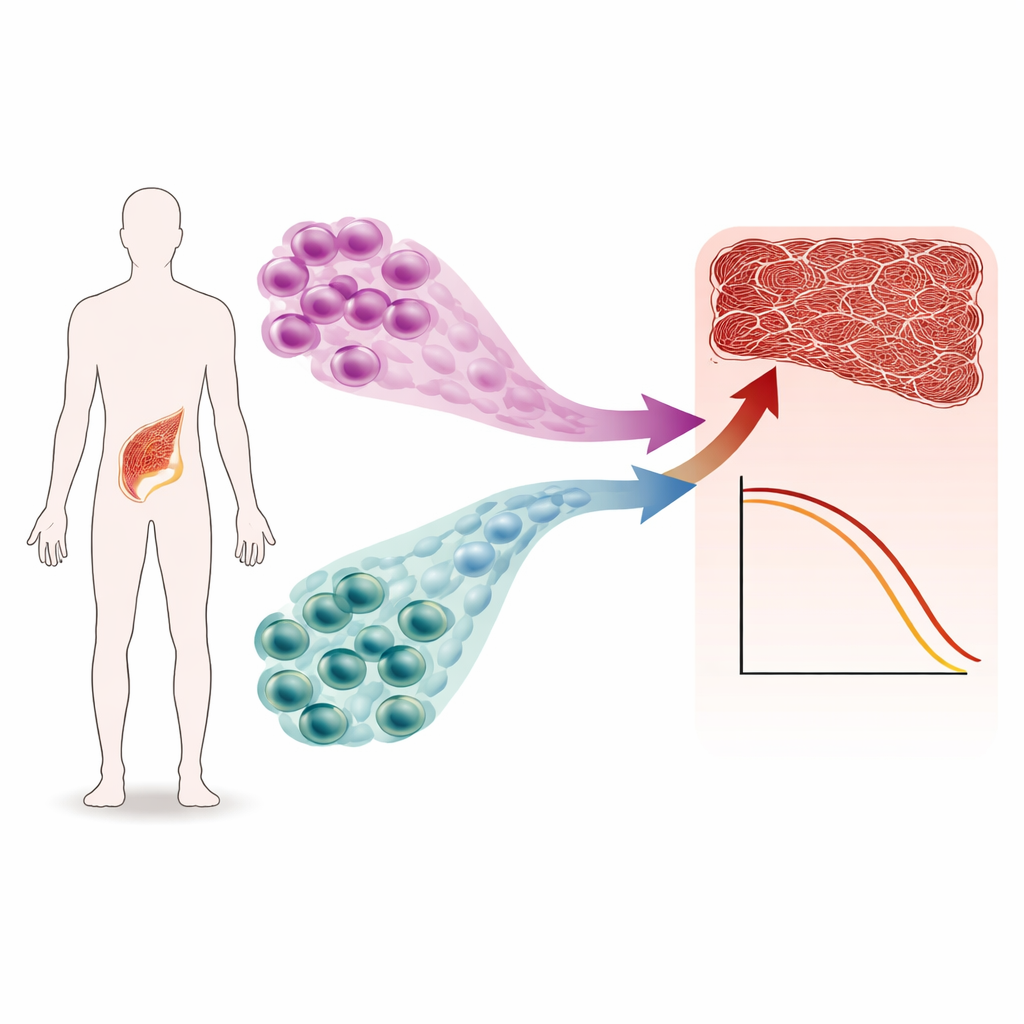
Two Different Bone Marrow Diseases
The work focuses on chronic myeloid leukemia (CML) and a group of related conditions called myeloproliferative neoplasms (MPN). In CML, a DNA swap between two chromosomes creates an overactive signal that drives white blood cell growth. In most MPNs, other, different mutations push the bone marrow to make too many red cells, platelets, or scar tissue. For years, doctors believed these two types of mutations did not occur together. Yet scattered reports suggested that a small number of patients carry both, raising questions about how the diseases interact and how best to treat them.
A Global Effort to Track Rare Cases
To move beyond single case reports, the authors gathered data from 30 centers in seven countries over nearly three decades. They identified 61 people who had both CML and a so‑called Philadelphia‑negative MPN, and grouped them by the order in which the diseases appeared. In about half, an MPN was diagnosed first and CML developed years later. In another third, CML appeared first, followed by an MPN. The rest were found to have both conditions at the same time. The team carefully reviewed test results, treatments, and follow-up information to see how these patients fared.
Drug Resistance and Scarring in the Marrow
One of the most striking findings was that many patients did not respond well to tyrosine kinase inhibitors, the targeted pills that usually work very well in CML. Among those who developed CML after an earlier MPN, more than two‑thirds failed to clear the abnormal chromosome from their cells, and over a quarter did not even regain normal blood counts. Many needed second or third lines of therapy. At the same time, more than a third of these patients saw their original MPN evolve into myelofibrosis, a condition where the bone marrow becomes scarred and less able to make healthy blood cells.
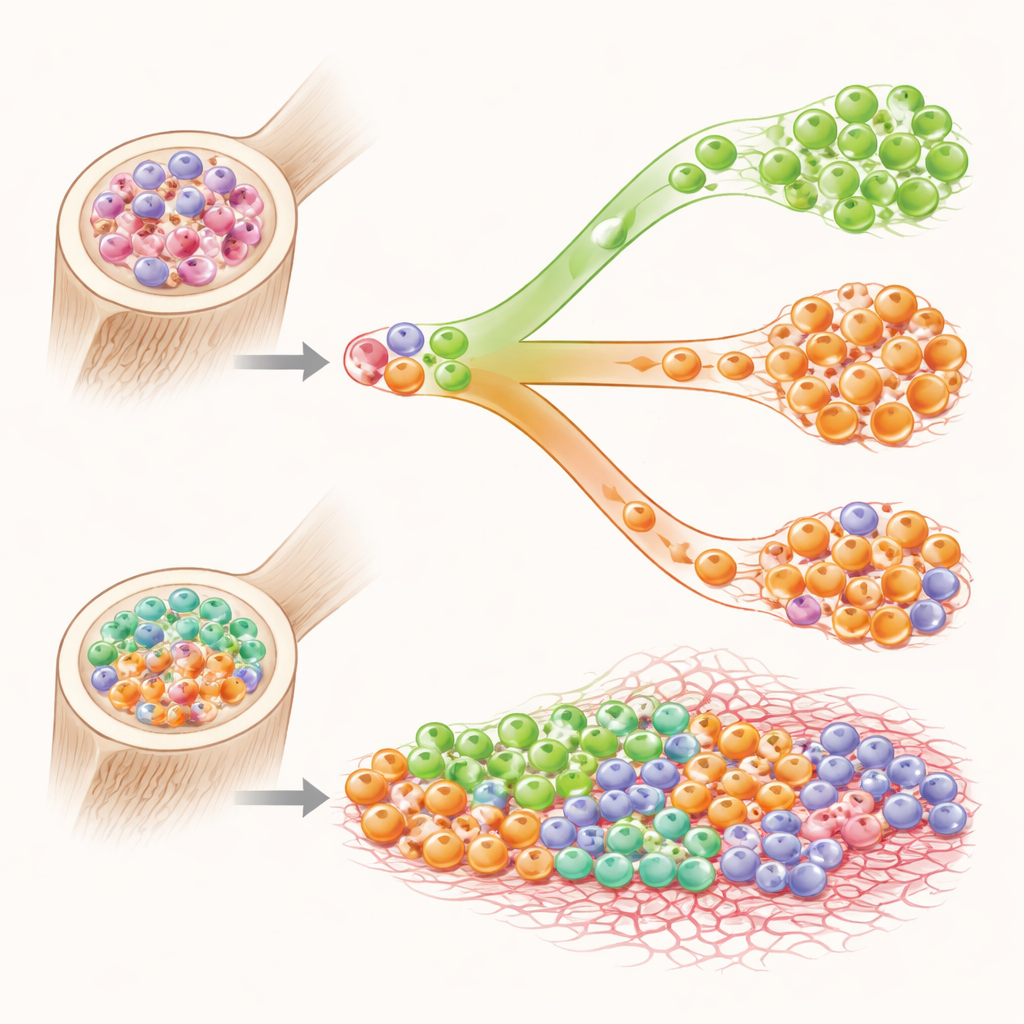
Clashing Clones in the Bone Marrow
Why do outcomes look worse when these two diseases coexist? In a subset of patients, the researchers were able to show that the genetic changes driving CML and those driving the MPN lived in separate groups of stem cells, like rival colonies sharing the same space. Treatment that shrank one clone sometimes allowed the other to expand. A rare form of the CML‑related gene change, known from other studies to be more aggressive and harder to treat, appeared more often in this mixed group of patients. Additional mutations beyond the main drivers were also common, painting a picture of a genetically unstable marrow where multiple abnormal clones compete and push the disease toward scarring and resistance.
What This Means for Patients and Doctors
When the team looked at survival, people whose MPN appeared first generally lived longer than those whose diseases arose together, while those diagnosed with CML first fell in between. Older age and certain gene variants were linked with shorter survival, but standard CML risk scores were less useful in this complex setting. Taken together, the findings suggest that anyone with one of these conditions who shows unusual features—such as persistent high counts, an enlarged spleen, or a poor response to therapy—should be checked for the other disease. Earlier recognition may allow more tailored treatment, closer monitoring, and consideration of advanced options such as stem cell transplant.
Looking Ahead
For now, the co‑occurrence of these two blood cancers remains rare, but its impact is significant for those affected. This large international study shows that when CML and an MPN develop together, patients face higher risks of drug resistance and bone marrow scarring. It underscores the need for better screening and for research into how these competing clones arise and interact. In simple terms, having two overlapping bone marrow diseases makes treatment harder and outcomes poorer, so spotting the combination early and adapting care accordingly could make a real difference.
Citation: Gagnon, L.L., Duminuco, A., Stagno, F. et al. Myeloproliferative neoplasms with concomitant chronic myeloid leukemia are associated with TKI resistance and poor outcomes. Leukemia 40, 946–954 (2026). https://doi.org/10.1038/s41375-026-02928-z
Keywords: chronic myeloid leukemia, myeloproliferative neoplasms, tyrosine kinase inhibitor resistance, bone marrow fibrosis, BCR-ABL1 and JAK2 co-mutation