Clear Sky Science · en
A multi-dimensional Sustainability Assessment Framework for Public Art
Art That Shapes Everyday Life
When we walk past a statue in a plaza, a glowing digital wall, or a small urban garden turned into art, we may not think about whether that artwork is helping or hurting the city in the long run. This paper tackles a simple but important question: how can we tell if public art truly supports a thriving, fair, and environmentally sound city, rather than just looking impressive for a moment?
Looking Beyond Pretty Pictures
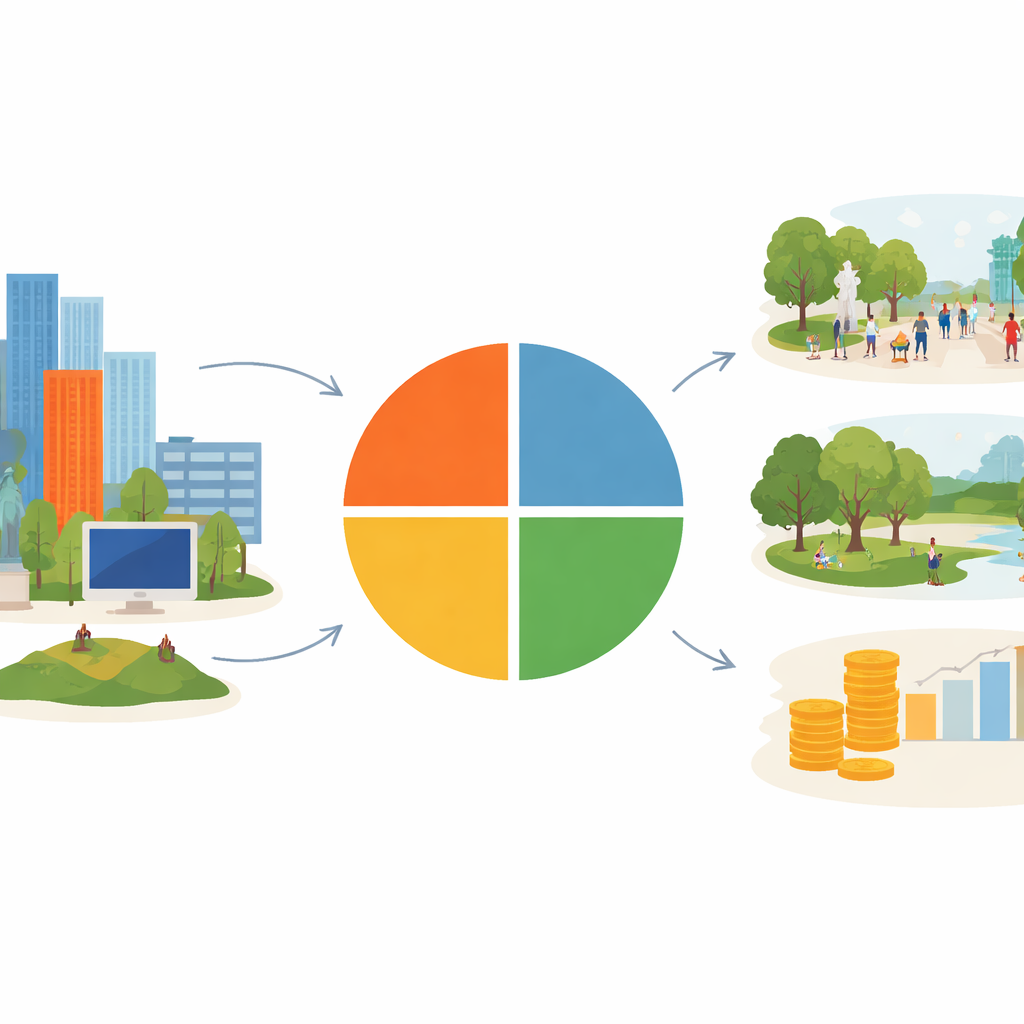
Public art is now a common tool for city governments, developers, and communities. It can draw tourists, give locals a sense of pride, invite conversation, and even teach people about history or nature. But decisions about which artworks to fund are often based on narrow measures such as visitor numbers or vague ideas about beauty. The authors argue that this misses the bigger picture: a sculpture might be admired but exclude parts of the community, or a dazzling digital piece might consume huge amounts of energy and be impossible to maintain. They propose that public art should be judged on how well it contributes, over time, to a city that is culturally rich, socially inclusive, environmentally careful, and economically realistic.
A New Scorecard for Public Art
To create a more balanced way of judging public artworks, the researchers designed a Sustainability Assessment Framework for Public Art (SAFPA). They began by reviewing studies from fields such as cultural policy, city planning, and sustainability, collecting more than 50 possible criteria. These were distilled into four main angles: cultural value, social inclusion, environmental impact, and economic strength. Within each angle, they defined three clear indicators, such as how well the work fits its local setting, how involved residents are in making or using it, how materials are sourced, and whether there is a realistic plan to pay for upkeep. A panel of 15 experienced artists, curators, city officials, and scholars from eight countries then helped refine and weight these indicators using a structured survey process. This expert input ensured that the framework reflects both theory and practice.
Testing the Tool on Three Types of Art
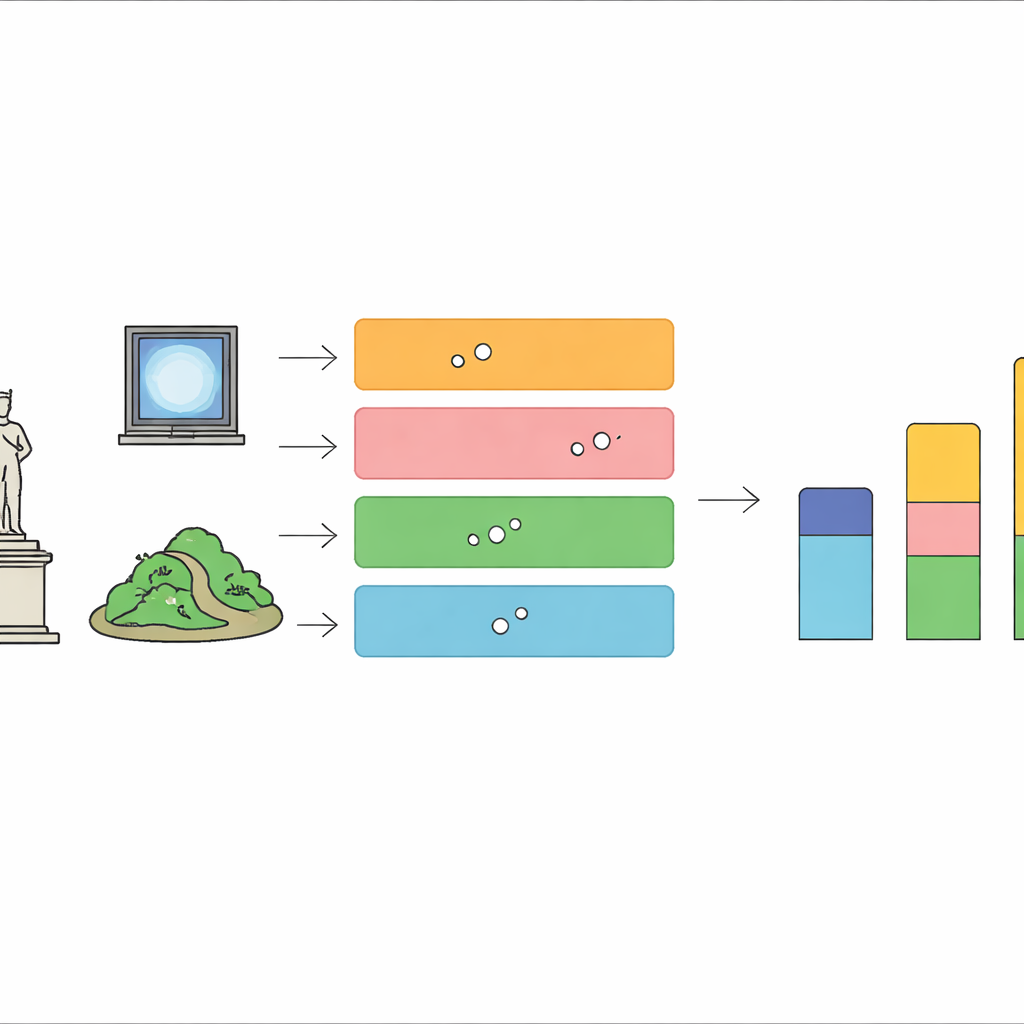
To show how SAFPA works, the authors applied it to three typical kinds of public art. The first was a traditional bronze monument of a historic figure in a main square. The second was an interactive digital wall created with local residents. The third was a piece of "land art" built with native plants and recycled materials, designed to blend into the landscape. Each project was scored from poor to excellent on the 12 indicators, and the scores were combined using a formula that rewards balance and penalizes glaring weaknesses in any single area. The land art project came out on top, with strong performance across culture, community, environment, and long-term costs. The monument scored well on cultural prestige and financial stability but poorly on social inclusion and ecology. The digital wall excelled at engaging people but struggled on energy use and financial durability. Computer simulations showed that even when the importance of each dimension was varied, the overall ranking of the three projects barely changed, suggesting the framework is robust.
What This Means for Cities and Citizens
SAFPA is meant to be a practical checklist rather than a rigid report card. The authors see it helping city officials draft calls for new artworks that reward projects strong in several areas at once, not just in short-term appeal or economic return. Artists can use the framework early in the design phase to think about how their work might age, how it could welcome diverse audiences, and how to limit its environmental footprint. Community groups gain a shared language for asking whether a proposed artwork reflects their stories and needs. The framework is not perfect: it simplifies complex experiences and may carry cultural biases, so it should be adapted locally. Still, it offers a clear structure for discussion and comparison.
Art as Long-Term Investment in the City
In everyday terms, the paper concludes that good public art is not only about being eye-catching or famous. Truly sustainable public art should nurture cultural memory, bring people together, care for urban nature, and be affordable to look after. By bringing these concerns into one simple framework, the study suggests a new kind of promise between cities and their residents: artworks in shared spaces should act as lasting investments in community life, environmental health, and economic resilience, rather than short-lived showpieces.
Citation: Zhu, A., Zhang, W. A multi-dimensional Sustainability Assessment Framework for Public Art. npj Herit. Sci. 14, 200 (2026). https://doi.org/10.1038/s40494-026-02478-8
Keywords: public art, urban sustainability, cultural policy, community engagement, environmental impact