Clear Sky Science · en
Organic residue analysis reveals the use of ambergris in a late Warring States royal tomb
A whale treasure in a royal grave
Imagine opening a 2,300‑year‑old royal tomb deep in central China and finding chemical traces that point all the way to the deep ocean and giant whales. This study does exactly that. By reading faint molecular fingerprints trapped in soil at the bottom of ancient bronze cooking and ritual pots, researchers present the earliest solid evidence that people in late Warring States China used ambergris – a rare, waxy substance formed in the guts of sperm whales and prized for its powerful scent.
A rare scent with a long journey
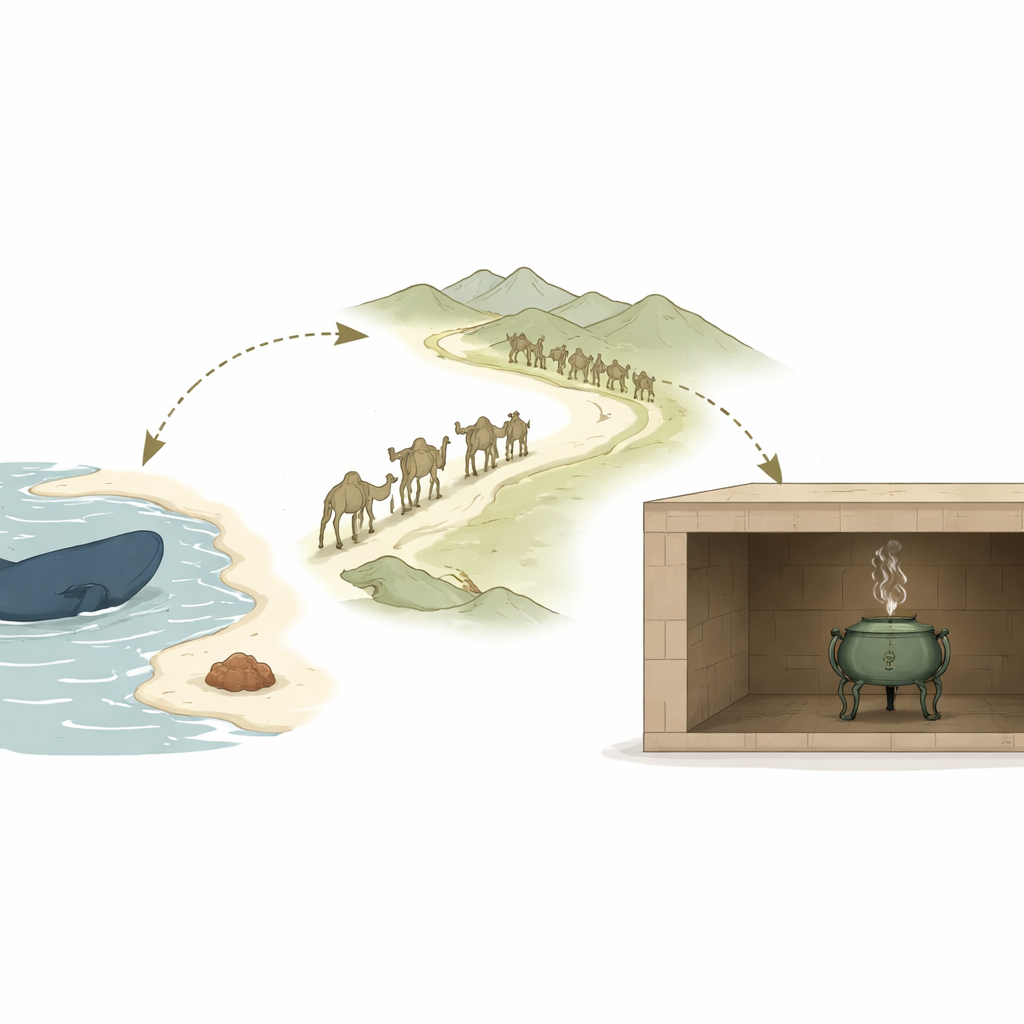
For many ancient cultures, fragrant substances were more than pleasant smells: they were medicines, status symbols, and key tools in religious rites. Resins such as frankincense and myrrh, wood like sandalwood and agarwood, and animal products such as musk moved along long‑distance trade routes and were burned or worn by elites. Ambergris, which begins as a waxy lump inside a small fraction of sperm whales and can later wash ashore, was one of the rarest of these animal aromatics. Historical texts from the Middle East, Europe, and later Chinese dynasties praise it as a luxury perfume and medicine. Yet until now, no one had been able to point to physical, chemical proof that people in ancient China actually used it.
A royal tomb and its bronze pots
The new evidence comes from Tomb No. 1 at the Wuwangdun site in Huainan, Anhui Province, dated to the late 3rd century BCE. This grand burial, belonging to a member of the Chu royal house, contains rich offerings: bronze ritual vessels, fine jades, lacquerware, and musical instruments. In one chamber, archaeologists uncovered many lidded bronze tripod pots known as dings, some still containing animal bones and a thin layer of mud‑like residue at the bottom. Because the lids had stayed in place and the chamber was undisturbed, these bottom deposits were ideal places to search for preserved traces of foods, oils, or incense once placed inside the vessels during funerary rites.
Reading invisible traces with chemistry
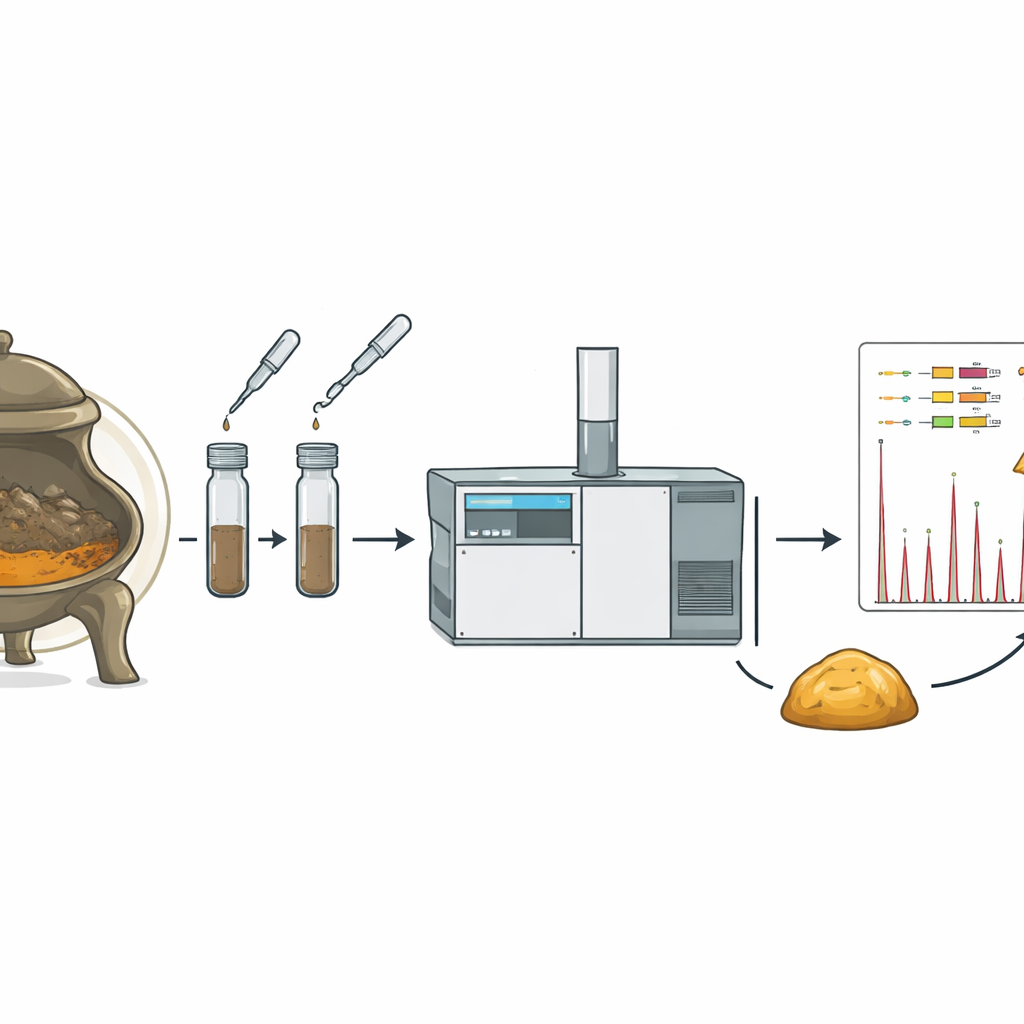
To see what these residues might contain, the team carefully scraped soil from the bottoms of 21 lidded bronze dings and also collected surrounding earth and mud as controls. In the lab, they dissolved fats and other organic molecules from the dried samples, chemically treated them so they could vaporize, and ran the mixtures through gas chromatography–mass spectrometry. This technique separates complex mixtures into individual compounds and then identifies them by their mass “fingerprints.” Many samples showed signs of meat and plant use, such as cholesterol from animal tissues, plant aromatics, and substances produced by burning, suggesting heating or cooking during rituals. Crucially, the researchers then compared the chemical patterns in the vessel samples with those in the control soils to separate original contents from later contamination.
Whale scent hidden in the data
Four vessels stood out. In them, the scientists found ambrein, a hallmark compound of ambergris, together with several substances that usually accompany it when it truly comes from sperm whales: coprostanol, epicoprostanol, and coprostanone, all related to breakdown products in the gut. Similar combinations can sometimes appear in human grave wax or animal droppings, so the team went further. They compared the ratios of ambrein to these gut‑related molecules in the tomb samples with published data from confirmed ambergris and from human decomposition products. The Wuwangdun values clustered with known ambergris samples, and other chemical clues – such as the absence of certain sterols in one vessel and the presence of coprostanone in another – argued strongly against contamination from human remains or ordinary faeces. Together, these patterns point to real ambergris having been placed in the bronze pots.
What this means for ancient lives
For a general reader, the finding is striking because it shows how subtle chemical signatures can reveal global connections and beliefs long after objects have decayed. If ambergris was burned as incense, used to flavor food, or placed in the tomb for protection and prestige, it implies access to distant marine resources, perhaps collected from sperm whale remains along the South China Sea coast and carried inland through trade networks. It also reinforces the very high status of the tomb’s occupant, who could mobilize such rare material. In plain terms, the study demonstrates that a luxury perfume born in the intestines of deep‑sea whales had already reached the royal courts of inland China more than 2,000 years ago, leaving behind only invisible molecules for modern science to detect.
Citation: Qi, B., Zhang, Z., Song, J. et al. Organic residue analysis reveals the use of ambergris in a late Warring States royal tomb. npj Herit. Sci. 14, 195 (2026). https://doi.org/10.1038/s40494-026-02462-2
Keywords: ambergris, ancient China, archaeological chemistry, incense trade, sperm whales