Clear Sky Science · en
Technological aspects of painted plaster production at Artaxata, Armenia
Ancient Walls, Hidden Stories
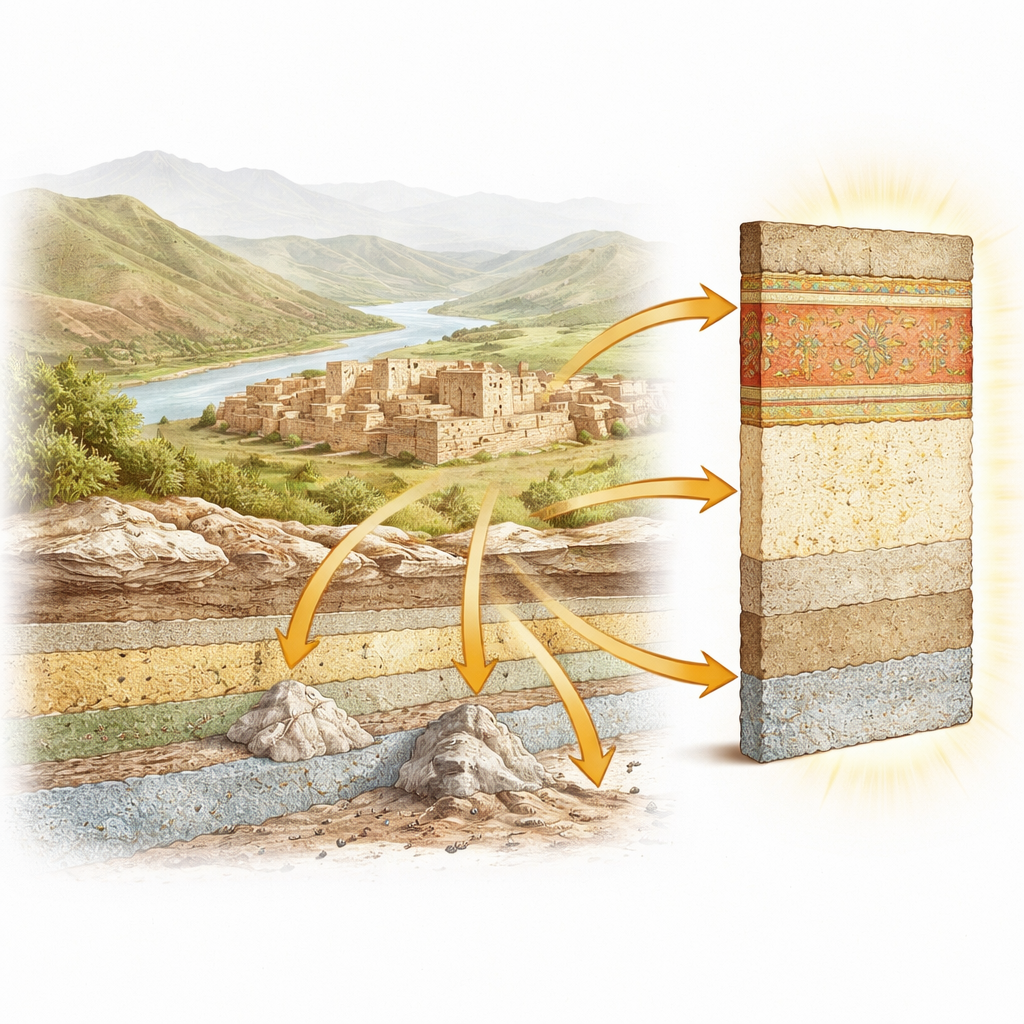
Walk into a painted room from antiquity and you mostly notice the colors and designs. Yet beneath those pigments lies a carefully engineered material that had to survive earthquakes, damp winters, and blazing summers. This study peels back the surface of painted walls from Artaxata, a Hellenistic city in today’s Armenia, to show how ancient builders mixed science and craftsmanship to create durable, colorful plaster—and how their techniques changed over time as they drew on local geology and wider cultural influences.
A City Between Empires
Artaxata, founded in the 2nd century BCE, sat in the fertile Ararat plain at a crossroads of Armenian, Persian, and Hellenistic worlds. Archaeologists have uncovered a grand sanctuary from this early phase and later domestic houses built directly above its destruction layer. The authors sampled 32 fragments of plaster and pigment from these buildings, plus a few older pieces from a nearby Urartian-period hall, all recovered from well-dated layers. This made it possible to connect specific plaster recipes to particular periods and types of architecture, from ceremonial spaces to ordinary homes.
Reading Plaster Like a Rock Record
To decode how these walls were made, the team used a suite of methods that zoom in from the visible surface down to the microscopic scale. They examined samples with hand lenses and stereomicroscopes to document layers, colors, and inclusions. Portable X-ray fluorescence and mass spectrometry revealed which chemical elements were present, while thin-section microscopy allowed them to see lime lumps, volcanic particles, gypsum crystals, plant fibers, and even bits of crushed pottery embedded in the plaster. Together, these tools turned each fragment into a record of raw materials, mixing habits, and application techniques.
Recipes for Strong and Colorful Walls
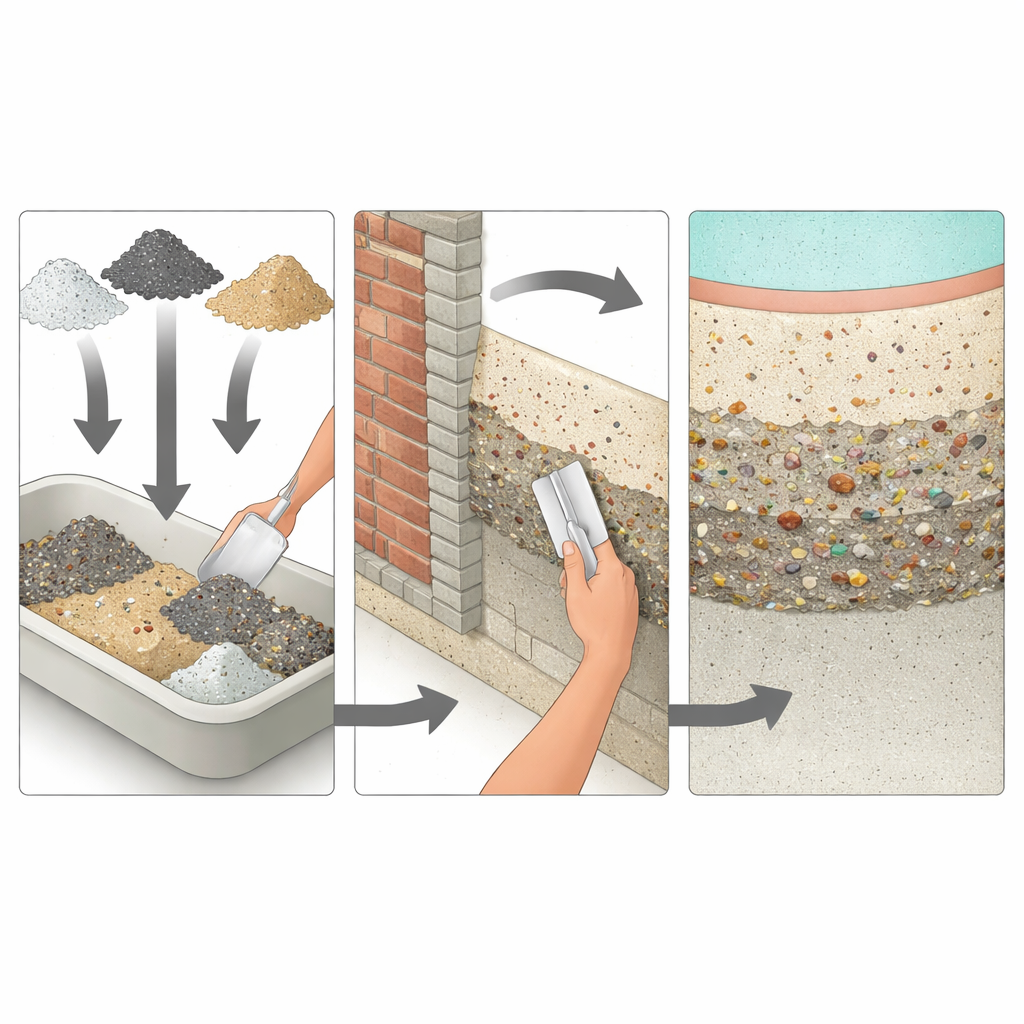
The sanctuary plasters typically consist of a coarse base coat topped by a smoother finishing layer, both on flat walls and shaped mouldings. This repeated pattern points to a shared “recipe” aimed at combining strength with a paint-ready surface. In the base layers, the team frequently found signs of volcanic ash—known as pozzolana—which reacts with lime in the presence of water to make harder, more durable mortars. Other samples leaned more heavily on gypsum, a mineral common in the local valley, or on nearly pure lime. The builders also mixed in crushed ceramics, charcoal, and plant fibers, all of which help resist cracking as walls dry and age.
Where the Colors Came From
The pigments on these walls reflect both everyday practicality and selective use of rarer materials. Many reds and browns come from iron-rich earths such as hematite, sometimes accompanied by manganese, giving warm, stable tones. Blue and green hues bear traces of copper minerals like malachite or azurite, which likely arrived through trade or targeted quarrying. Black areas are mainly charcoal-based. One red pigment stands out for its arsenic content, suggesting the use of vivid, prestigious minerals such as realgar or orpiment in high-status decoration. In several cases, iron-rich material is not only painted on but woven into the plaster itself, hinting at deliberate choices to tune both color and performance.
Innovation in a Connected World
Although the plasters can be grouped by texture and chemistry—pozzolana-rich, gypsum-rich, or mixed—these categories do not map neatly onto specific time slices. Instead, they appear linked to function and setting: interior versus exterior, ceremonial versus domestic, or the need for faster setting and higher strength. The presence of hydraulic-style, pozzolana-enhanced mixes aligns Artaxata with broader Hellenistic and early Roman technological trends seen across the Mediterranean and western Asia, while the parallel use of simpler lime plasters shows continuity with older local practices.
What These Walls Tell Us Today
For non-specialists, the main takeaway is that these ancient walls were anything but simple. Artaxata’s builders carefully blended local limestone, volcanic ash, gypsum, fibers, and colorful minerals into layered coatings tuned for beauty and durability. Their choices show a keen awareness of how different ingredients behave, and a readiness to borrow and adapt techniques circulating in the wider Hellenistic and early Roman world. In short, the plaster beneath the paint reveals a culture that balanced tradition with experimentation, using the rocks under their feet—and ideas from abroad—to make architecture that could stand, and shine, for centuries.
Citation: Lorenzon, M., Uzdurum, M., Ruano Posada, L. et al. Technological aspects of painted plaster production at Artaxata, Armenia. npj Herit. Sci. 14, 261 (2026). https://doi.org/10.1038/s40494-025-02269-7
Keywords: ancient plaster technology, Hellenistic Armenia, wall painting, lime and gypsum mortars, archaeological materials analysis