Clear Sky Science · en
HMGCS2-dependent β-OHB/H3K9bhb ameliorates synaptic plasticity and cognition in Alzheimer’s disease
Why Energy Molecules Matter for Memory
Alzheimer’s disease is best known for memory loss and clogged brain tissue, but this study looks at a less familiar side of the illness: how the brain’s fuel and gene switches interact. The researchers explore how a natural fuel molecule, often boosted by ketogenic diets or fasting, can flip chemical tags on DNA-packaging proteins and, in turn, help restore the tiny connections between nerve cells that underlie learning and memory. Their work points to a new, metabolism-based strategy for supporting brain function in Alzheimer’s disease.
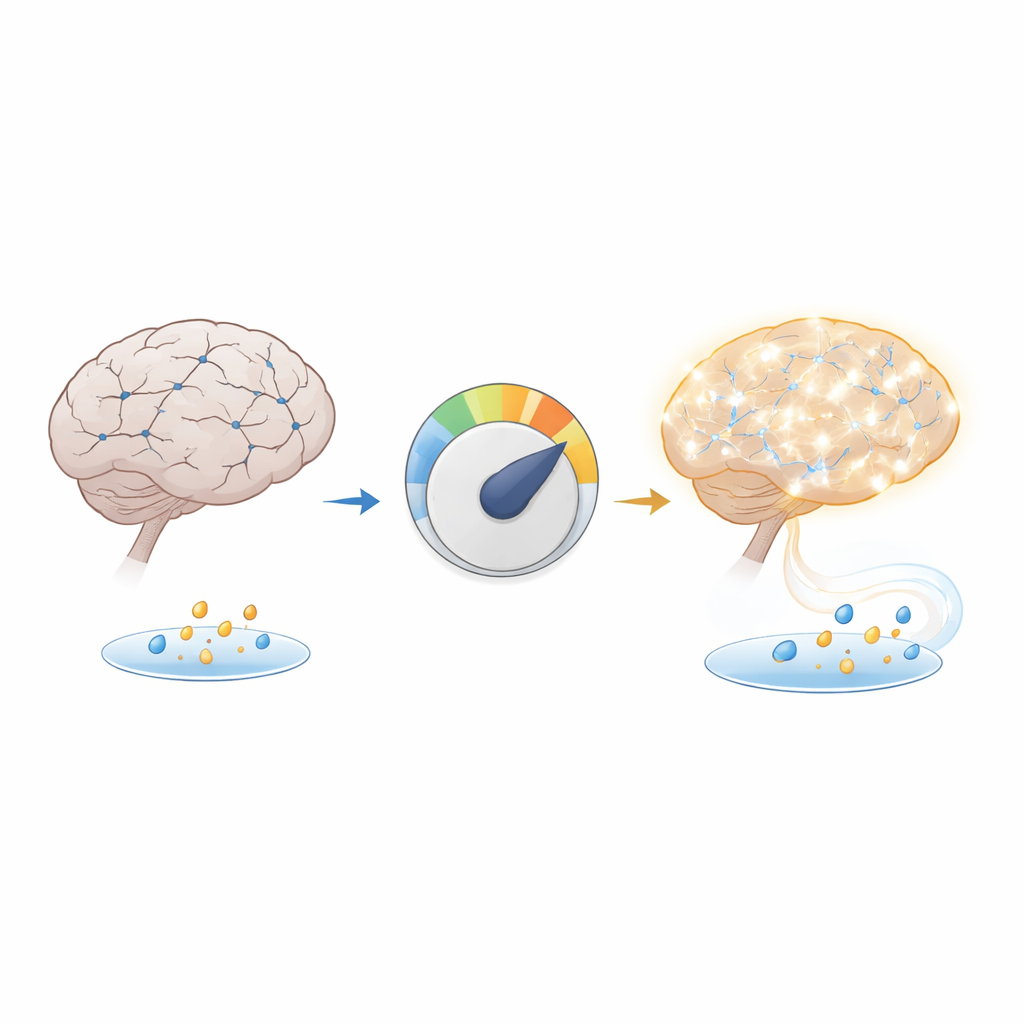
A Hidden Shortage in the Alzheimer’s Brain
The team focused on β-hydroxybutyrate, a small molecule produced when the body burns fat, and on a related chemical tag placed on histone proteins, which help organize DNA. This tag, called H3K9bhb, tends to “open up” stretches of DNA so nearby genes can turn on. Examining brain tissue from a widely used Alzheimer’s mouse model and from people who had Alzheimer’s, the scientists found that levels of β-hydroxybutyrate and H3K9bhb were both reduced, especially in the hippocampus, a key memory center. Blood levels of the molecule looked normal, suggesting that the problem is not a whole-body fuel shortage, but a specific failure to make or use this fuel inside the brain.
Fueling Gene Switches to Protect Nerve Wiring
Next, the researchers gave β-hydroxybutyrate to middle-aged Alzheimer’s mice for several months. This treatment raised the molecule’s level in the brain and boosted H3K9bhb marks, mostly in neurons rather than support cells. Using genome-wide and targeted analyses, they showed that these marks became more abundant on the starting regions of genes involved in guiding axons (the long fibers that carry signals) and in building and operating synapses. Those genes, previously dialed down in the Alzheimer’s mice, became more active again. Microscopy confirmed that markers of healthy axons and synapses increased and that nerve cells sprouted more branches and tiny spines, the structural basis of new connections.
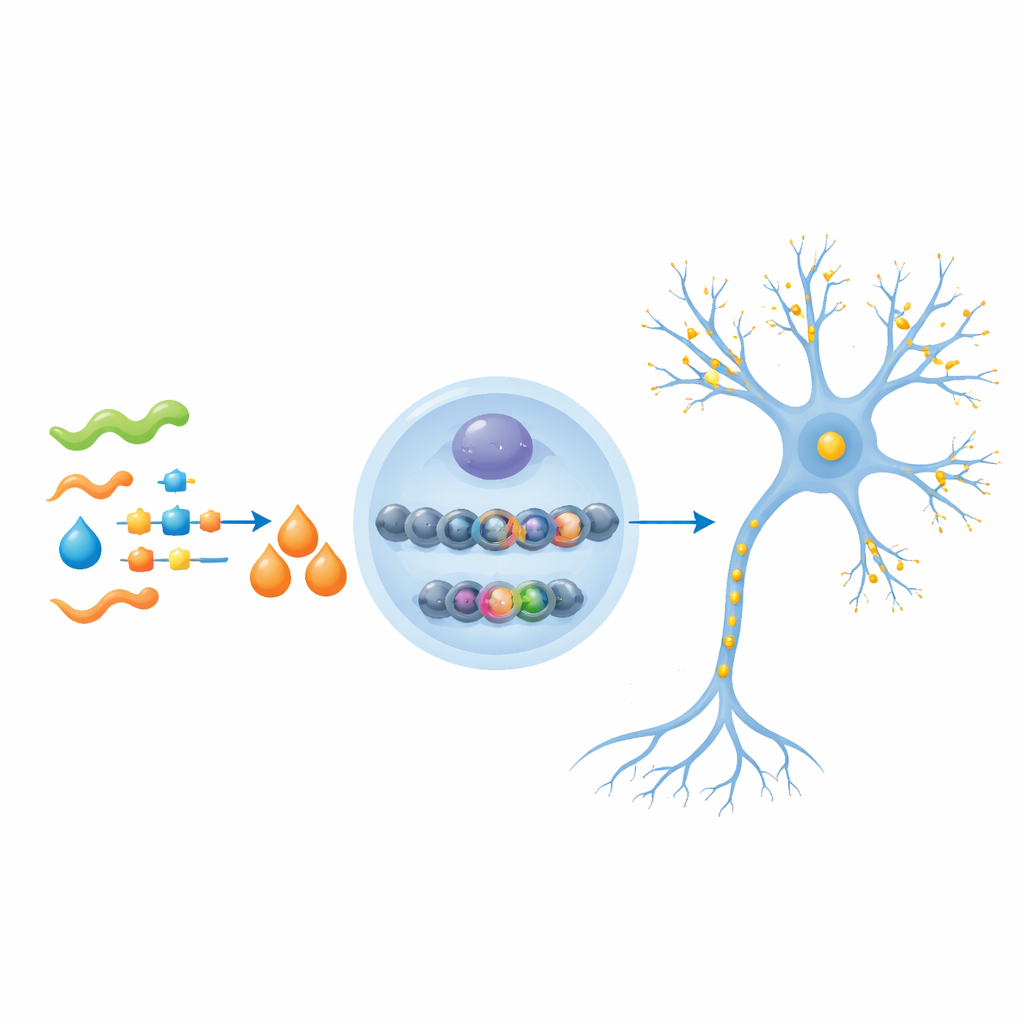
From Stronger Synapses to Sharper Memory
Because communication between neurons depends heavily on certain receptor proteins, the team looked closely at the NMDA receptor family and a synaptic protein called Syn1. In the Alzheimer’s mice, these proteins and their gene activity were depressed, and the corresponding DNA regions carried fewer H3K9bhb marks. β-hydroxybutyrate treatment restored both the chemical tags and the expression of these key synaptic components. Behavior tests told a similar story: treated mice learned the location of a hidden platform in a water maze more quickly, remembered it better days later, distinguished new objects from familiar ones, and showed stronger fear-based memory. Importantly, their swimming ability and overall movement were unchanged, indicating that the improvements were cognitive rather than physical.
The Brain Enzyme That Sets the Fuel Level
The study then asked why β-hydroxybutyrate is low in the first place. The molecule is made in cells by a small set of enzymes, including one called HMGCS2 that controls a key step. By analyzing public human datasets, mouse brains, cultured brain cells exposed to Alzheimer’s-related protein fragments, and primary neurons from Alzheimer’s mice, the researchers found that HMGCS2 was consistently reduced. They traced this back to a drop in a transcription factor, PPARα, which normally boosts the HMGCS2 gene. When they artificially increased HMGCS2 in neurons or in the brains of Alzheimer’s mice, β-hydroxybutyrate and H3K9bhb rose, synapse-related genes turned back on, synaptic structures improved, and memory performance in multiple tasks moved closer to that of healthy mice.
Reframing Treatment Around Brain Fuel and Gene Control
Taken together, the findings outline a chain of events: reduced HMGCS2 in Alzheimer’s brains leads to lower β-hydroxybutyrate production, fewer H3K9bhb tags on synapse-supporting genes, weaker synapses, and cognitive decline. Restoring β-hydroxybutyrate levels—either directly or by boosting HMGCS2—rebuilds these chemical marks, revives gene activity important for axons and synapses, and improves learning and memory in mice. For a lay observer, the message is that Alzheimer’s is not only about plaques and tangles, but also about how the brain manages its energy and controls access to critical genes. Targeting this “fuel-to-gene” pathway could complement existing approaches and inspire new treatments that work by stabilizing the brain’s wiring from within.
Citation: Yu, H., Wang, F., Yuan, Jq. et al. HMGCS2-dependent β-OHB/H3K9bhb ameliorates synaptic plasticity and cognition in Alzheimer’s disease. Exp Mol Med 58, 813–831 (2026). https://doi.org/10.1038/s12276-026-01664-9
Keywords: Alzheimer’s disease, ketogenic metabolism, synaptic plasticity, epigenetic regulation, beta-hydroxybutyrate