Clear Sky Science · en
DNA methyltransferase inhibition is a therapeutic vulnerability in VHL-deficient renal cell carcinoma cells
Why this kidney cancer study matters
Kidney cancer is often discovered late and can be stubbornly resistant to standard treatments. This study uncovers a hidden weakness in a common subtype of kidney tumors: when a key protective gene called VHL is lost, the cancer cells become unusually dependent on a chemical process that silences other genes. By blocking that silencing machinery with existing drugs, the researchers were able to kill VHL‑deficient tumor cells while sparing others, pointing to a new, more tailored way to treat patients.
A common flaw in kidney tumors
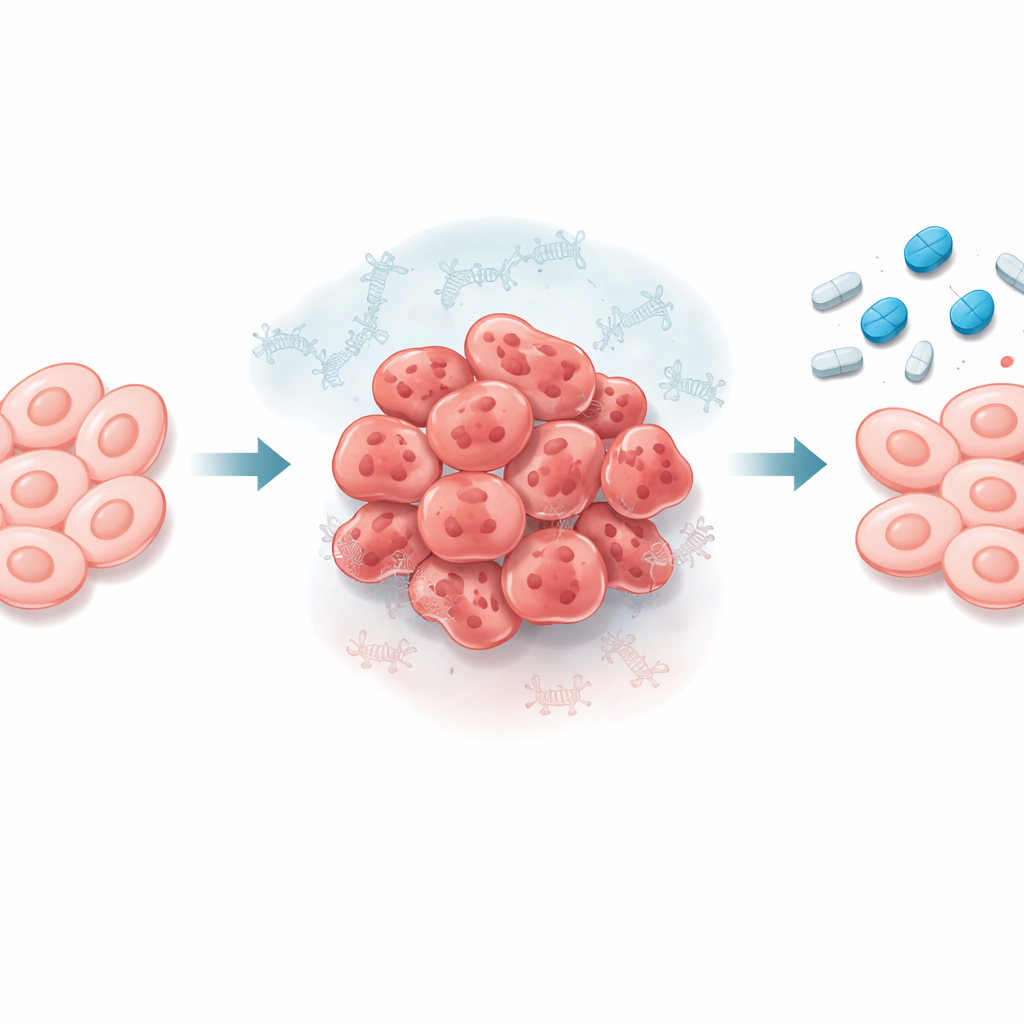
Most kidney cancers of the clear cell type carry damage in the VHL gene, which normally helps cells sense oxygen and keep blood vessel growth and metabolism in check. When VHL is missing, cells switch into a chronic "low‑oxygen" mode driven by a factor called HIF‑2α. Earlier work showed that such tumors also carry extra chemical tags, called methyl groups, on their DNA, especially near gene on‑switches. These tags can shut down genes that normally restrain cancer growth. The new study set out to ask a simple question: if VHL‑deficient tumors rely on this abnormal DNA tagging, could that reliance be turned into their Achilles’ heel?
Finding drugs that hit the weak spot
The team used pairs of kidney cancer cell lines that were genetically identical except for VHL: one partner lacked VHL, the other had it restored. They exposed these cells to a library of 128 small molecules that target different "epigenetic" regulators—proteins that control how DNA is packaged and marked. By comparing how well each compound slowed cell growth, they looked for agents that were especially toxic to VHL‑deficient cells, a strategy known as synthetic lethality. Several candidates emerged, but drugs that block DNA methyltransferases—enzymes that add methyl tags to DNA—stood out, including the approved medicines decitabine and azacitidine and two experimental compounds. Across multiple kidney cancer lines and even in lung and liver cancer models where VHL was disabled, these drugs preferentially killed VHL‑deficient cells.
How DNA tagging links VHL loss to cell death
Diving deeper, the researchers discovered why VHL‑deficient cells are so sensitive to these drugs. Loss of VHL leads to constant activation of HIF‑2α, which in turn boosts levels of DNMT1, the main DNA‑tagging enzyme that maintains methyl marks during cell division. Patient tumor data confirmed that DNMT1 is more abundant in kidney cancers than in normal kidney tissue and increases in step with HIF‑2α. This elevated DNMT1 contributes to widespread DNA hypermethylation. When the team reduced DNMT1, DNMT3A, or DNMT3B individually with genetic tools, VHL‑deficient cells began to die, partly mimicking the drug effect and confirming that blocking DNA methylation itself—not just off‑target drug actions—is key. In mice implanted with VHL‑deficient kidney tumors, treatment with decitabine sharply slowed tumor growth without obvious weight loss or toxicity, supporting the idea that this vulnerability holds in living organisms.
A silenced gatekeeper gene returns
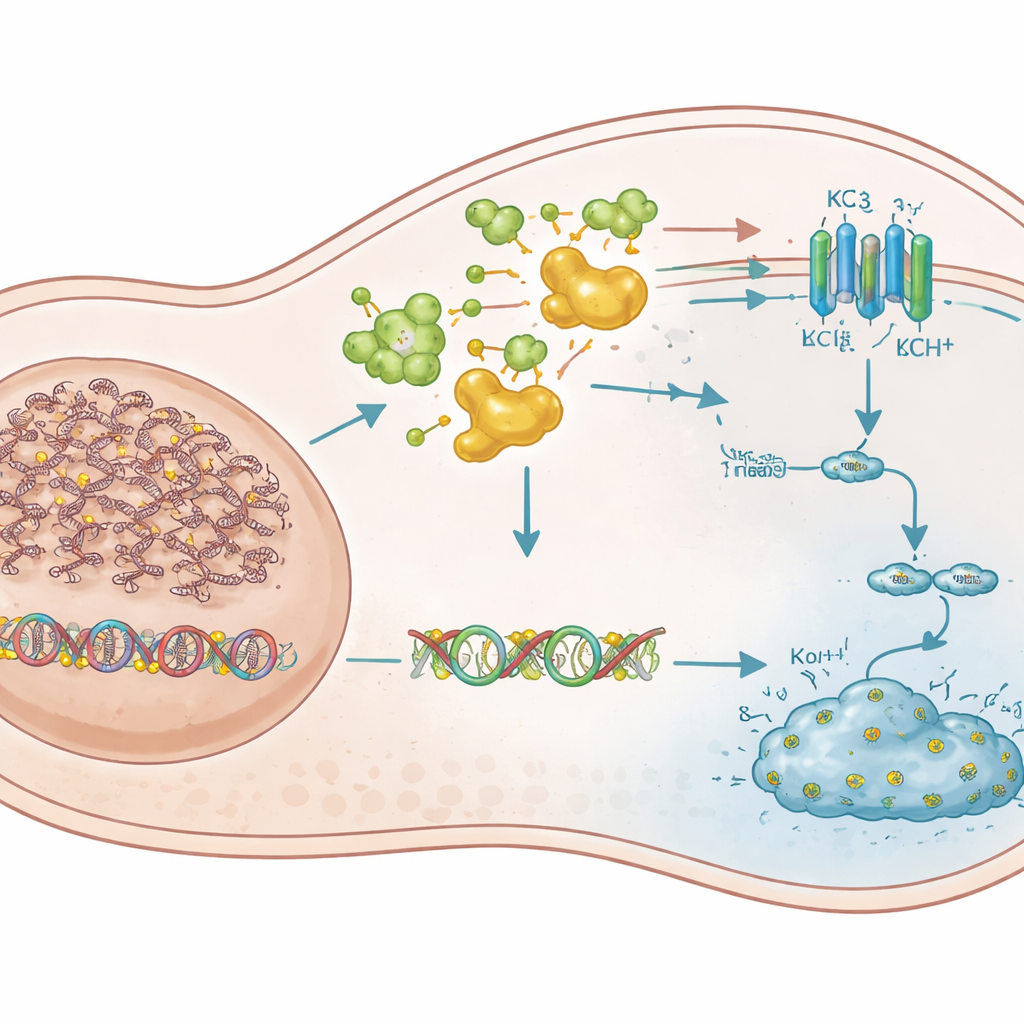
To pinpoint which methylation‑silenced genes were most important, the authors compared gene activity in VHL‑deficient and VHL‑restored cells before and after decitabine treatment. They focused on genes known or suspected to act as tumor suppressors that were shut down in VHL‑deficient cells but reawakened by the drug. Out of 14 strong candidates, one gene, KCNK3, emerged as the critical player. KCNK3 encodes a potassium channel—a tiny pore in the cell membrane that controls the flow of potassium ions. In VHL‑deficient kidney cancer cells, the first part of the KCNK3 gene was heavily methylated and its activity was nearly absent. DNMT‑blocking drugs removed these methyl marks, restored KCNK3 levels, and triggered strong growth inhibition and cell death. When KCNK3 was experimentally turned back on, cells stopped dividing; when it was knocked down, the lethal effect of decitabine largely disappeared both in dishes and in mouse tumors. Patient datasets further showed that KCNK3 is more methylated in kidney tumors than in normal kidney and that higher methylation predicts poorer survival.
Signaling pathways that tip cells into self‑destruction
Restoring KCNK3 did more than simply reopen an ion channel. RNA sequencing of cells with and without KCNK3 under decitabine treatment revealed that KCNK3 reactivation boosts signals linked to nutrient stress, tumor necrosis factor‑alpha (TNF‑α), and key stress‑response routes known as MAPK pathways. These, in turn, feed into the cellular suicide machinery. In cells with normal KCNK3, decitabine raised TNF‑α levels and activated downstream signaling while lowering the survival protein BCL‑2 and increasing executioner proteins like cleaved caspase‑3 and PARP cleavage. When KCNK3 was depleted, these changes were blunted, and the cells resisted apoptosis. The emerging picture is that in VHL‑deficient cells, DNMT‑driven methylation shuts off KCNK3 and blunts death signals; DNMT inhibitors remove this brake, reawaken KCNK3, and push the cells down a TNF‑α‑ and MAPK‑driven path to self‑destruction.
What this could mean for patients
Taken together, the work suggests that DNA methyltransferase inhibitors exploit a specific wiring of VHL‑deficient kidney tumors: VHL loss lifts HIF‑2α, which raises DNMT1, which in turn silences protective genes like KCNK3. Undoing this silencing with drugs selectively kills the defective cells by reactivating powerful death pathways. Because decitabine and azacitidine are already used in blood cancers, this discovery raises the possibility of repurposing them, or related agents, for patients whose kidney tumors carry VHL mutations and high KCNK3 methylation. With further clinical testing, measuring VHL status and KCNK3 methylation could help match individuals to epigenetic therapies that take advantage of this built‑in weakness.
Citation: Pu, Y., Wang, Z., Tao, S. et al. DNA methyltransferase inhibition is a therapeutic vulnerability in VHL-deficient renal cell carcinoma cells. Exp Mol Med 58, 798–812 (2026). https://doi.org/10.1038/s12276-026-01663-w
Keywords: renal cell carcinoma, VHL mutation, DNA methylation, DNMT inhibitors, KCNK3