Clear Sky Science · en
Material engagement in architecture
Why Building Materials Shape More Than Walls
When we look at a building, we usually notice its style, size, or energy rating. This article argues that we should also ask a deeper question: how do the very materials of architecture—glass, paper, clay, wood—shape the way we think, feel, and live in buildings? In a world facing climate change and calls for sustainable design, the authors suggest that changing materials is not enough; we must also rethink our relationship with them.
From Stuff We Use to Partners in Thought
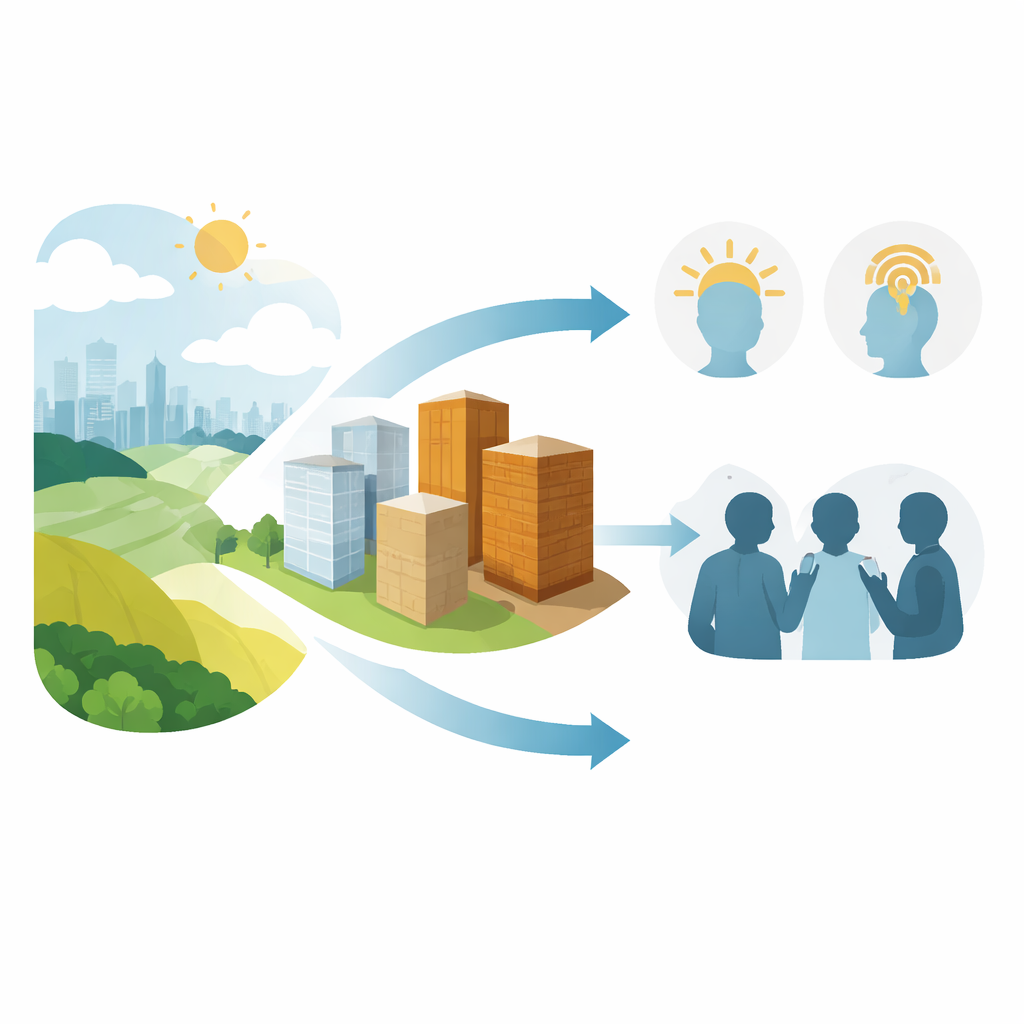
Architects and engineers often talk about materials in two very different ways. One camp focuses on technical performance and environmental impact: strength, durability, carbon footprint. Another camp studies how materials carry cultural meaning, affect our senses, and reflect social values. This paper brings these views together using an idea called Material Engagement Theory, which treats materials not as lifeless stuff but as active partners in human thinking and culture. Instead of seeing buildings as products of minds that plan first and build later, the authors argue that our thinking unfolds through hands-on work with materials over time.
Openings That Shape How We See the World
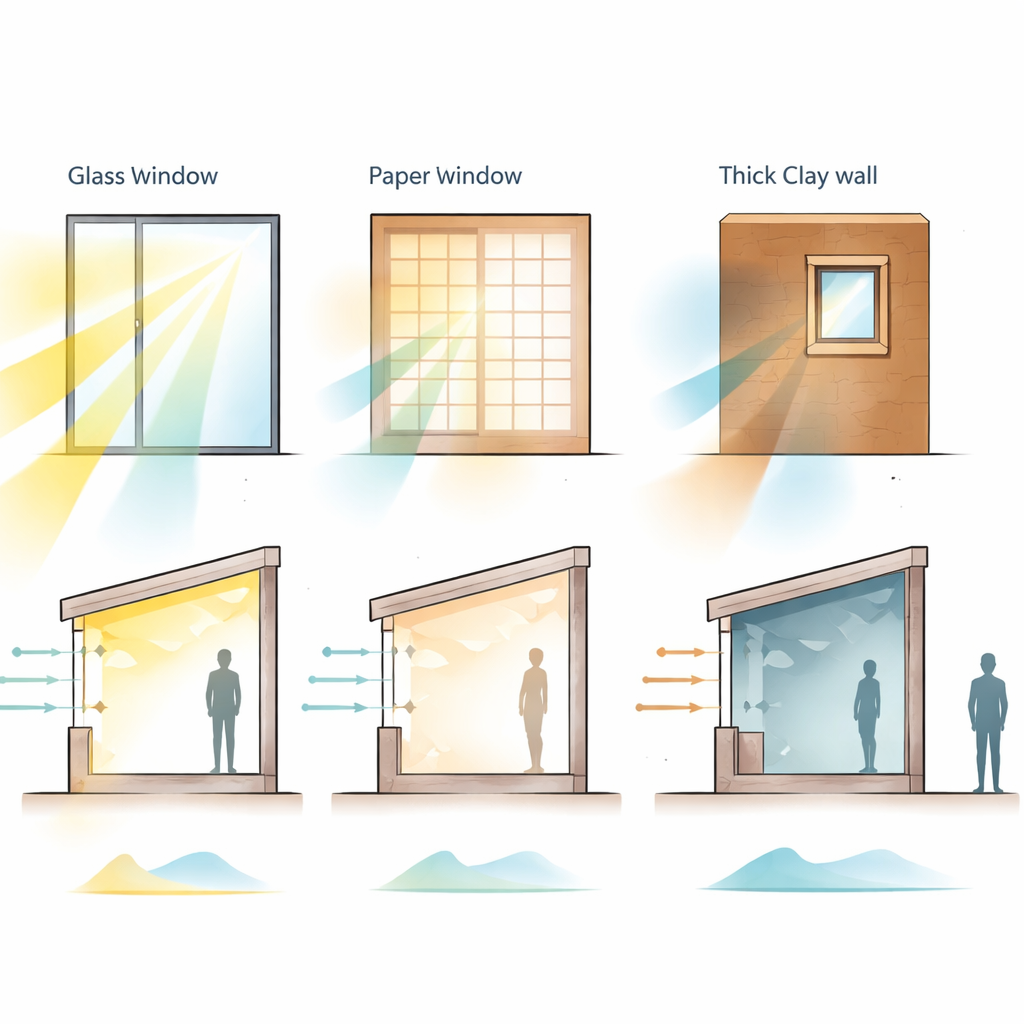
To make this idea concrete, the authors compare a basic feature of buildings: openings. Early shelters had simple roof or wall holes to let in light and release smoke, long before windows were meant for looking out. Over thousands of years, these openings evolved in strikingly different ways in what the authors call the European classical tradition and the East Asian tradition. In Europe, advances in glassmaking slowly turned windows into clear, bright surfaces that support ideals of transparency, control, and sharp vision, visible in landmarks like the Hall of Mirrors at Versailles. In East Asia, paper windows became common, filtering light into a soft glow and encouraging an appreciation of shadows, ambiguity, and gentle transitions between inside and outside, as seen in the gardens of Suzhou or the Katsura Imperial Villa in Japan.
Heavy Walls That Remember Climate and Culture
The story continues with the other basic side of buildings: mass. Clay, one of humanity’s oldest building materials, appears in many forms—from raw earth in simple walls to fired bricks in monumental domes. The brick dome of Florence Cathedral shows how fired clay helped express a vision of ordered geometry and civic pride, while also driving improvements in brick production and construction techniques. In contrast, timber-framed houses in Central Europe use wooden skeletons filled with clay-based mixtures. This approach responded to dwindling forests and local climates, creating walls that store heat, regulate moisture, and can be easily repaired. In both cases, clay is not just a cheap material; it anchors ways of building, governing, and understanding space that grew through generations of hands-on craft.
Different Traditions, Different Ways of Knowing
By placing windows and clay walls side by side, the authors show that material choices are woven into broader worldviews. European classical architecture draws on Christian ideas of divine light, linear order, and clear outlines, favoring straight axes and wide, transparent openings. East Asian traditions, shaped by Daoist, Confucian, and Buddhist thought, tend to value harmony with nature, cyclical change, and subtle transitions, expressed in curved paths, layered spaces, and filtered light. These are not rigid opposites but helpful lenses for seeing how cultures think through materials. The same element—a window, a wall of earth—can guide attention, emotion, and movement in very different ways depending on how it is made and understood.
Rethinking Sustainability From the Ground Up
In the end, the article argues that genuine sustainability in architecture demands more than swapping concrete for wood or adding new high-tech products. It calls for a shift in how we imagine and work with materials in the first place, recognizing them as partners that shape our minds, habits, and sense of place. By drawing on Material Engagement Theory and rich case studies from different times and cultures, the authors invite designers, teachers, and policymakers to treat windows, walls, and other elements as carriers of shared knowledge, not just technical components. For everyday readers, this means that the path to greener buildings runs not only through better engineering, but through a more thoughtful, culturally aware way of engaging with the materials that surround us.
Citation: Xie, X., Fechner, H. Material engagement in architecture. Humanit Soc Sci Commun 13, 557 (2026). https://doi.org/10.1057/s41599-026-07351-4
Keywords: architecture, building materials, sustainability, cultural design, material engagement