Clear Sky Science · en
A decision-analysis framework for school garden investments in Vietnam: evaluating trade-offs for nutrition, biodiversity, and economic outcomes
Why School Gardens Matter
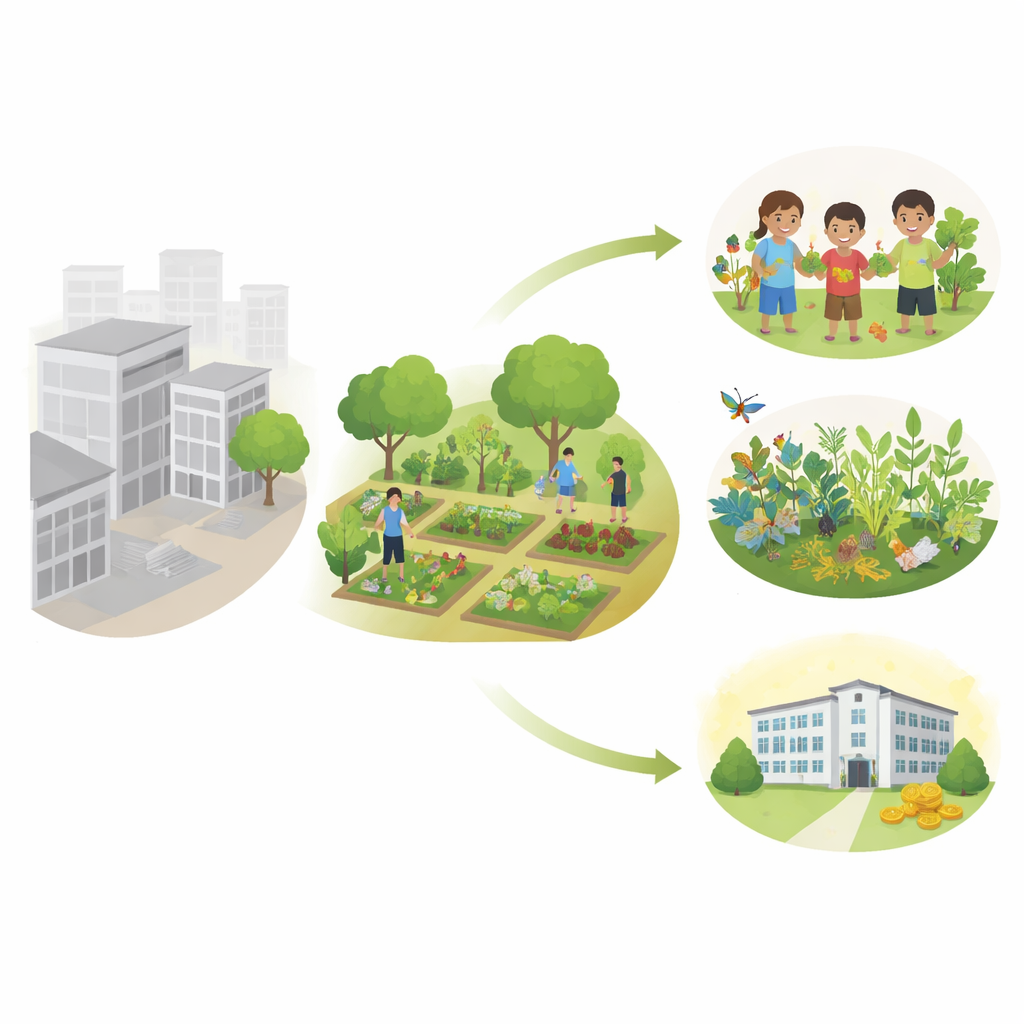
Across the world, more children are growing up in crowded cities, eating more packaged foods and fewer fresh fruits and vegetables. Vietnam is no exception: while many children still face undernutrition, others are becoming overweight. This article explores whether growing simple food gardens right on school grounds in urban Hanoi could be a smart way to improve children’s diets, enrich local nature, and make financial sense for schools at the same time. It follows a group of researchers who built a detailed decision-making tool to help school leaders choose the best kind of garden for their situation.
Food, Kids, and City Life
The authors begin by painting a picture of Vietnam’s “double burden” of malnutrition. In some families, children are too short or too light for their age; in others, especially in growing cities, they are gaining excess weight as cheap, highly processed foods become more common. Schools are a natural place to intervene because they shape what children learn and, in full-day programs, what they eat. In Hanoi’s dense urban environment, green space is scarce and most school lunches are cooked on-site, but vegetables are often left uneaten. School gardens could help by making fresh produce more available, more accessible, and more appealing to students.
Turning Ideas into a Decision Tool
To move beyond good intentions, the researchers designed a structured decision-analysis model with input from about 50 Vietnamese teachers, parents, administrators, and other specialists. Together, they mapped how money, effort, and space invested in a school garden might ripple through a school community, affecting children’s nutrition and mental well-being, local biodiversity, and the school’s finances. They combined this expert knowledge with a fast review of recent scientific studies on child nutrition in Vietnam. Then they translated more than one hundred pieces of information—such as garden costs, likely health savings, and community support—into probability ranges and ran thousands of computer simulations to see how different choices might play out.
Comparing Garden Options
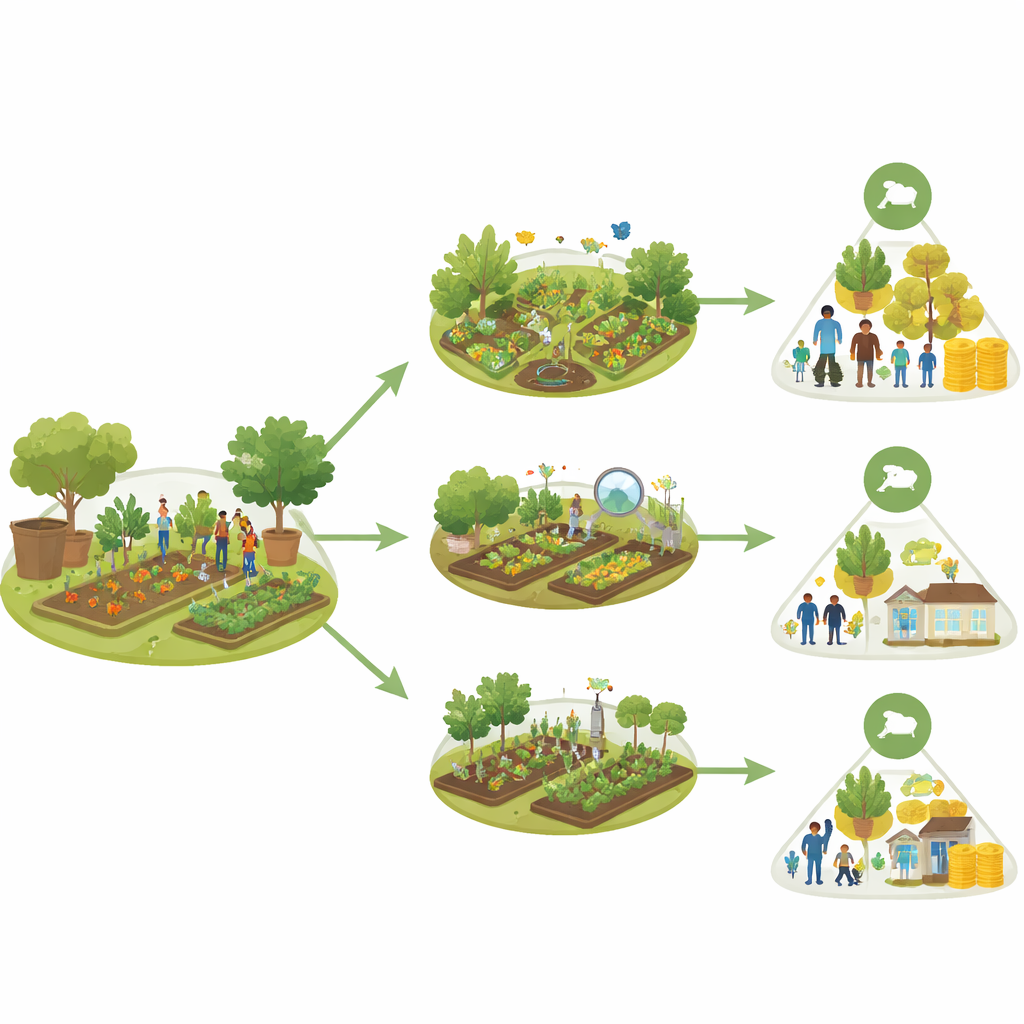
The team focused on five scenarios: no garden; a “passive” garden in a public school; a science-and-technology (STEM) garden in a public school; a passive garden in a private school; and a STEM garden in a private school. A passive garden is mainly for growing plants and offering green space, while a STEM garden doubles as an outdoor laboratory with extra tools and intensive teacher training. The model tracked how each option could change the school food environment, influence children’s desire and opportunity to eat vegetables, and alter the school’s cash flow over five years. It also examined how choices like garden size, inclusion of small animals, and the number of garden-related school events affected the balance among health, nature, and money.
What the Simulations Reveal
The simulations suggest that gardens are generally a good bet, but not all gardens are equal. For both public and private schools, passive gardens tended to deliver stronger combined gains for children’s health and local biodiversity than the more ambitious STEM versions. In private schools, passive gardens also looked financially attractive, with a high chance of positive returns. STEM gardens in private schools could still pay off, but with more risk. For public schools, passive gardens often broke even or produced modest gains, while STEM gardens frequently lost money, largely because of higher costs for equipment and teacher training and tighter budgets. Across all versions, school events centered on the garden and strong community support emerged as the most important ingredients for success.
Balancing Nature, Health, and Budgets
By treating health, biodiversity, and school finances as separate but linked goals, the team showed the trade-offs that school leaders face. Their analysis found that it is possible to expand garden area, include small animals, and maintain a school canteen while improving both nature and children’s well-being. However, trying to turn the garden into a fully equipped science lab often shifted resources away from features that support wildlife or from practical steps that make healthy eating easier. The study also pinpointed where better information would help the most: understanding how much money garden-focused school events can realistically generate, and how costly it truly is to train teachers to run rich, garden-based lessons.
What This Means for Families and Schools
In simple terms, the study concludes that school gardens can be powerful tools for healthier children and greener cities, especially when they are kept relatively simple and well supported by families and local communities. For many public schools in Hanoi, a modest, well-cared-for garden is more realistic and more beneficial than a high-tech teaching facility that strains budgets and staff. For better-funded private schools, gardens can enhance their reputation and attract families while still fostering healthier diets and richer urban biodiversity. The framework developed by the authors gives decision-makers a way to see these trade-offs clearly, helping them invest in garden designs that fit their resources while still nurturing both children and nature.
Citation: Whitney, C., Luu, T.T.G., Kopton, J. et al. A decision-analysis framework for school garden investments in Vietnam: evaluating trade-offs for nutrition, biodiversity, and economic outcomes. Humanit Soc Sci Commun 13, 580 (2026). https://doi.org/10.1057/s41599-026-07204-0
Keywords: school gardens, child nutrition, urban food environments, Vietnam education, biodiversity and health