Clear Sky Science · en
Empowering landscapes: women’s formal land rights and their impact on rural investments and land transfer in China
Why this story about farms and families matters
In many rural areas, land is the most important asset a family owns, yet women’s names often do not appear on the paperwork. This article looks at what happens in rural China when women are officially listed as co-owners of family farmland. Using large-scale survey data, the authors show that simply writing women into land certificates can change how families use their fields, how much they invest in them, and who can leave farming for other kinds of work.
Putting women’s names on the land
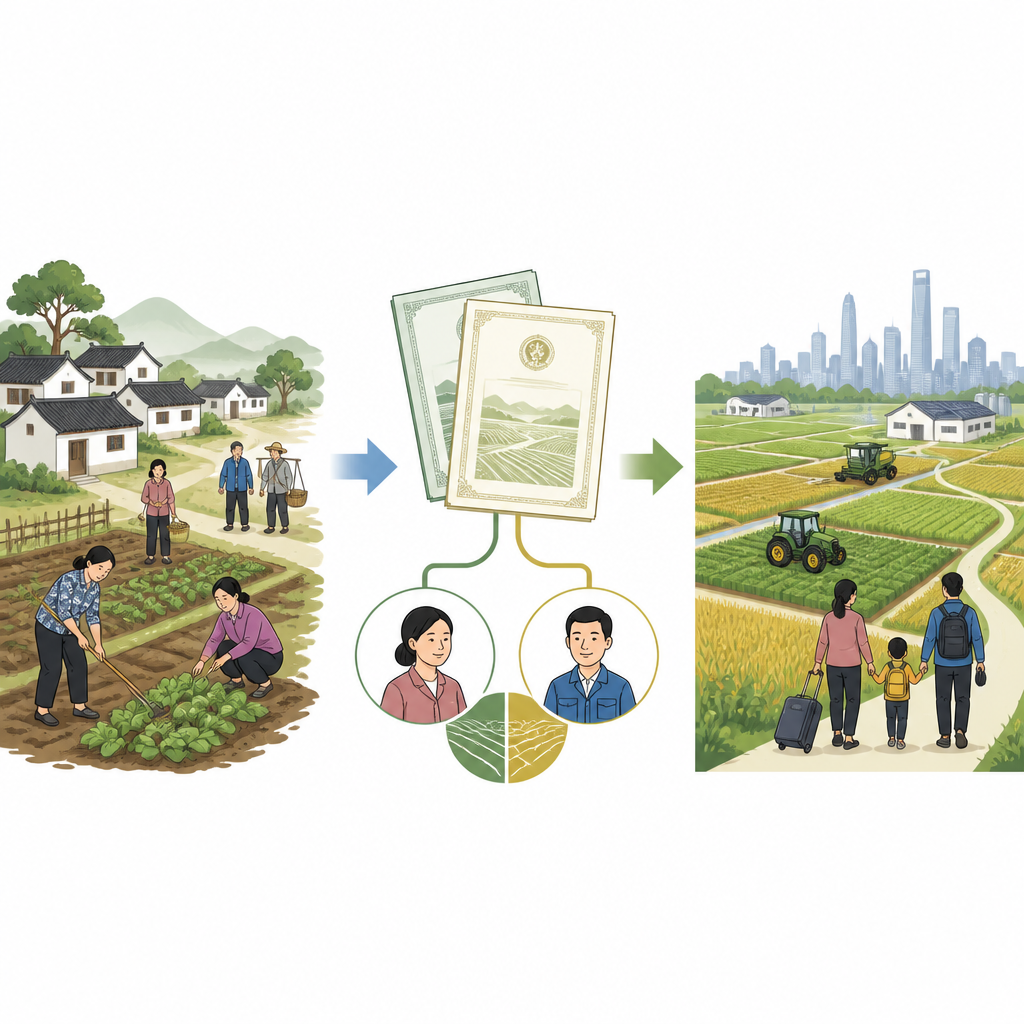
China’s countryside has long operated under a collective land system where villages own the land and allocate plots to households. For decades, most of these plots were registered only in men’s names, even though women do much of the farm work. In 2008, the government launched a nationwide Land Registration and Certification program that mapped fields and issued formal certificates. A key change was a push to list all eligible family members, including wives and daughters, as co-owners. By 2016, the share of households giving women formal land rights had risen from about one in eight to nearly half. This created a natural setting to study how equal recognition on paper might affect real decisions in the fields.
From fragile rights to stronger voices
Before these reforms, women’s claims to land were often fragile. When women married into another village, divorced, or were widowed, they could lose access to plots because they were not recognized as full members of either community. To guard against this, many women kept cultivating land even when it was not the best use of their time, fearing that leasing it out or leaving it unused would be seen as giving it up. The new certificates helped in two ways. They made land claims more secure, reducing the fear of losing fields if they were rented out. They also strengthened women’s influence inside the household, because co-ownership meant they had clearer standing in decisions about land use, investment, and whether to seek work away from farming.
What the numbers reveal about land use
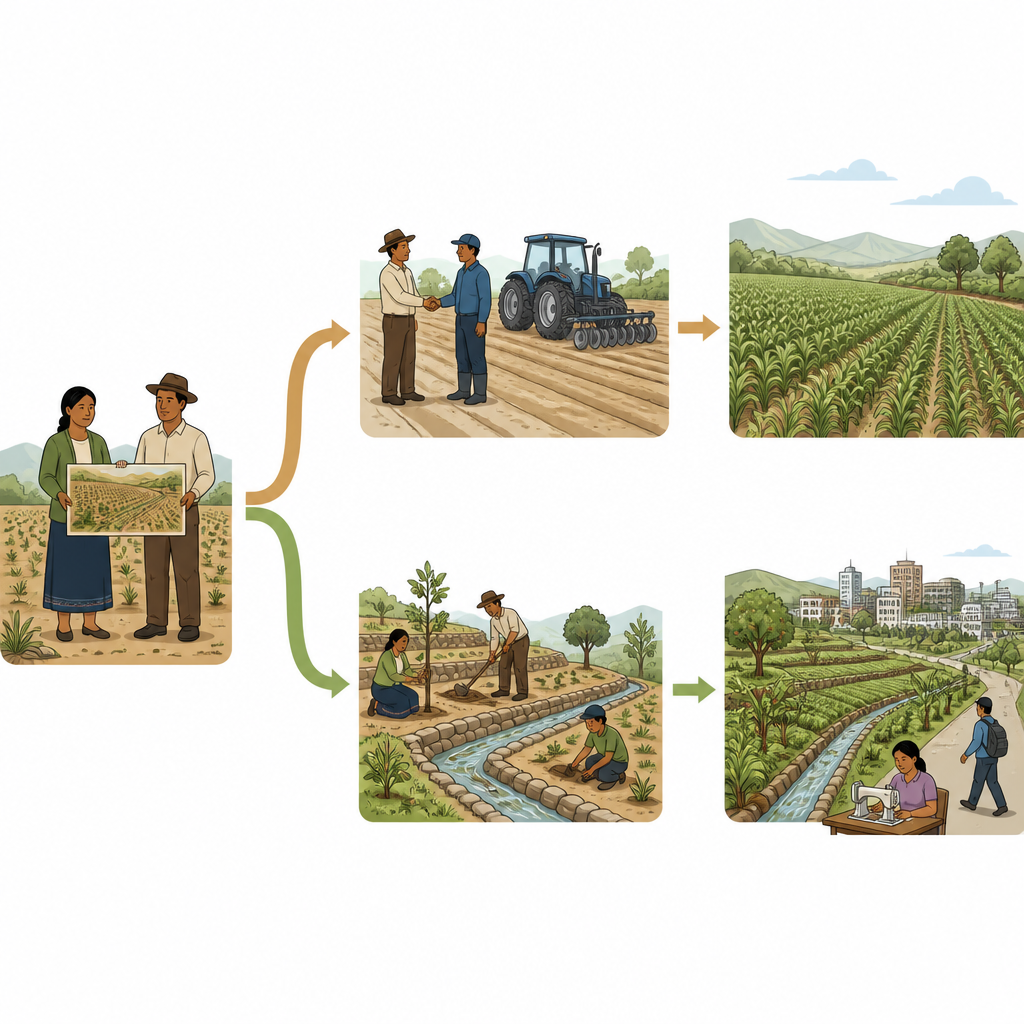
The authors analyzed data from a 2016 survey of nearly 1900 rural households across 17 provinces, combined with earlier waves stretching back to 2001. They compared families where women were formally registered as co-owners with otherwise similar families where only men held titles. After carefully adjusting for income, education, land size, village conditions, and wider county economies, they found clear patterns. Households that included women on certificates were about 8 percentage points more likely to lease out land. They were also more likely to invest in their remaining plots, with a 6.9 percentage point higher chance of making improvements and larger spending on actions such as better soil management, irrigation, or perennial crops.
Where and when change is strongest
These shifts did not look the same across all of rural China. The effects were strongest in provinces with more productive farming, livelier land rental markets, and more jobs for women outside agriculture. In these places, secure rights made it easier for women to support leasing out land that others could farm more efficiently, while they or their family members moved into higher-paying work. It also made it more worthwhile to invest in land because families could be more confident they would reap the future benefits. In poorer, less connected regions with weaker markets and stricter gender norms, the impact of co-registration was much smaller, suggesting that legal change alone is not enough without supportive economic and social conditions.
What this means for people and policy
Overall, the study shows that putting women’s names on land certificates is not just a symbolic act. It can help families make better use of their land, increase investment in the soil, and open doors for women to choose different kinds of work. At the same time, the benefits are uneven and depend on whether local markets, laws, and customs truly support women’s ability to act on their rights. For countries thinking about land reforms, the message is clear: gender equality in land ownership should be built into policy from the start, and backed by strong institutions, if rural development is to be both inclusive and sustainable.
Citation: Zheng, L., Zheng, Y., Zhang, Z. et al. Empowering landscapes: women’s formal land rights and their impact on rural investments and land transfer in China. Humanit Soc Sci Commun 13, 683 (2026). https://doi.org/10.1057/s41599-026-07046-w
Keywords: women’s land rights, rural China, land registration, land rental markets, agricultural investment